

Key Takeaways
- Generic and name-brand products often share identical active ingredients or formulations, especially in regulated categories.
- In some categories — electronics, infant formula, and personal care — brand differences can reflect meaningful quality gaps.
- Reading ingredient lists and understanding labeling standards is the most reliable way to compare products.
- Price gap alone is not a reliable signal of quality difference between generic and branded versions.
Our Verdict
Generics win on value in categories with standardized formulations or heavily regulated ingredients — groceries, OTC medications, and basic household supplies. Name brands hold their ground where proprietary formulation, durability, or safety margins are harder to verify from a label alone. The smartest approach is category-specific, not brand-loyal.
| Best for | Recommended |
|---|---|
| Budget-conscious shoppers buying pantry staples and household basics | Generic / Store Brand |
| Shoppers purchasing OTC medications with standardized active ingredients | Generic / Store Brand |
| Buyers of electronics, tools, or items where long-term durability is critical | Name Brand (with verified track record) |
| Parents selecting infant formula or specialized dietary products | Consult a healthcare professional before switching |
The Real Question Behind the Price Tag
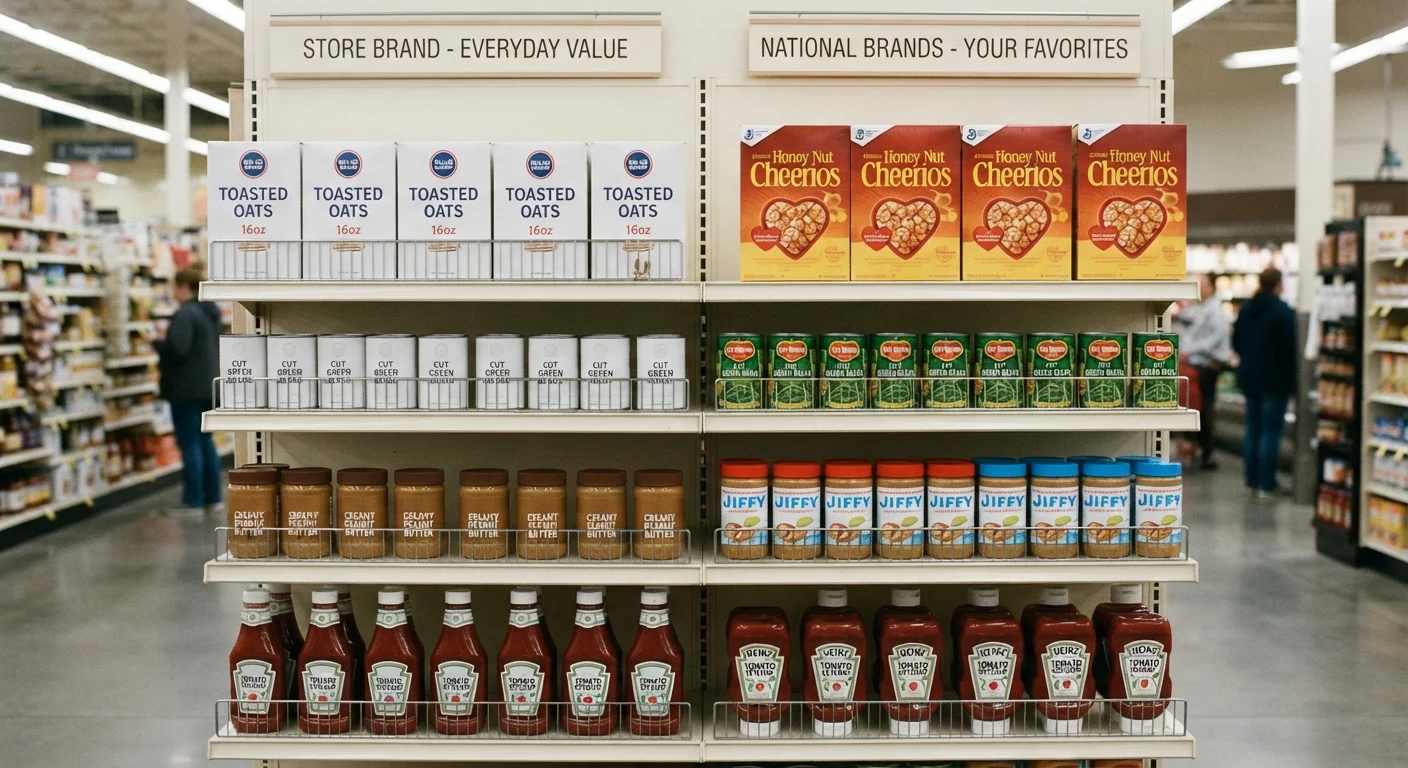
When a store-brand cereal costs 40% less than its name-brand equivalent, two things are possible: either you're getting the same product for less, or you're leaving out something that actually matters. The problem is that most packaging isn't designed to help you figure out which scenario applies.
Understanding when the label matters — and when it's mostly marketing — comes down to knowing how products in each category are actually regulated, formulated, and manufactured. For a deeper look at how retail language is used to frame purchasing decisions, see key shopping terms every consumer should recognize.
This comparison breaks down the categories where switching to generic is genuinely low-risk, and the ones where a closer look is warranted before you make the swap.
Where Generics Are Virtually Identical
In federally regulated categories, the gap between generic and name brand often narrows to near zero. Over-the-counter (OTC) medications are the clearest example. The FDA requires that generic OTC drugs contain the same active ingredient, in the same concentration, as their branded counterparts. A store-brand ibuprofen tablet and a nationally advertised ibuprofen tablet must meet the same pharmacological standard — the difference is in the inactive binders and the packaging budget.
Pantry staples follow a similar pattern. Flour, sugar, canned vegetables, cooking oils, and dried pasta are commodities with tight food-safety standards. The ingredient list on a store-brand can of diced tomatoes is typically indistinguishable from the national brand sitting beside it. In many cases, the products come from the same regional suppliers or co-manufacturers.
| Category | Generic Viability | Key Deciding Factor | |
|---|---|---|---|
| OTC Medications | High | Active ingredient regulation (FDA mandated) | |
| Pantry Staples | High | Commodity sourcing, food safety standards | |
| Cleaning Supplies | High | Active agent concentration match | |
| Personal Care | Moderate | Proprietary formulation differences | |
| Electronics & Tools | Low–Moderate | Component quality, warranty support | |
| Infant Formula | Consult a professional | Nutritional parity varies; health stakes high |
Cleaning supplies and basic paper products also fall into this column for most households. If the active cleaning agent is sodium hypochlorite at the same concentration, the performance difference between branded and generic bleach is negligible.
Where Brand Differences Are More Than Cosmetic
Some categories involve meaningful variation that doesn't always show up clearly on a label. Electronics and power tools are a notable example. While two products may share similar spec sheets, differences in component quality, thermal management, and manufacturer warranty support can affect long-term reliability in ways that only become apparent after months of use. A branded item may also carry clearer paths to customer support or replacement parts.
Don't Apply Food Logic to Every Category
The reasoning that works well for comparing generic flour or ibuprofen breaks down in categories with less regulatory oversight or more complex performance variables. Applying a one-size-fits-all 'generic is the same' assumption to electronics, specialized tools, or health-sensitive products can lead to regret. Adjust your comparison method to match the category's regulatory and performance context.
Personal care products occupy a middle ground. Shampoos, moisturizers, and skincare items are not as tightly regulated for efficacy as pharmaceuticals. Proprietary formulations — specific combinations of ingredients, pH calibration, or delivery systems — can produce genuinely different results. This doesn't mean name brands are always superior, but it does mean the active-ingredient comparison that works for OTC meds is less definitive here.
Infant formula deserves special mention. While U.S. store-brand formulas must meet FDA nutritional standards, formulation differences do exist, and any switch — especially for newborns or infants with specific dietary needs — should involve a pediatrician. For related decisions in personal care, see our look at deodorant vs. antiperspirant as an example of how ingredient function matters differently across product types.
How to Make the Call for Any Product
The most reliable method for comparing generic and name-brand products is to read the ingredient or specification list side by side, not the front-of-package marketing. For OTC medications, compare active ingredients and concentrations. For food products, check the ingredient list and nutrition panel. For electronics, verify warranty terms and look for independent reviews that cover long-term performance rather than unboxing impressions.
Use the Ingredient List as Your Guide
For regulated categories like OTC drugs and food, the ingredient or supplement facts panel is more informative than any front-of-package claim. When the active ingredients match in type and concentration, you have a substantive basis for comparison — not just a price comparison. For unregulated categories, look for third-party certifications or independent test results to fill in the gaps.
Price gap alone tells you very little about quality. A large spread might reflect heavy advertising spend on the branded side, not superior ingredients. A small spread might mean a genuine formulation difference that the store brand can't replicate at lower cost. Value and cheap are not the same thing — and the same logic applies in reverse when evaluating whether a premium price is actually justified.
When in doubt, consider the stakes. A generic dish soap that underperforms is an easy fix. A generic smoke detector or an unfamiliar infant formula replacement warrants more scrutiny and, where health is involved, a conversation with a qualified professional.
For a closer look at which specific product categories consistently favor the store brand, see when the store label actually wins.