

Key Takeaways
- The lowest sticker price rarely reflects the true cost of a purchase over time.
- Cost per use is a practical metric for comparing purchases of different price points.
- Replacement frequency and maintenance costs can make cheap items more expensive than quality alternatives.
- Value is always relative to the buyer's specific use case, frequency, and circumstances.
- Spending more is not automatically smarter — context determines when quality is worth the premium.
Value vs. Cheap
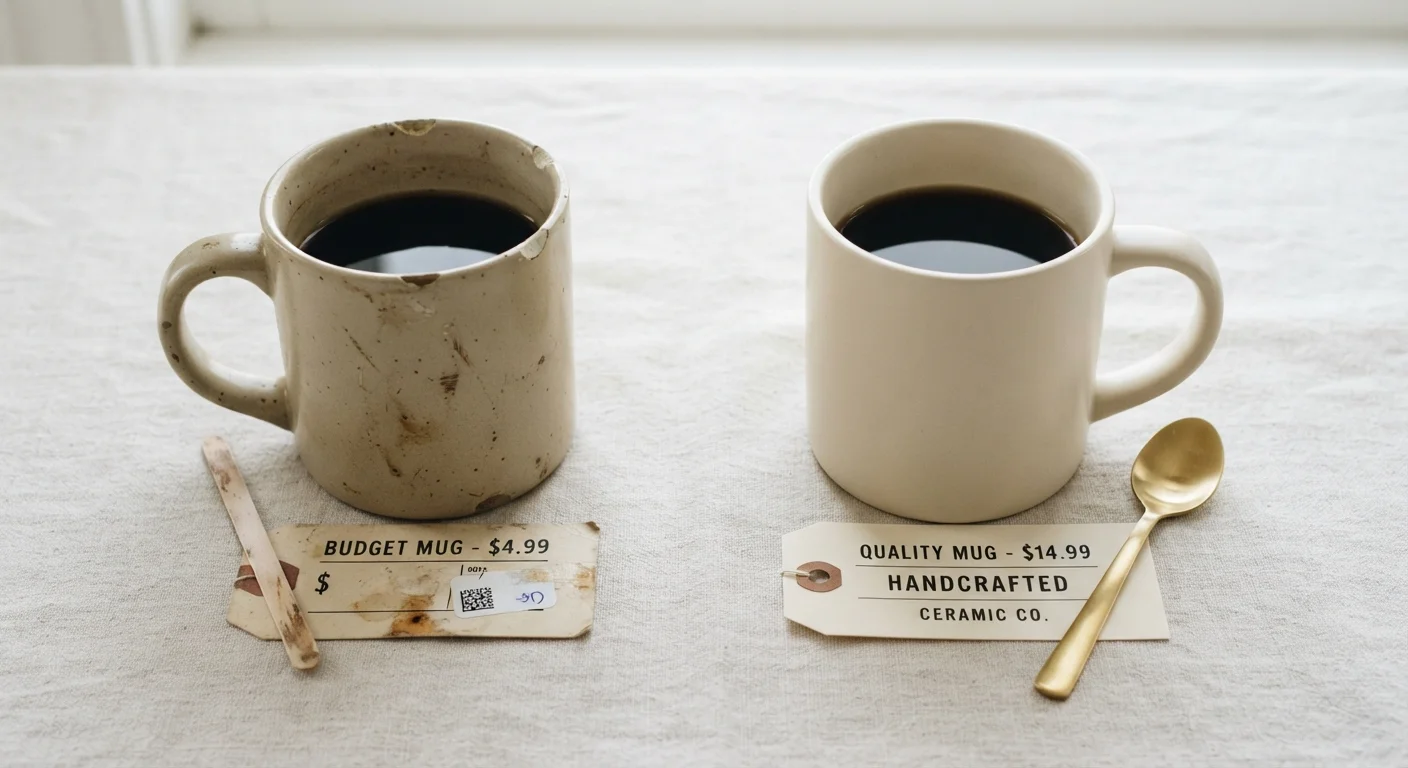
"Cheap" refers to a low purchase price, while "value" describes how much benefit you actually receive relative to what you paid. A cheap item may cost less upfront but require frequent replacement or perform poorly, making it more expensive over time. Value purchasing means accounting for durability, usefulness, and total cost of ownership — not just the sticker price.
Economists sometimes frame this as the difference between price and utility — a cheap item with low utility delivers poor value, while a higher-priced item with exceptional longevity may offer superior cost-per-use ratios.
The Problem With Price as a Proxy for Value
When most shoppers scan a shelf or scroll a product listing, price does much of the decision-making work. The lower number feels like the safer choice — less money at risk, more left in the wallet. But this instinct conflates two very different things: what something costs and what it's actually worth.
A $12 pair of headphones and a $60 pair can both technically play music. The question is how long each will do it well, and what happens when they don't. If the $12 pair needs replacing every three months, you've spent $48 in a year — and still don't have a reliable product. The $60 pair that lasts four years costs $15 per year. The "cheap" option turned out to be the expensive one.
This gap between sticker price and actual cost is where most purchasing mistakes happen. Understanding it is the foundation of smarter decision-making at any budget level.
3–5×
Typical replacement rate for low-durability items
Consumer research broadly suggests that low-cost versions of everyday durable goods are replaced significantly more often than quality alternatives, multiplying their effective lifetime cost.
$0.30
Example cost per use of a quality item
A $60 item used 200 times — common for daily-use tools or clothing — arrives at $0.30 per use, often undercutting cheaper alternatives that fail sooner.
Cost Per Use: The Metric That Changes the Calculation
Cost per use is one of the most practical tools for evaluating any purchase. The math is simple: divide the total price by the expected number of uses. A $90 cast iron skillet used five days a week for a decade costs fractions of a cent per meal. A $15 non-stick pan that degrades and gets discarded after a year costs considerably more per use.
This framework is especially useful for everyday items — footwear, kitchen equipment, bags, tools, and clothing worn regularly. It's less applicable to single-use purchases or items you'll use infrequently, where a lower price genuinely makes more sense.
The concept of value for money goes beyond just comparing prices. It asks: how much useful output does this item actually deliver per dollar spent?
Try a Quick Cost-Per-Use Estimate Before Buying
Before purchasing any item you expect to use regularly, take 30 seconds to divide the price by a realistic usage estimate. If a cheaper alternative has a higher cost per use due to shorter lifespan, you have concrete grounds to justify the pricier option — or reconsider both.
When Cheap Is the Right Call
Framing every low-price purchase as a mistake would itself be a mistake. Cheap is often the appropriate choice — it depends on context, not ideology.
If you need a basic item for a one-time project, a child who will quickly outgrow it, or a use case where you're genuinely uncertain whether you'll stick with it, paying less upfront carries less risk. Buying an expensive piece of exercise equipment for a workout routine you haven't started yet is a classic example of when "value" logic can backfire.
The needs vs. wants distinction is also relevant here — a want that doesn't serve you regularly rarely justifies a premium price.
It's also worth noting that cheap and value aren't always opposites. Generic products in many categories deliver equivalent performance at a lower price — that's value, not just cheapness.
Hidden Costs That Make Cheap Purchases Expensive
The sticker price is only part of the picture. Some purchases carry ongoing costs that are easy to overlook at checkout: maintenance, replacement parts, consumables, or even the time spent dealing with failures.
A low-cost appliance that breaks outside its (very short) warranty window means paying for repair or full replacement. A cheap mattress that disrupts sleep night after night has costs that don't show up on any receipt. These are sometimes called "total cost of ownership" — the full financial and practical burden of a purchase over its lifespan.
For a deeper look at how this plays out across specific purchase types, the short-term vs. long-term cost of cheap purchases is worth reading alongside this one. And for those trying to build sustainable habits around this kind of thinking, smart shopping habits offers a practical starting point.
Price Alone Is a Weak Quality Signal
Higher prices don't reliably indicate better quality — branding, packaging, and marketing all inflate costs without improving performance. Before treating price as a proxy for durability, look at material specifications, warranty length, and independent user feedback. The signals that a product will actually last can help you read those cues more accurately.