

Key Takeaways
- Apply skincare products from thinnest to thickest texture as a reliable default rule.
- pH-sensitive products like exfoliating acids work best applied before higher-pH moisturizers.
- Heavier products like oils and sunscreen should always come last to avoid blocking absorption.
- Waiting 30–60 seconds between layers helps each product settle before the next is applied.
- Consistent order matters more than owning the most expensive products.
Skincare Layering Order
Skincare layering order refers to the sequence in which you apply multiple skincare products during a routine. The general principle is to move from thinnest to thickest consistency — starting with water-based, lightweight formulas and finishing with heavier creams or oils. This sequence allows each product to absorb properly rather than being blocked by a denser formula applied first.
pH also plays a role: leave-on exfoliants and vitamin C serums work best at a lower pH, so they should be applied before products with a higher pH such as moisturizers, which can interfere with their activity if layered immediately on top.
Why Order Isn't Just a Beauty Myth
If you've ever wondered whether it actually matters which product you reach for first, the short answer is yes — and the reason is mostly physical. Skincare products are formulated at different viscosities, meaning some are watery and fast-absorbing while others are thick and occlusive. Apply a rich moisturizer before a serum, and that serum hits a barrier instead of skin. It can't penetrate the way it was designed to.
Think of it like painting a wall. You prime first, then paint, then seal. Each layer needs the one below it to function properly. Skincare operates on a similar logic: you're building a stack of beneficial ingredients, and each one needs a clear path to your skin.
If you're just starting out, our beginner's guide to building a skincare routine covers the essential steps before you start thinking about layer order.
A Simple Habit to Build Consistency
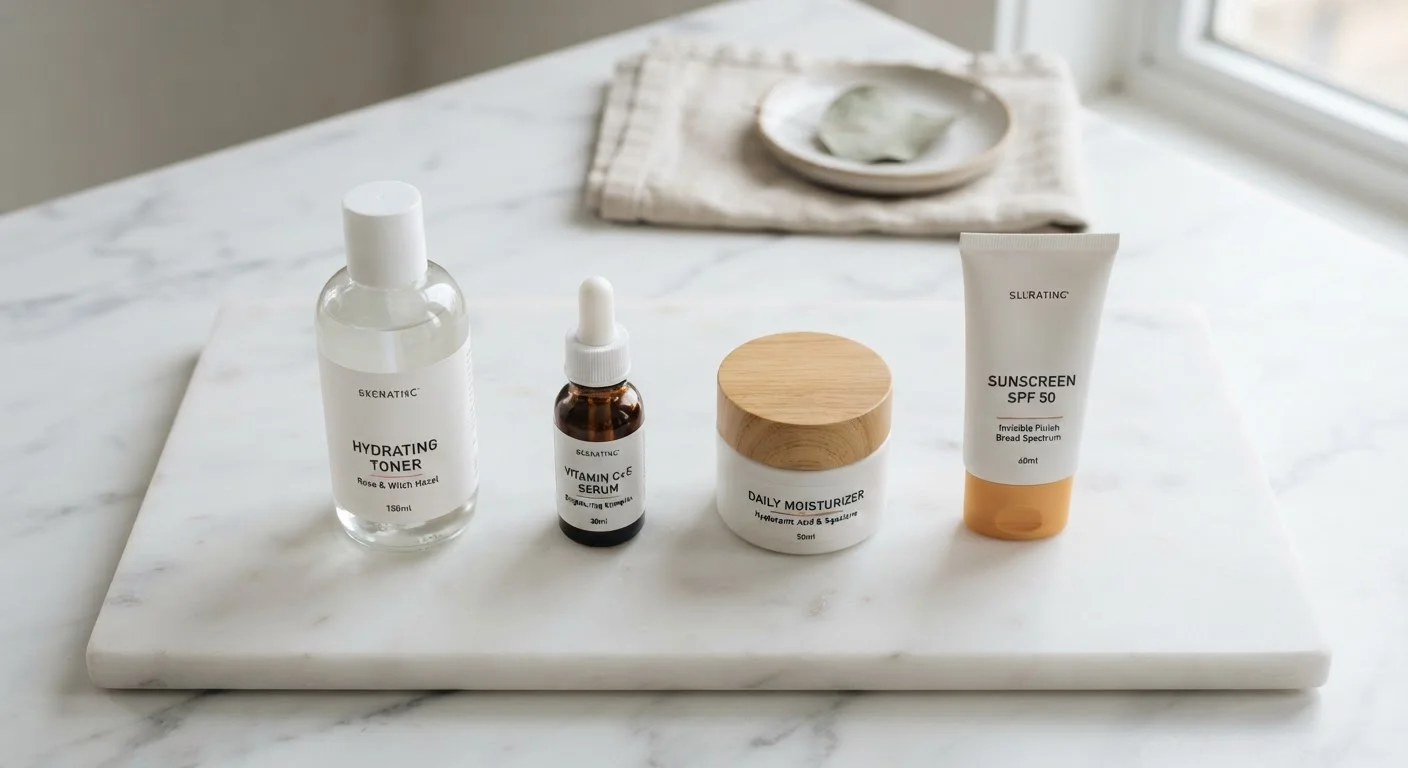
Line your products up on the counter left to right, in the order you use them. This visual cue removes the guesswork each morning and evening and reinforces the correct sequence until it becomes automatic. It takes about 30 seconds to set up and saves a lot of second-guessing.
The Thinnest-to-Thickest Rule
The most universally practical guideline is to layer products from the lightest consistency to the heaviest. In a typical morning routine, that sequence looks something like: cleanser → toner → essence or serum → eye cream → moisturizer → sunscreen. At night, you'd swap SPF for a heavier moisturizer or facial oil at the end.
Why does this work? Thin, water-based formulas have small molecules that can slip through the skin's surface more easily. Dense creams and oils form a semi-occlusive layer that holds moisture in — but if applied early, they physically limit what can get through afterward.
~30–60s
Recommended wait time between skincare layers
Dermatologists commonly suggest a brief pause between steps to allow each product to begin absorbing before the next layer is applied.
3–4
Optimal pH range for AHA and BHA exfoliants
Research on alpha and beta hydroxy acids indicates they require a low-pH environment — generally between pH 3 and 4 — to exfoliate effectively at the skin's surface.
Oils in particular should nearly always come last, even after moisturizer. Oil repels water, so putting it before a water-based product guarantees that product goes nowhere useful.
The pH Factor Most People Overlook
Texture is the easy part. pH is where things get a little more nuanced — but it's worth understanding even at a basic level. Certain skincare actives are formulated at a low pH to function properly. Alpha hydroxy acids (AHAs) like glycolic acid, beta hydroxy acids (BHAs) like salicylic acid, and vitamin C serums typically require a pH between 3 and 4 to work as intended.
Moisturizers, on the other hand, are usually formulated at a skin-neutral pH of around 5.5 to 7. Applying a moisturizer immediately before or after a low-pH product can temporarily raise the pH at the skin's surface, potentially reducing the active ingredient's effectiveness.
The practical solution: apply your pH-sensitive actives first after cleansing, wait about a minute, then continue with the rest of your routine. You don't need to test products with litmus paper — just learn how to read ingredient labels to spot these actives and know when to give them priority placement.
Not All Actives Play Well Together
Some ingredient combinations can cause irritation or reduce effectiveness when used in the same routine — for example, retinol and exfoliating acids applied together can be too harsh for many skin types. If you're using multiple actives, consider alternating them between morning and evening routines rather than stacking them all at once. A dermatologist can help you design a layering plan that works for your specific skin.
Putting It Into Practice
A consistent layering order, even a simple one, produces better results than a complicated routine applied haphazardly. If your current routine has only three steps — cleanser, moisturizer, SPF — you're already doing it right. Add products one at a time and slot them in based on texture and function rather than brand recommendations alone.
One common slip-up is switching products before giving any of them enough time to show results. Before reshuffling your entire routine, it helps to run through a quick self-check to understand whether a product actually isn't working or just hasn't had enough time. You can also find more personal grooming tips and routines to complement your skincare practice.
This article is for general informational purposes only and does not constitute medical or dermatological advice. Consult a qualified skincare professional or dermatologist for concerns about your specific skin condition.