

| Cotton breathability | High — excellent for warm weather and sensitive skin |
| Polyester durability | High — resists stretching and shrinking |
| Rayon care level | Delicate — often requires gentle or hand washing |
| Spandex content for stretch | As little as 2–5% adds significant elasticity |
| Linen best season | Spring and summer — highly breathable in heat |
| Modal softness | Rated among the softest cellulose-based fibers |
Why Fabric Composition Actually Matters
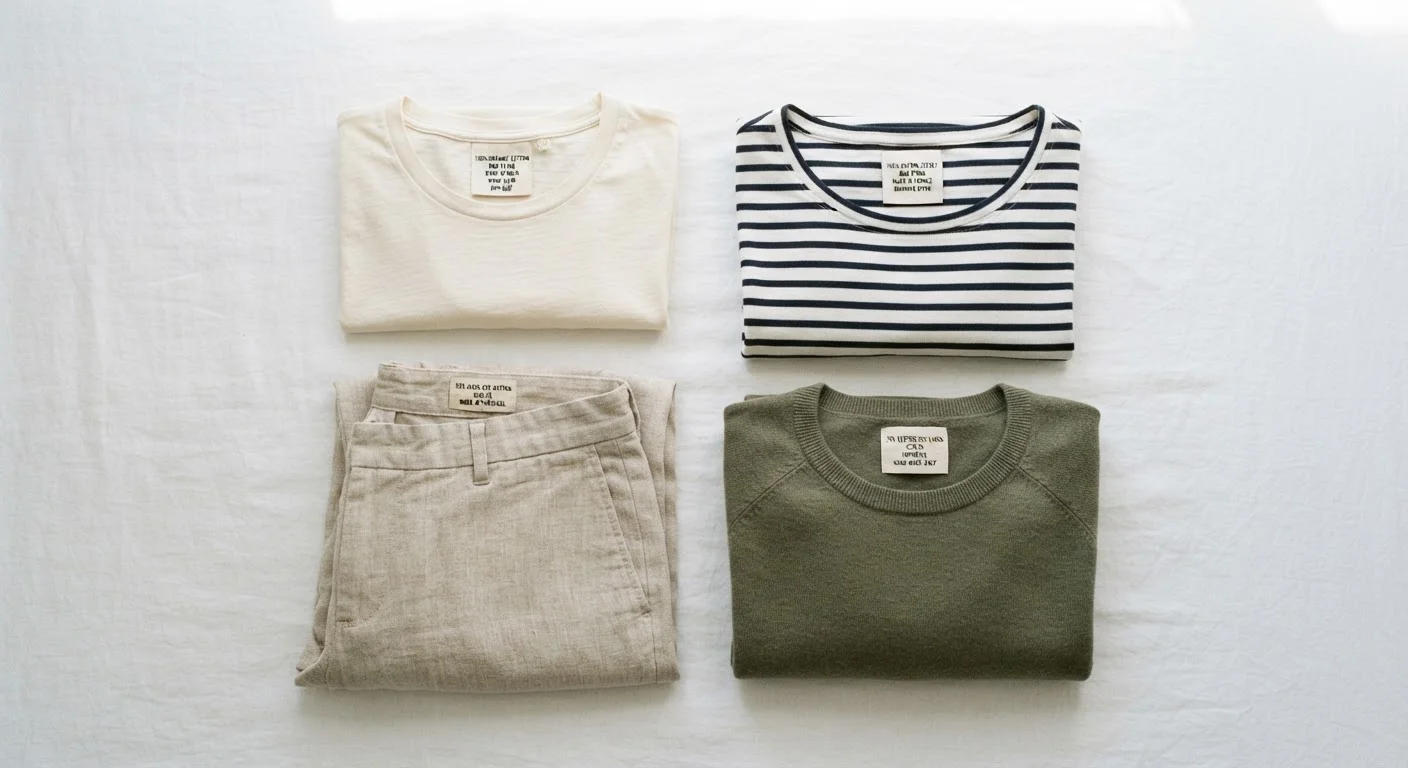
Flip any garment inside out and you'll find a small tag listing a fabric composition — something like "60% cotton, 40% polyester" — along with a row of cryptic symbols. Most people ignore it. That's a shame, because those few lines of text explain how a piece will feel against your skin, how it will age with washing, and whether it's worth the price on the tag.
Understanding fabric composition is one of the fastest ways to shop smarter and dress more comfortably. It also helps you avoid surprises — like the T-shirt that shrinks two sizes in the dryer or the blouse that pills after three wears. For a broader look at building an outfit that works for your body, see our plain-language guide to clothing fit.
| Cotton breathability | High — excellent for warm weather and sensitive skin |
| Polyester durability | High — resists stretching and shrinking |
| Rayon care level | Delicate — often requires gentle or hand washing |
| Spandex content for stretch | As little as 2–5% adds significant elasticity |
| Linen best season | Spring and summer — highly breathable in heat |
| Modal softness | Rated among the softest cellulose-based fibers |
The Most Common Fabrics, Decoded
These are the fibers you'll encounter most often on American clothing tags, and what each one means in practice.
Cotton
A natural fiber from the cotton plant, cotton is breathable, absorbent, and soft against skin. It's highly washable but prone to shrinking — especially on the first wash. Look for "pre-shrunk" on the label if you want a more stable fit. Heavier cotton (like canvas or denim) is durable; lightweight cotton (like jersey) is comfortable but pills faster.
Polyester
A synthetic fiber made from petroleum-based plastic. Polyester resists wrinkles, holds its shape well, and dries quickly — which is why it dominates activewear. The tradeoff: it traps heat and moisture more than natural fibers, and it can hold onto odors over time. Garments blended with polyester typically cost less and last longer structurally.
Rayon (Viscose)
Rayon — often labeled as viscose in Europe — is a semi-synthetic fiber made from wood pulp. It drapes beautifully and feels silky, making it popular in flowy tops and dresses. However, it weakens significantly when wet, wrinkles easily, and usually requires gentle or hand washing. Rayon blends add softness but reduce durability.
Modal and Lyocell (Tencel)
Both are cellulose-based fibers similar to rayon but processed differently. Modal is exceptionally soft, resists shrinkage, and holds color well. Lyocell (often sold under the brand name Tencel) is known for being moisture-wicking and environmentally lower-impact than conventional rayon. Both are common in underwear, athleisure, and premium basics.
Linen
Linen comes from the flax plant and is one of the oldest textiles in the world. It's exceptionally breathable in warm weather but wrinkles dramatically. Linen softens with repeated washing and age, which many people enjoy. It's a solid choice for summer clothing when a slightly relaxed look is acceptable.
Nylon and Spandex (Elastane)
Nylon adds strength and abrasion resistance to blends. Spandex (also called elastane or Lycra) provides stretch and recovery — that snap-back feeling. You'll find small percentages of spandex (typically 2–5%) in jeans, leggings, and fitted tops to allow movement without the garment losing its shape.
Natural fiber
A textile fiber derived directly from plants or animals, such as cotton, linen, wool, or silk. Natural fibers are generally breathable but may require more careful washing.
Synthetic fiber
A textile fiber produced through chemical processes, typically from petroleum derivatives. Polyester and nylon are common examples. Synthetics are durable and wrinkle-resistant but less breathable than natural fibers.
Semi-synthetic fiber
A fiber made from a natural raw material (usually wood pulp) that undergoes significant chemical processing. Rayon, modal, and lyocell fall into this category.
Fabric weight
A measure of how heavy a fabric is per unit area, expressed in grams per square meter (GSM). Higher GSM fabrics tend to be thicker, warmer, and more durable; lower GSM fabrics are lighter and more breathable.
Pilling
Small fiber balls that form on a fabric surface through friction and washing. Pilling is common in lower-quality blends and synthetic fabrics with loose weaves.
Moisture-wicking
The ability of a fabric to draw perspiration away from the skin and toward the outer surface where it can evaporate. Common in performance and activewear fabrics like polyester and lyocell.
Blends, Care Symbols, and What to Do With All of It
Pure single-fiber garments are increasingly rare. Most modern clothing is blended to balance cost, comfort, and durability. A cotton-polyester blend, for example, gives you some breathability with less shrinkage and wrinkling. When reading a label, consider the dominant fiber first — it usually defines the feel — and the secondary fiber as a modifier of performance.
When the Tag Has Been Removed
Many people cut out tags for comfort, which makes care instructions harder to track later. Consider photographing the tag before removing it, or note the care requirements in a phone app. Some retailers also post full product specifications, including fabric content, on their websites for reference after purchase.
Care symbols on tags follow an international standard. A tub icon represents washing; a triangle means bleaching; a square with a circle inside is tumble drying; an iron icon indicates ironing. Numbers inside symbols typically refer to maximum temperature in Celsius. If you're ever unsure, a crossed-out symbol means "do not do this."
Getting fabric care right pays off over time. For a deeper dive into habits that extend the life of everything in your closet, our article on making clothes last longer covers washing temperature, storage, and more. And if navigating clothing labels feels similar to decoding product tags at the store, our guide to key shopping terms can help you shop with more confidence across the board.