

Key Takeaways
- Cold water washing and gentle cycles prevent fabric breakdown and color fading over time.
- Over-washing is one of the most common reasons clothes wear out faster than they should.
- How you store garments — folded vs. hung — directly affects how long they hold their shape.
- Turning dark clothing inside out before washing dramatically slows visible color loss.
- Air drying is gentler on almost every fabric than machine drying on high heat.
The Real Reason Clothes Age Too Fast
Most clothing doesn't wear out from being worn — it wears out from being washed. Heat, agitation, and harsh detergents break down fibers faster than daily use ever could. Understanding where the damage actually happens gives you real control over how long your wardrobe lasts.
If you've noticed that a favorite shirt looks tired or shapeless after just a season, washing habits are usually the first place to look. The good news is that small, consistent changes make a measurable difference — no special products required. And if shrinkage or distortion sounds familiar, our piece on why your clothes stop fitting explores exactly how laundering affects garment shape over time.
Wash clothes in cold water whenever the care label allows.
Hot water accelerates dye fading, causes fibers to contract, and weakens elastic threads. Cold water cleans effectively for most everyday laundry while dramatically reducing fiber stress with every cycle.
Turn dark and brightly colored garments inside out before washing.
The outer surface of fabric takes the most mechanical friction in the drum. Flipping garments inside out keeps the visible face protected from abrasion and direct detergent contact, which are the two main causes of color loss.
Wash clothes only when they actually need it — not after every single wear.
Each wash cycle puts mechanical stress on fibers. Most outerwear, denim, and structured pieces don't need laundering after one wear unless visibly soiled. Reducing wash frequency is one of the highest-impact things you can do for garment longevity.
Air dry whenever possible instead of using a machine dryer.
Dryer heat is one of the leading causes of shrinkage, elastic breakdown, and fiber thinning. Even a low-heat setting applies stress that compounds over dozens of cycles. Air drying is gentler on virtually every fabric type.
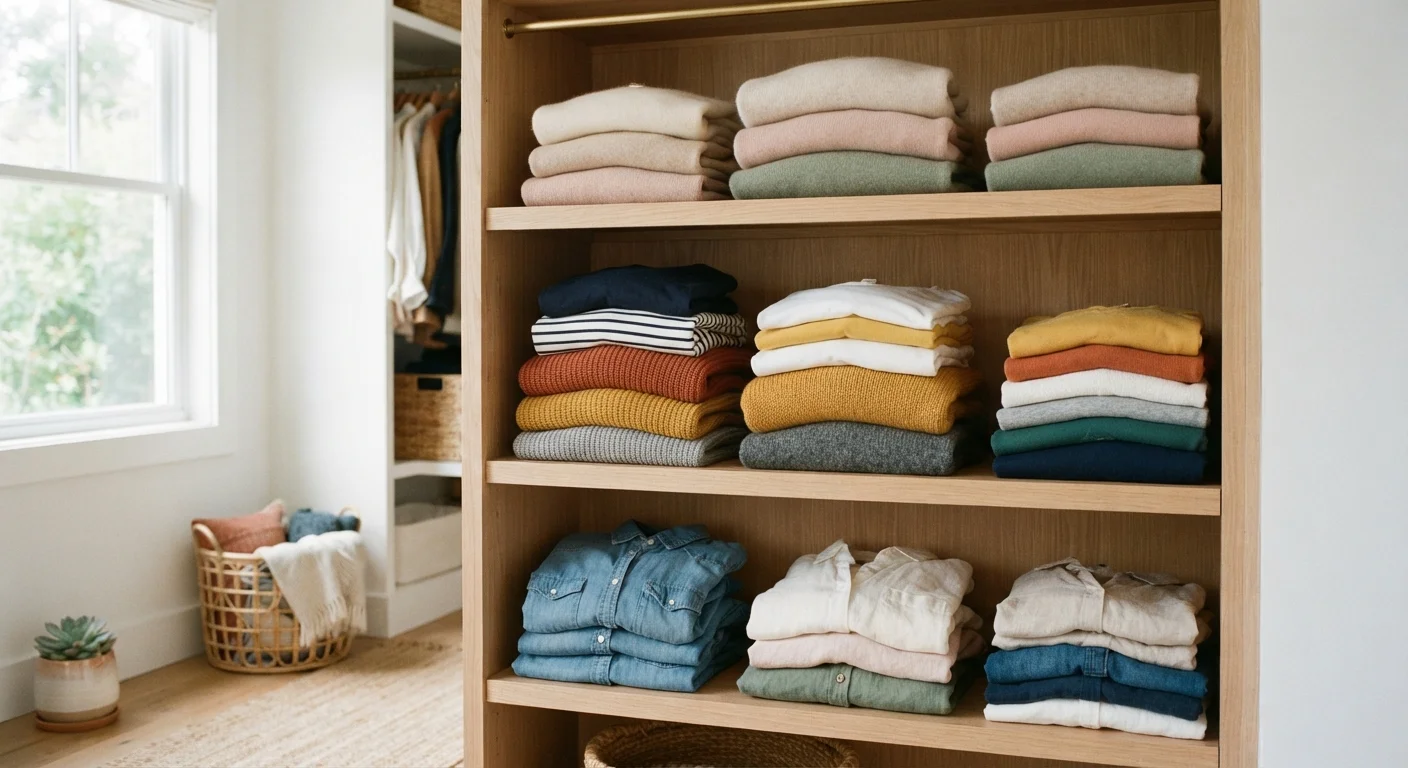
Fold knits and store them flat rather than hanging them.
Heavy knit fabrics — sweaters, cardigans, chunky jersey — stretch under their own weight when hung. Over time, this creates shoulder bumps and distorted shapes that can't be reversed.
Give clothes room to breathe in storage — avoid overpacking closets.
Crushed fabric develops permanent creases, and poor air circulation encourages mildew, especially in humid climates. A closet with adequate spacing keeps garments in better condition between wears.
Storage Habits That Protect Your Wardrobe
Washing isn't the only place clothes take a beating. Storage done wrong — cramming a closet, hanging knits, or skipping airflow — quietly degrades fabric structure between wears.
Hang Wisely — Not Everything Belongs on a Hanger
Structured wovens like dress shirts, blazers, and trousers do well on hangers — ideally wooden or padded ones that hold garment shape. Knits, heavyweight jerseys, and bias-cut fabrics are better off folded. If a garment stretches noticeably at the shoulders after hanging, that's a signal to switch to shelf storage. The right storage method per fabric type is one of the simplest, most overlooked ways to preserve a wardrobe.
A well-stored wardrobe also makes getting dressed faster and more confident. When you can actually see what you own in good condition, outfit decisions get easier. For more on building a wardrobe that works for your lifestyle, see our guide on how clothing fit actually works.
Putting It All Together
Caring for clothes well isn't about being precious — it's about getting genuine value from what you already own. The habits above require almost no extra time once they become routine, and the payoff is a wardrobe that looks better for longer.
~80%
Of garment wear caused by laundering, not use
Research cited by sustainability-focused textile organizations suggests the majority of a garment's physical degradation occurs during washing and drying rather than from being worn.
2–3×
Longer lifespan with air drying vs. machine drying
Textile care experts commonly cite heat exposure from machine dryers as accelerating fiber breakdown at a rate significantly faster than air drying over the same number of uses.
If you want to extend the same thinking to other items you use daily, the principles in our article on caring for earbuds and headphones translate surprisingly well. And when it's genuinely time to replace something, the smart shopping habits that hold up across any income level can help you choose pieces built to last.