

Key Takeaways
- Outfit formulas reduce decision fatigue by pairing proven combinations rather than reinventing your look daily.
- Most reliable formulas hinge on fit and proportion — not trend awareness or a large wardrobe.
- A single structured layer, like a blazer or overshirt, can elevate almost any casual base outfit.
- Neutral-on-neutral combinations work when you vary texture, weight, or silhouette between pieces.
- Shoes and one accessory are often enough to shift a formula from casual to polished.
Why Formulas Work Better Than Inspiration
Scrolling through outfit inspiration feels productive, but it rarely solves the real problem: standing in front of your closet at 7 a.m. with nothing obvious to grab. That's where outfit formulas come in. Instead of constructing a look from scratch each morning, a formula gives you a reliable structure — a template you fill in with the pieces you already own.
Think of a formula less as a rigid rule and more as a ratio. Something like fitted base + relaxed mid-layer + simple shoe works across seasons, occasions, and personal style preferences because the logic is sound regardless of what specific pieces you plug in. The result is less stress, fewer outfit regrets, and more headspace for everything else.
If you've ever felt paralyzed by a full closet that somehow yields nothing to wear, you're far from alone — the reasons that happens are surprisingly practical, and formulas are one of the most effective fixes. These seven combinations are a solid place to start.
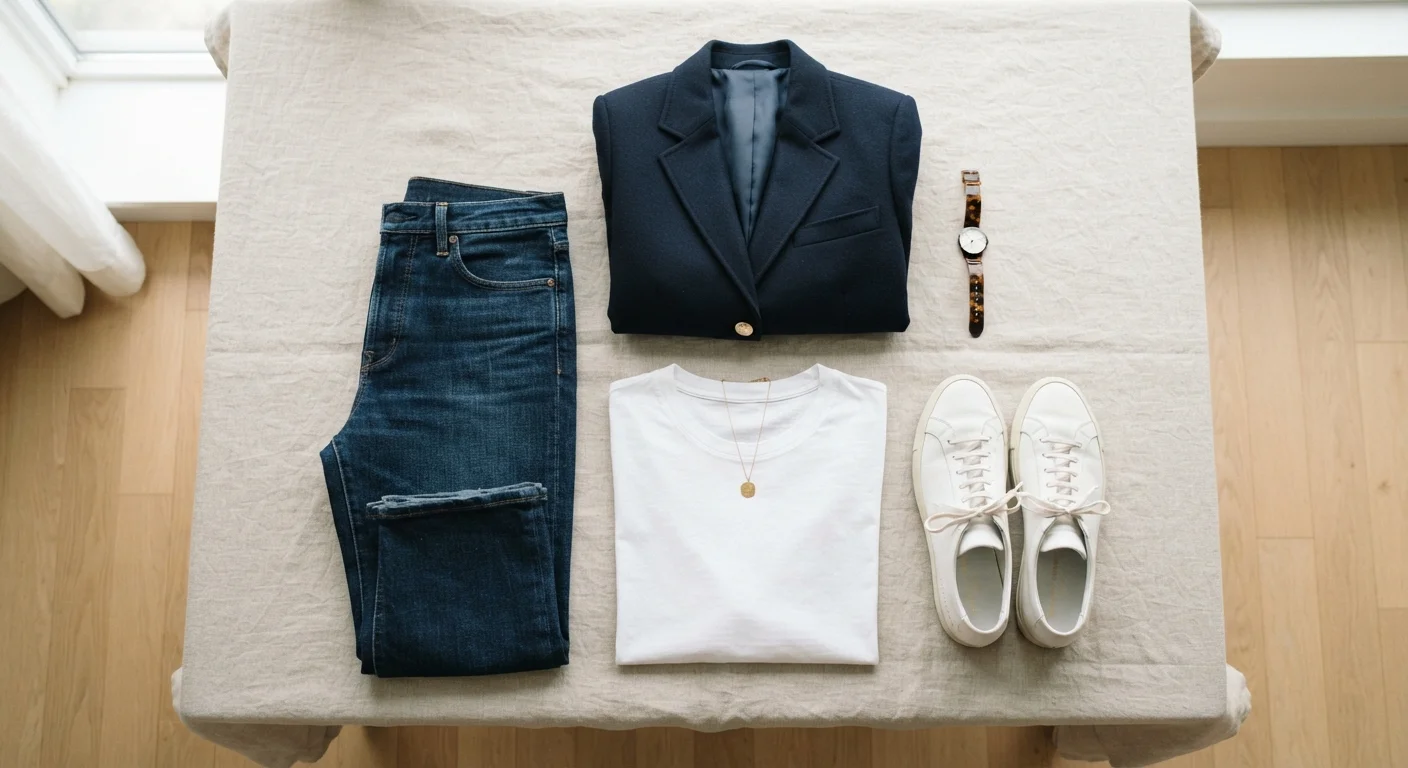
Dark Jeans + Plain Tee + Structured Layer
This is the closest thing fashion has to a universal answer. Dark-wash jeans read more polished than light or distressed styles, a plain tee (crew or V-neck, fitted or relaxed) keeps the base clean, and a structured layer — blazer, chore coat, or zip-up bomber — ties the look together without effort. The formula handles everything from casual Fridays to dinner out. Swap sneakers for loafers to shift the register up; keep them on to stay relaxed.
Dark jeans and a plain tee become genuinely versatile the moment you add one structured layer.
Monochromatic Neutrals with Texture Variation
Wearing one neutral color head-to-toe — camel, grey, navy, olive, cream — creates an effortlessly put-together look that requires zero color-matching anxiety. The key to keeping it from looking flat is varying the fabric weight and texture: a ribbed knit top over wide-leg trousers in a woven fabric, for example. Tonal dressing also makes proportions easier to manage, since there's no color break at the waist drawing attention to fit issues. Thinking about fit and proportion in a practical way helps you get the most out of this formula.
One neutral color worn head-to-toe eliminates color-matching stress — just vary the textures.
Tailored Trousers + Relaxed Knit + Clean Sneakers
This formula works because it balances structure and ease — the tailored trouser brings polish, the relaxed knit (a lightweight crewneck, a fine-gauge turtleneck, or an oversized cardigan) softens the whole look, and clean white sneakers keep it accessible. It reads smart-casual in most American workplaces. If your office leans more conservative, understanding where casual and business casual actually diverge will help you calibrate.
Tailored trousers paired with a relaxed knit hit the smart-casual sweet spot without trying too hard.
Midi Dress or Skirt + Fitted Base Layer + Flat Boot
A midi-length skirt or dress is one of the most versatile silhouettes available — it works across seasons, body types, and settings. Adding a fitted base layer (a slim tank, a ribbed long-sleeve) tucked in or layered under addresses warmth and proportion simultaneously. A flat ankle or knee boot anchors the outfit and avoids the dressed-up formality that heels introduce. This formula adapts from grocery run to gallery opening with minimal adjustment.
A midi silhouette plus a fitted layer and flat boot handles more occasions than almost any other combination.
Overshirt or Flannel + Fitted Tee + Well-Fitting Chinos
An overshirt worn open functions as a lightweight jacket and adds visual structure without a blazer's formality. Pair it over a fitted tee — not boxy, not paper-thin — with chinos in khaki, olive, or slate, and you have a clean, grounded look that works for weekends, casual offices, and most social settings. The formula is particularly forgiving on fit because the open overshirt creates a vertical line that's flattering across a wide range of builds.
An open overshirt worn as a layer creates a vertical line that's flattering and effortlessly structured.
All-Black with One Intentional Detail
All-black outfits are reliable precisely because they remove all color decisions — but the trap is looking flat or underdone. The fix is one intentional detail: an interesting belt, a shoe with a subtle texture, a bag in a contrasting material, or a single piece with architectural cut. The detail doesn't need to be loud; it just needs to be chosen rather than defaulted to. This formula is especially useful for evening plans that arise last-minute.
All-black works best when one deliberately chosen detail prevents it from reading as an afterthought.
Print Piece + Two Solid Neutrals
If you own printed pieces but rarely reach for them because you don't know what to pair them with, this formula solves it: let the print be the single focal point and build the rest of the outfit in solids pulled from the print's own color palette. A floral blouse with olive, rust, and cream? Reach for your cream trousers and rust flats — no guesswork required. This approach also prevents the pattern-clashing territory explored in pattern mixing, which has its own logic when you're ready for it.
Let the print lead and pull your solids directly from the colors already living inside it.
Making the Formulas Work for You
Formulas are starting points, not mandates. The goal is to reach for them on autopilot until getting dressed feels like something you've solved rather than something you tackle fresh each day. Once a formula becomes muscle memory, it's easy to riff on — swapping textures, adjusting proportions, or nudging the formality level up or down depending on the day.
Start with Two or Three Formulas
Rather than memorizing all seven at once, identify two or three that match pieces you already own and wear them on rotation for a few weeks. Familiarity builds confidence faster than variety. Once a formula feels automatic, adding a new one is easy — and you'll start noticing how the same logic applies to pieces you already own but haven't been using.
For a deeper look at how fit affects every formula you try, this plain-language breakdown of clothing fit explains what tailored, relaxed, and oversized actually mean in practice. And if you want to build a wardrobe where every piece feeds into multiple formulas, the capsule wardrobe concept is worth understanding — it's a system, not a trend.