

Key Takeaways
- A capsule wardrobe is built around versatility, not minimalism for its own sake.
- Fewer, well-chosen pieces typically generate more usable outfit combinations than a stuffed closet.
- The right capsule is personal — it reflects your actual life, not an idealized one.
- Neutral foundations and a handful of accent pieces form the core of most capsule systems.
- Getting dressed becomes faster and less stressful when every item already works together.
Capsule Wardrobe
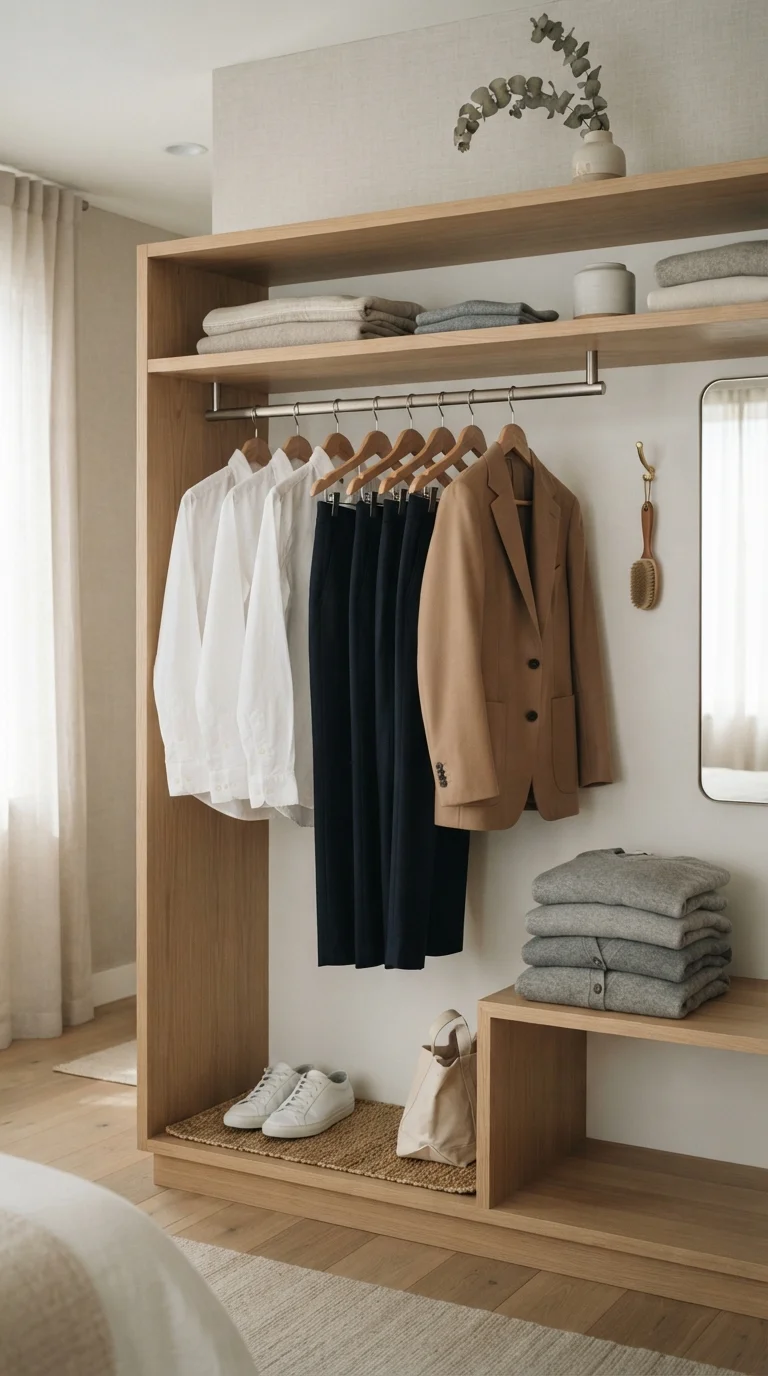
A capsule wardrobe is a curated collection of a relatively small number of clothing pieces that work seamlessly together to create a wide variety of outfits. Every item is chosen deliberately — for fit, versatility, and compatibility with the rest of the collection. The goal isn't to own the least possible, but to own only what you actually use.
The term was coined by London boutique owner Susie Faux in the 1970s and later popularized by designer Donna Karan's '7 Easy Pieces' collection in 1985, though modern interpretations vary widely in size and philosophy.
The Problem a Capsule Wardrobe Actually Solves
The average American closet holds far more clothing than its owner regularly wears. Research from various consumer behavior studies suggests a significant portion of most wardrobes goes untouched for months or years. Yet the experience of staring at a packed closet and feeling like you have nothing to wear is almost universal.
This is the paradox a capsule wardrobe is designed to break. The problem usually isn't too few clothes — it's too many that don't work together. Impulse purchases, trend-driven pieces, and items bought for occasions that never quite materialized all accumulate, fragmenting the closet into isolated items that resist combination. If you recognize this cycle, getting dressed with a full closet that feels empty is worth exploring.
A capsule wardrobe addresses the root cause: incompatibility. When every item you own coordinates with several others, the math changes dramatically in your favor.
~20%
Of wardrobe items worn regularly
Consumer behavior research consistently suggests most people regularly wear only a small fraction of the clothes they own, though exact figures vary by study.
2+ hrs
Weekly time lost to outfit decisions
Surveys on morning routines have found that many adults spend significant weekly time on clothing decisions, contributing to daily stress and decision fatigue.
30 pieces
Typical capsule wardrobe size
Style educators commonly cite 25–50 items as a functional capsule range, with 30 often cited as a practical starting point for four-season climates.
How a Capsule Wardrobe Is Actually Built
The structure of a capsule wardrobe follows a simple logic: a foundation of versatile, neutral-leaning basics forms the core, and a smaller set of accent pieces adds personality and variation. Think of it as a ratio — roughly 70–80% reliable workhorses, 20–30% items that make things interesting.
The foundation layer typically includes well-fitting trousers or jeans, plain tees and shirts in 2–3 neutral tones, a structured jacket or blazer, a versatile dress or two, comfortable but polished footwear, and outerwear suited to your climate. These pieces appear repeatedly across different outfits because they're designed to.
The accent layer is where personal style lives — a printed blouse, a bold-colored sweater, statement shoes, or accessories that shift an outfit's tone without requiring a whole new wardrobe around them. The accent items should still coordinate with your foundation pieces; they just do it with more flair.
Outfit formulas are the natural output of this system. When your closet is built this way, combinations like a navy tee, tan trousers, and white sneakers happen automatically — because every element was chosen to work together.
Start With What You Already Wear
Before buying anything, spend a week noting which pieces you naturally reach for. Those items are the seed of your capsule. Build outward from them rather than starting from scratch — it's faster, cheaper, and far more likely to reflect how you actually live.
Why It Works: The Outfit Math
Here's where the counterintuitive part kicks in. A capsule of 30 well-chosen, interchangeable pieces can realistically produce hundreds of outfit combinations. A closet of 100 disjointed items might yield only the same 10 or 12 outfits you cycle through anyway.
The reason is combinatorial range. If 8 bottoms each pair cleanly with 10 tops, that's 80 combinations before you factor in layers, shoes, or accessories. Contrast that with 30 tops that each work with only 2 bottoms — you've got 60 combinations total, and the variety feels thin in practice.
This is also why the capsule approach reduces decision fatigue. When you know everything works together, choosing an outfit becomes less of a test and more of a preference. That shift in daily experience — from stressful to effortless — is what makes people loyal to the system once they've tried it.
Building One That Actually Fits Your Life
The most common mistake people make with capsule wardrobes is building one based on aspirational living rather than actual lifestyle. A wardrobe full of tailored workwear isn't a capsule — it's a costume — if you work from home three days a week and spend weekends outdoors.
An honest inventory of your real week is the best starting point. How many days do you dress for an office? For casual errands? For social occasions? Your capsule should reflect that distribution, not an idealized version of it.
Color cohesion matters, but it doesn't mean everything has to be beige. If your personal style runs toward saturated color, build a capsule around a consistent palette of colors that play well together. The neutral vs. colorful wardrobe debate has more than one right answer. And if you're starting from zero, a practical approach to building a wardrobe on a realistic budget can make the process far less overwhelming.
The capsule wardrobe isn't a rigid formula — it's a framework. Get the foundation right for your actual life, and getting dressed becomes one of the easier parts of your day.
“Style is a way to say who you are without having to speak. A smaller wardrobe doesn't restrict that — it clarifies it.”
— Susie Faux, London boutique owner and originator of the capsule wardrobe concept