

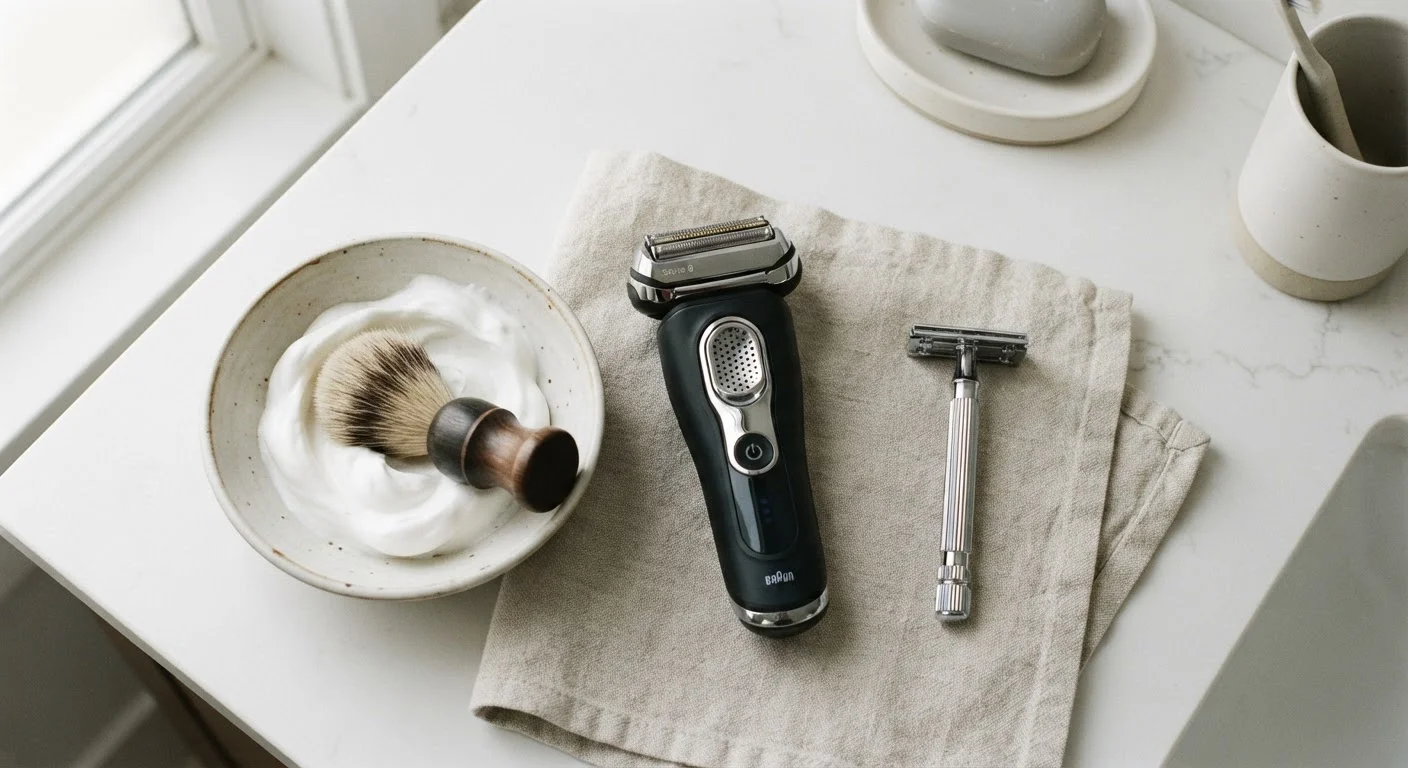
Key Takeaways
- Electric razors generally cause less skin irritation, making them a solid choice for sensitive skin types.
- Manual blades typically deliver a closer shave but require more technique and prep to avoid razor burn.
- Upfront cost favors manual razors, but long-term costs depend heavily on how often you replace blades or foils.
- Electric razors are faster and more convenient for daily use; manual razors reward a slower, more deliberate routine.
- Skin type, shave frequency, and lifestyle should all factor into your decision.
Option A
Electric Razor
The convenient, skin-gentle everyday option.
Best for: Best for people with sensitive skin, busy mornings, or those who shave frequently without wanting a super-close cut.
Option B
Manual Blade
The precision tool for a close, traditional shave.
Best for: Best for those who want maximum closeness, enjoy a deliberate grooming ritual, or need a smooth finish for special occasions.
If you have sensitive or acne-prone skin
Electric Razor
Electric razors glide above the skin surface rather than scraping directly against it, reducing friction and the likelihood of irritation, bumps, or razor burn.
If you want the closest possible shave
Manual Blade
Multi-blade manual razors cut hair at or just below the skin line, producing a noticeably smoother result that electric shavers rarely match.
If you're always pressed for time in the morning
Electric Razor
Most electric razors work on dry skin with no prep, making them ideal for quick, no-fuss grooming before heading out the door.
If you're on a tight short-term budget
Manual Blade
Disposable and cartridge razors have a low entry price, though ongoing blade replacement costs can add up over time.
If you struggle with ingrown hairs regularly
Electric Razor
Because electric razors don't cut as close to the follicle, they're less likely to trigger the ingrown hairs common with very close blade shaving.
How Each Method Actually Works
Understanding the mechanics helps explain why these two tools feel so different on skin. An electric razor uses oscillating or rotating blades housed behind a thin metal foil or guard. Hair is guided in but skin stays largely protected from direct blade contact. A manual razor, by contrast, drags one or more exposed blades across the skin surface, slicing hair flush — sometimes below — the skin line.
That fundamental difference shapes everything: closeness, irritation risk, required prep, and overall shaving experience. Neither method is objectively superior — they're optimized for different priorities. For a deeper look at how these tools affect your skin beyond the shave itself, see what changes beyond the shave.
| Criterion | Electric Razor | Manual Blade |
|---|---|---|
| Closeness of shave | Moderate — above skin line | Very close — at or below skin line |
| Skin irritation risk | Generally lower | Higher without proper technique |
| Upfront cost | Higher | Lower |
| Ongoing maintenance cost | Foil/head replacement annually | Regular blade/cartridge replacement |
| Time required | Fast — dry shave possible | Longer — prep and rinse needed |
| Best skin type | Sensitive, dry, or acne-prone | Normal to resilient skin |
| Ingrown hair risk | Lower | Higher, especially on curly hair |
Skin Sensitivity and Irritation Risk
Skin irritation is one of the biggest deciding factors for most shavers. Manual blades — especially multi-blade cartridges — pass repeatedly across the skin, which can strip away the outermost protective layer and trigger redness, razor burn, or bumps. People with coarse, curly hair are particularly prone to ingrown hairs after close blade shaving.
Electric razors reduce that friction significantly. Because the foil or rotary guard separates blade from skin, there's less opportunity for micro-abrasion. That said, electric shavers aren't irritation-free — dull foils, pressing too hard, or shaving too infrequently can still cause discomfort. If skin irritation is already a concern in your routine, understanding what's triggering it is a smart first step before switching tools.
Technique Matters as Much as the Tool
Switching razors won't automatically fix skin problems if underlying habits — like shaving against the grain aggressively or using a dull blade — remain unchanged. Both electric and manual shavers perform best when blades or foils are replaced on schedule, skin is clean before shaving, and pressure is kept light. Small technique adjustments often make a bigger difference than the razor itself.
Cost, Convenience, and Long-Term Upkeep
Manual razors win on initial cost — a quality handle with replaceable cartridges is far cheaper to buy upfront than a mid-range electric shaver. But blade replacement adds up: frequent shavers can spend a meaningful amount annually on cartridges. Electric razors carry a higher upfront price, with replacement foils or heads needed every 12–18 months depending on use.
Convenience is where electric shavers pull ahead clearly. Dry shaving with no cream, no rinsing, and no mirror required is a real time-saver. Manual shaving done properly — warm water, quality lather, careful strokes — takes noticeably longer but can feel like a genuine grooming ritual rather than a chore. Your lifestyle and how much you value that routine matters as much as the numbers.
~12–18 mo
Typical electric shaver head replacement interval
Manufacturers generally recommend replacing foils or rotary heads every 12 to 18 months for optimal performance and hygiene.
30–60 sec
Time saved per shave with a dry electric shave
Skipping warm-up, lather application, and post-rinse can meaningfully reduce grooming time for daily shavers.
Which One Is Right for Your Skin Type?
Oily or resilient skin can generally handle either method well. Dry or sensitive skin types tend to fare better with electric razors, since less direct blade contact means less moisture stripping. If you shave daily, electric shavers reduce cumulative skin stress over time. If you shave a few times a week and take your time, a sharp manual blade with proper prep — warm water, a hydrating lather, and light pressure — can deliver excellent results without significant irritation.
Pairing your shaving routine with good skin prep also matters. Regular exfoliation can reduce the dead skin buildup that makes shaving harder and increases the chance of ingrown hairs, regardless of which razor you use. And for troubleshooting specific shaving problems like razor burn or ingrown hairs, the tool is just one piece of the puzzle.
This article is for general informational purposes only. If you experience persistent skin reactions or irritation, consult a qualified dermatologist or healthcare professional.