

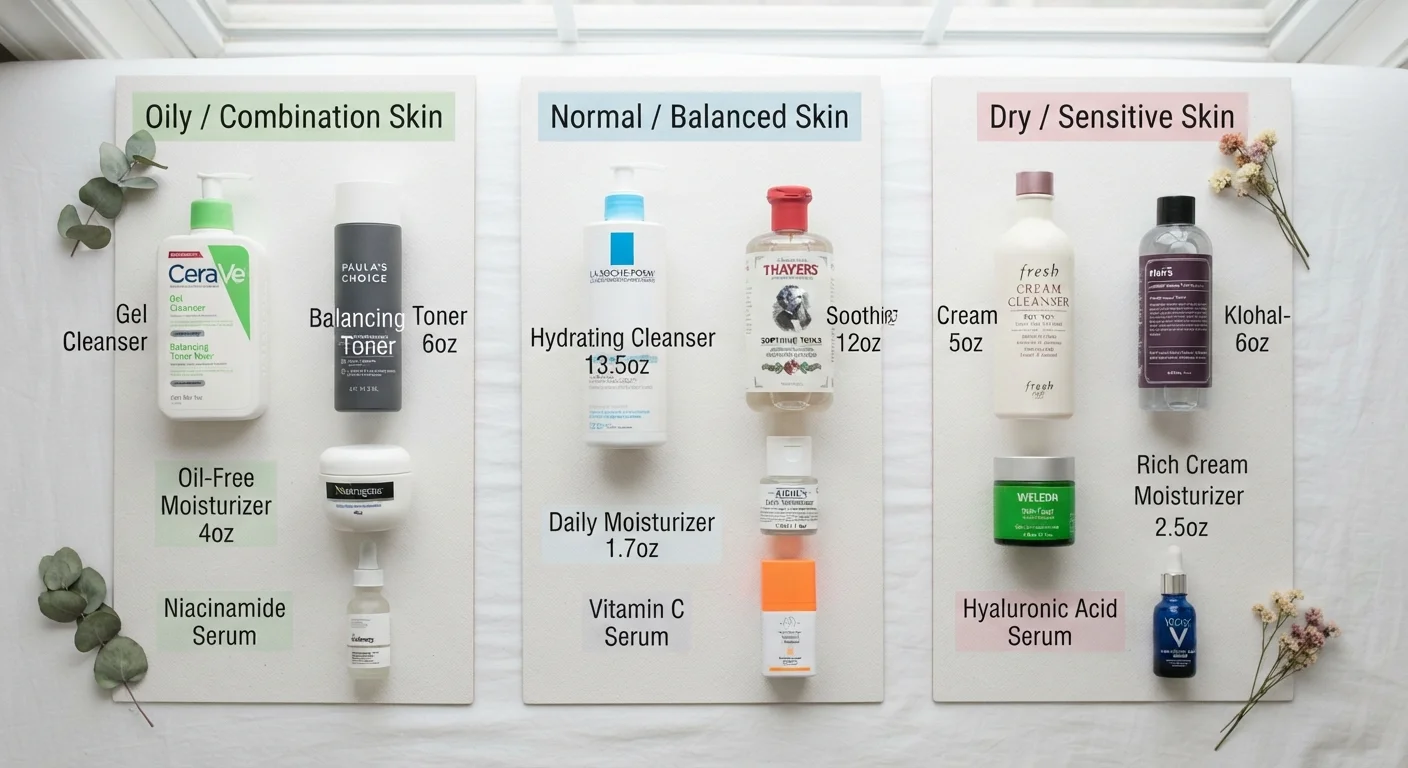
Key Takeaways
- Dry skin needs richer moisture barriers and gentle, non-stripping cleansers to stay comfortable.
- Oily skin benefits from lightweight, non-comedogenic products rather than harsh drying formulas.
- Combination skin requires a zone-specific approach — treating the T-zone differently from drier areas.
- Sensitive skin thrives with fragrance-free, minimal-ingredient formulas and careful patch testing.
- Skin type can shift seasonally, so routines should be reassessed throughout the year.
Our Verdict
No single grooming routine works for everyone, and that's actually good news — it means small, targeted adjustments can deliver noticeably better results. Understanding your skin type is the clearest shortcut to a routine that actually works without wasted effort or money on products that fight your skin instead of supporting it.
| Best for | Recommended |
|---|---|
| Those experiencing tightness, flaking, or dullness | Dry Skin Routine |
| Those dealing with midday shine, enlarged pores, or frequent breakouts | Oily Skin Routine |
| Those with a shiny forehead and nose but dryness on the cheeks | Combination Skin Routine |
| Those prone to redness, stinging, or reactions to new products | Sensitive Skin Routine |
Why Your Skin Type Changes Everything
Walk down any drugstore skincare aisle and the sheer volume of options can feel paralyzing. The real issue isn't that there are too many products — it's that most people are buying for the wrong skin type. Using a heavy cream on oily skin or a foaming cleanser on dry skin can actively worsen what you're trying to fix.
Skin type is determined by how much sebum (oil) your skin naturally produces, along with factors like sensitivity thresholds and moisture retention. Dermatologists generally recognize four main types: dry, oily, combination, and sensitive — though overlap is common. Checking in with your skin as seasons shift matters too; as explored in why your skin feels different in winter, climate and indoor heating can genuinely alter your skin's behavior. For a broader look at common misconceptions, skin type myths that may be ruining your routine is worth a read.
| Dry | Oily | Combination | Sensitive | |
|---|---|---|---|---|
| Cleanser type | Cream or oil-based | Gentle gel or foam | Mild gel cleanser | Fragrance-free, soap-free |
| Moisturizer weight | Rich, occlusive cream | Lightweight, oil-free | Zone-specific application | Simple, minimal-ingredient |
| Exfoliation frequency | Once or twice weekly | Two to three times weekly | As needed per zone | Once weekly or less |
| Key concern | Flakiness and tightness | Shine and congestion | Inconsistent texture | Redness and reactivity |
| Sunscreen preference | Moisturizing SPF formula | Non-comedogenic SPF | Lightweight SPF overall | Mineral/physical SPF |
| Biggest mistake to avoid | Over-cleansing or hot water | Harsh drying cleansers | One-size-fits-all products | Fragranced or alcohol-based products |
Grooming for Dry and Oily Skin: Opposite Needs, Equally Valid
Dry skin produces less sebum than average, leaving it prone to flakiness, tightness after washing, and a dull appearance. The grooming priority here is sealing in moisture without disrupting the skin barrier. That means cream or oil-based cleansers over foaming formulas, applied with lukewarm (never hot) water. Thicker moisturizers containing ingredients like glycerin or hyaluronic acid help attract and hold water in the skin. Exfoliating gently once or twice per week — rather than daily — prevents buildup without stripping what little natural oil is present.
Oily skin overproduces sebum, leading to shine, enlarged-looking pores, and a tendency toward breakouts. A common mistake is reaching for harsh, drying cleansers — which can actually trigger the skin to produce even more oil in response. A gentle, water-based gel or foaming cleanser used twice daily, paired with a lightweight, oil-free moisturizer, keeps sebum in check without overcorrecting. Regular exfoliation (two to three times per week) helps prevent pores from becoming congested. If shaving is part of your routine, shaving irritation is often tied to skin type — oily skin is especially prone to trapped-hair bumps.
The Blotting Test for Skin Type
If you're unsure of your skin type, try this: wash your face with a gentle cleanser, pat dry, and wait one hour without applying any products. Then press a plain sheet of blotting paper against your forehead, nose, and cheeks separately. Oily skin leaves clear oil marks on all areas; dry skin leaves none; combination produces oil only from the T-zone; and sensitive skin may show redness or feel uncomfortable after even a gentle wash.
Combination and Sensitive Skin: Nuance Is the Strategy
Combination skin is arguably the trickiest to manage because it behaves differently across zones of the face — typically oilier through the T-zone (forehead, nose, and chin) and drier or normal on the cheeks. A single product rarely works uniformly. The practical approach: use a mild gel cleanser overall, then apply a lighter moisturizer to the T-zone and a slightly richer one to drier areas. Multi-masking — applying different masks to different zones — is a legitimate strategy, not just a social media gimmick.
Sensitive skin reacts more readily to external triggers: fragrance, alcohol, certain preservatives, and even physical friction. The guiding principle is minimalism. Shorter ingredient lists, fragrance-free and dye-free formulas, and consistent patch testing before introducing anything new are non-negotiable habits. Avoid over-exfoliating, which can compromise the skin barrier and amplify reactivity. Physical sunscreens (mineral-based) are generally better tolerated by sensitive skin than chemical formulas.
Whatever your skin type, building your routine on a solid foundation of core tools and products matters. The grooming kit essentials guide covers what's actually worth having on hand. And for more approachable skincare guidance, Beauty Basics is a useful resource to explore.
Don't Self-Diagnose Persistent Skin Issues
Chronic redness, persistent acne, eczema-like patches, or skin that doesn't respond to standard care may signal an underlying condition rather than just a skin type mismatch. A board-certified dermatologist can help distinguish between routine skin types and conditions that benefit from professional treatment. This article provides general educational information only and is not a substitute for personalized medical advice.