

Key Takeaways
- A starter grooming kit needs only a handful of well-chosen tools — not a cabinet full of them.
- Quality tools maintained properly outlast cheap replacements and deliver more consistent results.
- Pairing the right products with your tools simplifies daily routines and reduces guesswork.
- Organizing your kit keeps habits consistent and avoids the chaos of scattered supplies.
Start here
Why a Dedicated Grooming Kit Matters
Next
The Core Tools Every Kit Needs
Then
Essential Products to Pair with Your Tools
Finally
Organizing and Maintaining Your Kit
Why a Dedicated Grooming Kit Matters
Scattered supplies across three drawers, a razor borrowed from a roommate, and a mystery moisturizer from two years ago — sound familiar? Building a dedicated grooming kit puts an end to that friction. When everything you need lives in one place, maintaining a consistent routine stops feeling like a chore.
A proper kit also signals intention. You're not improvising — you're building a repeatable system that keeps you looking polished without spending hours in the bathroom. For beginners especially, having the right tools on hand removes the guesswork and makes it far easier to develop good habits. For a clear picture of what a daily routine actually looks like in practice, see our daily grooming routine overview.
Dopp bag
A small toiletry bag — typically zipper-close and water-resistant — used to store and transport personal grooming supplies.
Non-comedogenic
A product formulated to avoid clogging pores, making it less likely to cause breakouts — especially relevant for oily or acne-prone skin.
pH-balanced cleanser
A face wash formulated to match the natural acidity of healthy skin, helping to clean effectively without disrupting the skin's protective barrier.
Boar-bristle brush
A hairbrush made with natural bristles that help distribute scalp oils through the hair shaft, adding shine and reducing frizz.
Ingrown hair
A hair that curls back or grows sideways into the skin after shaving or trimming, sometimes causing redness or a small bump.
The Core Tools Every Kit Needs
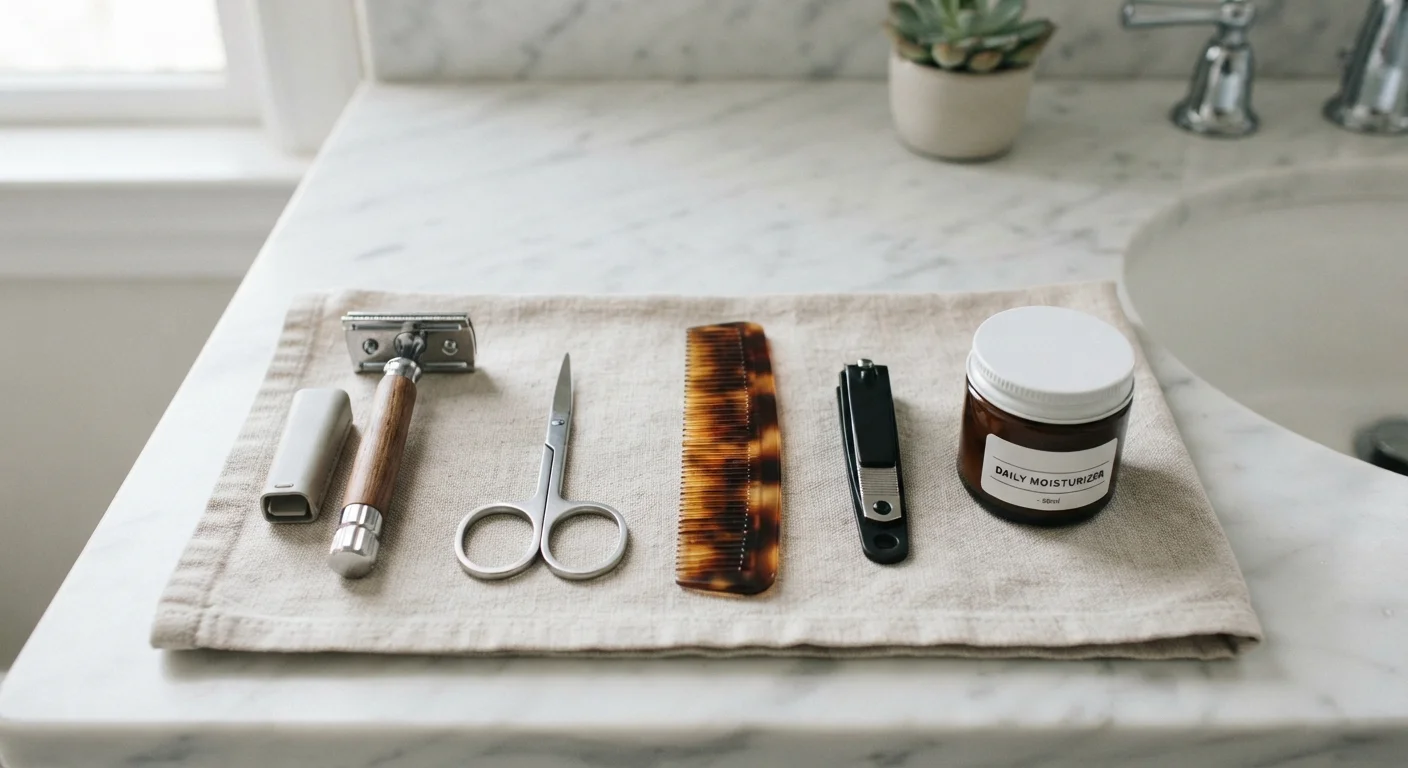
You don't need a professional setup — you need a focused one. These are the tools that earn their place in any starter kit:
- Razor or trimmer: Whether you prefer a clean shave or managed stubble, a reliable razor or electric trimmer is non-negotiable. Choose based on your shaving style and skin sensitivity.
- Nail clippers: One pair for fingers, one for toes — keeping nails trimmed is one of the most immediate signals of personal care. A small nail file rounds out this category.
- Comb or brush: A wide-tooth comb suits most hair textures for detangling; a boar-bristle brush excels at distributing natural oils in longer or finer hair. Match the tool to your hair type.
- Tweezers: Useful for brow maintenance and dealing with ingrown hairs — a slant-tip pair offers the most control for everyday use.
- Small grooming scissors: Ideal for trimming nose hair, brow strays, and mustache edges that clippers can't finesse.
If facial hair is part of your look, you'll want to go deeper on upkeep. Our guide on beard care from week one covers what to expect as you grow it out.
Start with versatile tools, not specialty ones
When building from scratch, resist the urge to buy task-specific gadgets for every grooming need. A quality all-purpose trimmer with adjustable guards, for example, handles beard, nose, and ear hair in one unit. Build depth only after you've used your basics long enough to know what you actually need more of.
Essential Products to Pair with Your Tools
Tools do the mechanical work; products support skin and hair health between uses. Keep this list tight — a few effective products beat a shelf of half-used ones:
- Facial cleanser: A gentle, pH-balanced cleanser removes oil, sweat, and debris without stripping moisture. Use morning and evening.
- Moisturizer: Hydration matters regardless of skin type. Lightweight gel formulas suit oilier skin; creamier options work better for dry or combination skin.
- Shaving cream or gel: A proper shaving lubricant reduces friction and irritation significantly compared to using soap or plain water.
- Lip balm: An often-overlooked staple. Dry, cracked lips are immediately noticeable and easily prevented.
- Deodorant or antiperspirant: Personal preference on formula — the goal is consistent daily use.
Your skin type shapes which of these products will actually work for you day-to-day. For a more detailed breakdown, see our article on grooming routines across skin types. And if you're ready to go further with skincare specifically, building your first skincare routine from scratch is a natural next step.
Avoid overloading on products early on
Introducing too many new products at once makes it difficult to identify what's working or causing irritation. Start with the core four — cleanser, moisturizer, shaving lubricant, and lip balm — and add gradually. If a new product causes redness, itching, or breakouts, stop using it and consult a dermatologist if symptoms persist.
Organizing and Maintaining Your Kit
The best grooming kit is one you actually use — and that starts with smart organization. A small dopp bag or drawer organizer keeps tools visible and accessible. Consider separating daily-use items (razor, moisturizer, deodorant) from weekly-use tools (tweezers, scissors) so your morning routine stays fast.
Maintenance matters too. Rinse blades and combs after every use, disinfect metal tools periodically with rubbing alcohol, and store everything dry to prevent rust or bacterial buildup. Tools that are cared for perform better and last longer.
Once your kit is established, avoiding clutter becomes a real advantage. Our guide on grooming without cluttering your bathroom offers a practical checklist to keep things streamlined. For a handy reference on terminology and techniques as you build your knowledge, the personal grooming quick-reference guide is worth bookmarking.
This article is for general informational purposes only. Product suitability varies by individual skin type and personal health factors. Consult a dermatologist or healthcare professional if you have specific skin concerns or sensitivities.