

Key Takeaways
- Breaking grooming into daily micro-tasks and one weekly session prevents any single day from feeling overwhelming.
- Most grooming essentials — skin, nails, hair, brows — can be handled in under 45 minutes total per week.
- Consistency matters more than perfection; a simple repeatable routine beats an elaborate one you abandon.
- Timing tasks strategically — morning vs. night — can make each step more effective and less rushed.
- A compact, well-chosen set of grooming tools covers nearly every need without cluttering your bathroom.
What you will need
Why a Weekly Structure Works Better Than a Daily Checklist
Most grooming routines fail not because people don't care, but because they're designed as all-or-nothing daily checklists. Miss one day and the whole thing feels broken. A weekly framework fixes that by sorting tasks into two categories: daily anchors (quick, non-negotiable steps that take under five minutes) and weekly sessions (the slightly longer tasks that don't need everyday attention).
This structure accommodates real life — early meetings, long commutes, tired evenings — without letting things slide into neglect. For a broader overview of what personal grooming actually encompasses, our head-to-toe grooming reference is a useful starting point.
Stack Grooming Tasks With Existing Habits
The easiest way to stay consistent is habit stacking — attaching grooming steps to things you already do, like applying moisturizer right after brushing your teeth. You remove the decision-making friction entirely, which is what usually derails routines.
It also helps to be honest about what actually needs daily attention (skin protection, basic hygiene) versus what people over-schedule out of anxiety. Brows don't need daily grooming. Nails don't either. Recognizing this frees up real time and mental energy.
What Your Weekly Grooming Schedule Actually Looks Like
Here's how the routine stacks up across a typical week. Daily tasks anchor the morning: cleanse, moisturize, SPF. Facial hair maintenance slots in every one to two days depending on growth. One weekday evening — paired with something passive like watching TV — handles nails, brows, and any ear or nose hair. One wash includes a scalp-reset shampoo. And Sunday evening is a two-minute readiness check.
What you will need
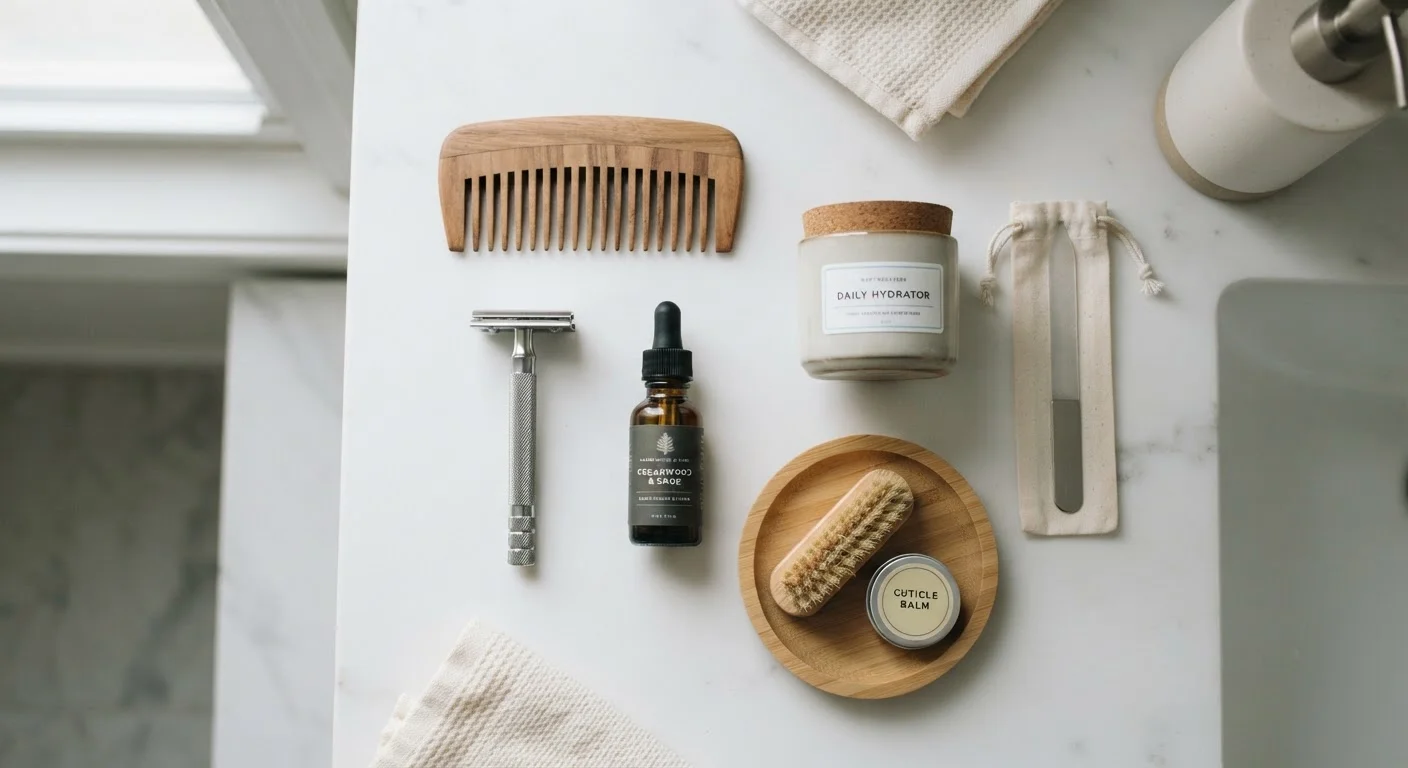
The tools required are minimal. Our grooming kit guide covers exactly what to keep on hand without overcrowding the bathroom cabinet.
Facial razor or electric trimmer
Handles facial hair maintenance — shaving, edging, or trimming — depending on your preferred style.
Nail clippers and a nail file
Keeps fingernails and toenails trimmed and smooth during the weekly nail-care session.
Moisturizer with broad-spectrum SPF
Hydrates skin and provides daily UV protection as part of the morning routine.
Brow grooming tool (spoolie or small scissors)
Tidies brow shape weekly to maintain a polished, defined look with minimal effort.
Clarifying or scalp-focused shampoo
Used once or twice per week to remove buildup without stripping hair of natural oils.
Exfoliating scrub or washcloth
Supports a once-weekly skin refresh that removes dead cells and keeps complexion looking even.
Lock in your daily 5-minute morning skin routine
Every morning, run through three quick steps: cleanse, moisturize, protect. A gentle cleanser removes overnight buildup; a moisturizer with broad-spectrum SPF does double duty hydrating and shielding. This trio takes under five minutes and forms the non-negotiable foundation of the whole routine. See our stripped-back morning skincare guide for a detailed breakdown of each step.
Handle facial hair every other day (or as needed)
Whether you shave clean, trim a beard, or maintain stubble, every-other-day upkeep prevents the patchy, overgrown look that builds up fast. A quick edge with a trimmer takes two to three minutes. Full shaving sessions are typically five to seven minutes. Adjust frequency to your growth rate — the goal is intentional, not obsessive.
Dedicate one weekday evening to nails and brows
Pick a low-key evening — Sunday works well for many people — to handle the tasks that don't need daily attention. Clip and file fingernails, clip toenails every two to three weeks, and use a spoolie to brush up brows before snipping any strays. The whole session rarely exceeds ten minutes. Our nail care basics guide walks through proper technique if you want to refine your approach.
Schedule a weekly hair and scalp reset
Most people wash their hair two to three times per week, but adding one dedicated scalp-focus wash — using a clarifying or scalp-specific formula — helps remove product buildup and keep the scalp healthy. This is also a good time to address any ear or nose hair with a small trimmer, a detail that's easy to overlook. For a full picture of commonly missed grooming moments, check our guide on grooming habits that tend to slip.
Add a once-weekly skin refresh
Once a week, swap your regular cleanse for a gentle exfoliation step using a washcloth or a mild exfoliating product. This helps remove dead skin cells and keeps your complexion looking even-toned. Follow immediately with your usual moisturizer. This step fits naturally into your dedicated evening grooming session and adds only a few minutes to the clock.
Do a quick Sunday evening review
Take two minutes before the week starts to scan for anything that slipped through. Check brows, nails, and any facial hair growth. Restock anything running low — running out of moisturizer mid-week breaks the habit chain. Think of it less as a chore and more as a five-second audit. Understanding when to do each part of your grooming routine can also help you plan this review more effectively.
Skin Changes Deserve a Professional Eye
This article covers general grooming habits for healthy skin and hair. It is not medical advice. If you notice unusual changes — persistent rashes, new moles, scalp issues — consult a qualified healthcare professional rather than adjusting your grooming routine alone.
If you're preparing for something high-stakes — a job interview or a big event — it's worth nudging some of these sessions a day or two earlier so everything looks fresh rather than just-done. Our pre-event grooming checklist walks through the specifics.
Don't Skip Sun Protection
Moisturizing without SPF leaves skin vulnerable to UV damage even on cloudy days. Make a broad-spectrum SPF a non-negotiable part of your morning routine rather than an afterthought.
Finally, be patient with yourself during the first couple of weeks. Habit formation takes repetition, not perfection. Even completing three out of six steps consistently puts you well ahead of having no routine at all. For a balanced view of what you gain — and what you might give up — by going more minimal, see our piece on the trade-offs of a minimal grooming routine.
This article is for general informational purposes only and does not constitute medical advice. Consult a qualified healthcare professional for any skin, scalp, or health concerns.