

| Practical minimum RAM | 6 GB for smooth multitasking |
| Standard refresh rates | 60 Hz, 90 Hz, 120 Hz |
| Common internal storage options | 64 GB, 128 GB, 256 GB, 512 GB |
| Battery capacity range (typical) | 3,000 mAh – 6,000 mAh |
Why Spec Sheets Feel Overwhelming
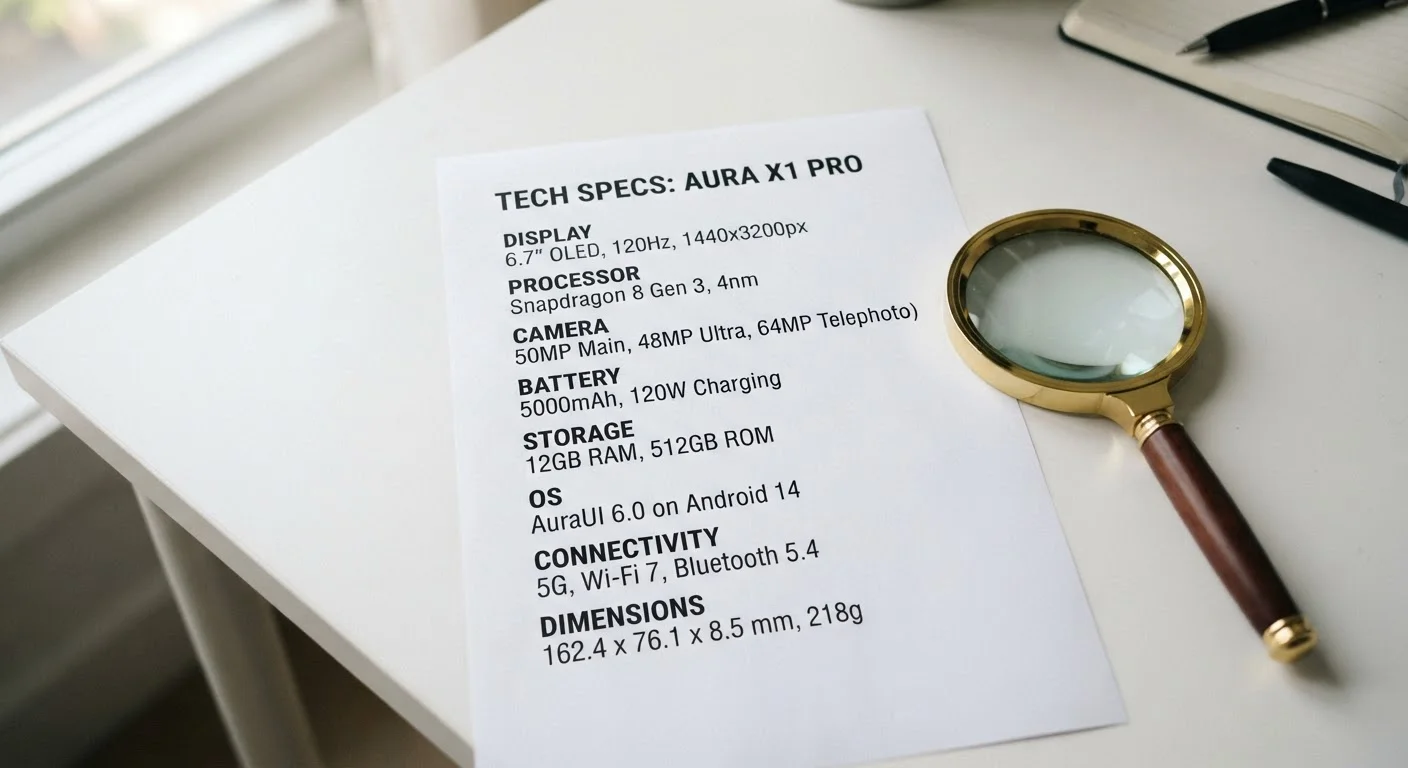
Pick up any phone's spec sheet and you'll see a wall of numbers: a processor with eight cores running at 3.2 GHz, 12 GB of LPDDR5 RAM, a 6.7-inch AMOLED display with a 120 Hz refresh rate. For most people, none of that means anything useful on its own.
The problem is that manufacturers list every measurable detail, not just the ones that affect your day-to-day experience. This guide cuts through the noise by explaining what each major spec actually does in real life — and flagging the numbers you can largely ignore.
If you're also weighing a used or refurbished device, see our guide to refurbished phone grades and warranties for additional context on what those listings mean.
| Practical minimum RAM | 6 GB for smooth multitasking |
| Standard refresh rates | 60 Hz, 90 Hz, 120 Hz |
| Common internal storage options | 64 GB, 128 GB, 256 GB, 512 GB |
| Battery capacity range (typical) | 3,000 mAh – 6,000 mAh |
The Specs That Genuinely Affect Daily Use
RAM (Random Access Memory) — RAM is short-term workspace. When you switch between apps, RAM keeps them loaded so you don't wait for them to reload. On a modern phone, 6 GB is a reasonable floor for smooth multitasking; 8 GB or more provides extra headroom if you keep many apps open simultaneously. More RAM doesn't make a single app run faster — it just means the phone juggles more apps without dropping any.
Processor (SoC) — The system-on-chip handles everything the phone computes. A faster, newer chip means quicker app launches, smoother video, and better support for demanding tasks like gaming or photo editing. Chip generations matter more than core count; an eight-core chip from several years ago will often underperform a newer four-core design.
Display refresh rate — Measured in Hz (hertz), this is how many times per second the screen redraws itself. A 60 Hz screen refreshes 60 times per second; a 120 Hz screen refreshes 120 times. The difference is most visible when scrolling — higher refresh rates feel noticeably smoother. The trade-off is slightly higher battery consumption.
Battery capacity (mAh) — Milliamp-hours indicate how much charge the battery holds. Bigger numbers generally mean longer life, but software efficiency and screen brightness matter just as much. A phone with a large battery but a power-hungry processor can still drain quickly.
Storage (internal) — This is where your apps, photos, and files live. 128 GB is a practical minimum for most users; heavy photo-takers or gamers often benefit from 256 GB or more. Check whether the phone supports expandable storage via a microSD card slot, since not all do.
RAM
Short-term memory that keeps apps loaded while you use them. More RAM allows smoother multitasking but doesn't speed up a single app on its own.
SoC (System-on-Chip)
The main processor of a smartphone, combining CPU, GPU, and other components on one chip. It governs overall speed, efficiency, and feature support.
Refresh rate (Hz)
How many times per second the display redraws its image. Higher rates (90 Hz, 120 Hz) make scrolling and animations appear smoother.
mAh (Milliamp-hours)
The unit used to measure battery capacity. A higher mAh rating generally means the battery holds more charge, though actual battery life also depends on software and screen usage.
Storage (eMMC / UFS)
The permanent space where apps, photos, and files are saved. UFS is a faster storage standard than eMMC and improves app load times.
Aperture (f-number)
A measure of how wide a camera lens opens to let in light. A lower f-number (e.g., f/1.8) means more light reaches the sensor, which typically improves low-light photography.
Specs You Can Usually Skim Past
Core count — Eight cores sounds twice as powerful as four, but most everyday tasks use only one or two cores at a time. Manufacturers often include efficiency cores (low-power) alongside performance cores. The total number tells you little without knowing which generation the chip belongs to.
Megapixels — A 108 MP camera does not automatically take better photos than a 50 MP camera. Sensor size, aperture, and the phone's image-processing software have a larger impact on real-world photo quality than the raw pixel count.
Network bands — Unless you travel internationally or live in an area with unusual carrier infrastructure, the specific list of supported bands rarely affects your experience. For a deeper look at what connectivity specs mean day-to-day, see what 5G actually means for everyday phone use.
Specs Don't Tell the Whole Story
Two phones with identical specs on paper can feel very different to use. Software optimization, build quality, and how the manufacturer tunes the hardware all play a significant role. Whenever possible, try to find hands-on impressions from sources that test phones in real-world conditions rather than relying on spec sheets alone.
For a broader look at how spec sheets across all consumer electronics can mislead as easily as they inform, reading between the lines of a product specification sheet is a useful companion read.