

| Sensor Types Covered | ECG, SpO2, Skin Temperature |
| ECG Method Used in Wearables | Single-lead (wrist-to-finger circuit) |
| Typical Healthy SpO2 Range | 95%–100% (General clinical reference range for adults at rest) |
| Skin Temperature vs. Core Temp | Skin reads lower; tracks relative change, not absolute |
| Primary Use of Wearable ECG | Screening for irregular rhythms such as AFib (U.S. FDA has cleared certain consumer ECG features for AFib detection) |
What These Sensors Actually Do
Smartwatches and fitness trackers have moved well beyond step counting. Many now carry three distinct health sensors — ECG, SpO2, and skin temperature — that each measure something fundamentally different about your body. Understanding what each one actually detects helps you interpret the numbers your device reports and recognize when a reading is worth a follow-up conversation with a clinician.
It also helps you shop smarter. Not every wearable includes all three, and the presence of a sensor doesn't guarantee it works the same way across devices. Before committing to any wearable, review the sensor set and ecosystem fit so you know exactly what you're getting.
| Sensor Types Covered | ECG, SpO2, Skin Temperature |
| ECG Method Used in Wearables | Single-lead (wrist-to-finger circuit) |
| Typical Healthy SpO2 Range | 95%–100% (General clinical reference range for adults at rest) |
| Skin Temperature vs. Core Temp | Skin reads lower; tracks relative change, not absolute |
| Primary Use of Wearable ECG | Screening for irregular rhythms such as AFib (U.S. FDA has cleared certain consumer ECG features for AFib detection) |
ECG: Mapping Your Heart's Electrical Activity
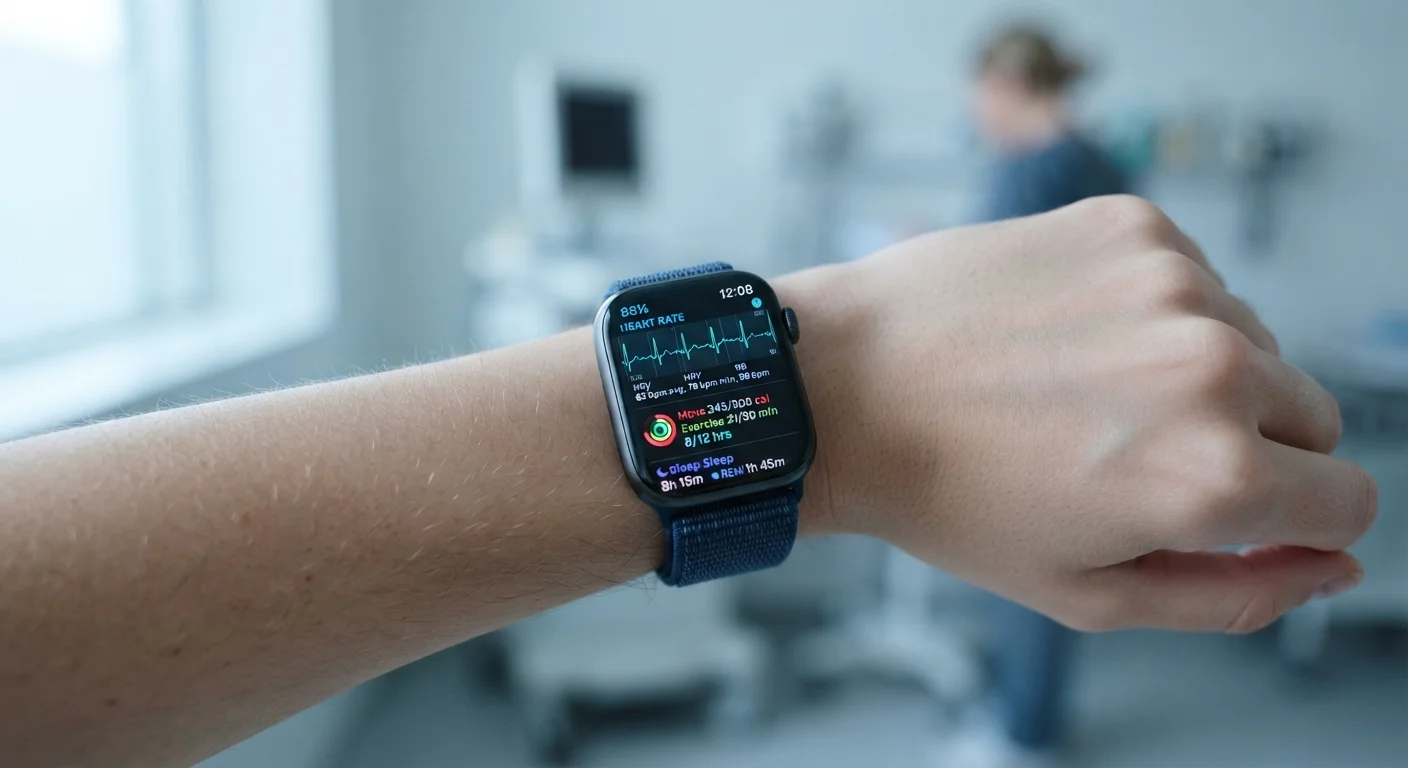
An electrocardiogram (ECG) — sometimes written EKG — records the electrical signals that trigger each heartbeat. In a clinical setting, a full 12-lead ECG uses electrodes placed across the chest, limbs, and torso. Wearable ECGs use a simpler approach: you press a fingertip against a sensor on the device while wearing it, completing an electrical circuit between your wrist and hand. The device captures a single-lead reading — a narrower but still meaningful snapshot.
What a wearable ECG can detect: irregular heart rhythms such as atrial fibrillation (AFib), where the upper chambers of the heart beat chaotically. Regulators in several countries, including the U.S. Food and Drug Administration, have cleared certain consumer ECG features specifically for AFib detection. What it cannot do: diagnose all heart conditions, replace a multi-lead clinical ECG, or provide a physician's interpretation. Think of it as a screening signal, not a diagnosis.
ECG (Electrocardiogram)
A recording of the electrical signals that coordinate each heartbeat. Wearable ECGs capture a single-lead version by completing a circuit between the wrist and a fingertip.
SpO2
Peripheral oxygen saturation — the estimated percentage of hemoglobin in your blood that is bound to oxygen. Consumer wearables estimate this using light sensors on the skin.
Photoplethysmography (PPG)
A non-invasive optical technique that uses light to detect blood volume changes beneath the skin. It is the core technology behind most wearable heart rate and SpO2 sensors.
Atrial Fibrillation (AFib)
An irregular heart rhythm in which the upper chambers beat chaotically rather than in sync with the lower chambers. Some consumer ECG features are cleared to flag potential AFib.
Skin Temperature
The surface temperature at the wrist as measured by a wearable device. It differs from core body temperature and is most useful when tracked as a change from a personal baseline.
Single-Lead ECG
A simplified ECG that records electrical signals along one pathway through the body. Consumer wearables use this method, which captures less information than a clinical 12-lead ECG.
SpO2: Estimating Blood Oxygen Saturation
SpO2 stands for peripheral oxygen saturation — the estimated percentage of hemoglobin in your blood that is carrying oxygen. Wearables measure this using photoplethysmography (PPG), a technique that shines red and infrared light through the skin and measures how much is absorbed. Oxygenated and deoxygenated blood absorb these wavelengths differently, allowing the sensor to estimate saturation.
In healthy adults at rest, SpO2 typically reads between 95% and 100%. Consumer wearables are generally less precise than a clinical pulse oximeter, particularly during movement or when the fit is loose. Skin tone, ambient light, and circulation can also affect accuracy. SpO2 readings on wearables are best understood as trend indicators — useful for noticing sustained dips, not for making clinical decisions on their own. For a broader look at what wearable metrics really measure, see our full metric decoder.
1 lead
ECG channels in most consumer wearables
Clinical ECGs use 12 leads; wearables use a single-lead circuit for basic rhythm screening.
±2–3%
Typical SpO2 accuracy margin for consumer devices
Consumer-grade pulse oximeters and wearables generally carry a stated accuracy window of ±2–3 percentage points under ideal conditions.
Skin Temperature: Tracking Baseline Shifts
Skin temperature sensors measure the surface temperature at the wrist, not your core body temperature. Core temperature — the internal reading a thermometer gives — runs significantly higher than skin temperature and fluctuates with metabolism, environment, and time of day. Wearables that include this sensor are designed to track relative change rather than report an absolute number you'd compare to a standard 98.6 °F (37 °C) reference.
The practical value lies in detecting deviations from your personal baseline. A consistent overnight rise can indicate your body is fighting an infection before you feel symptomatic. Some platforms use temperature shifts as one input in menstrual cycle tracking. Wearable sleep research benefits from this data point too — explore how sleep tracking interprets physiological signals for a fuller picture.
Because skin temperature varies with exercise, ambient conditions, and device fit, a single anomalous reading carries limited meaning. Patterns across multiple nights are far more informative than any single data point.
This article provides general technology and health information for educational purposes only. It is not medical advice. Always consult a qualified healthcare professional for any health concerns or before acting on data from a wearable device.