
Key Takeaways
- Private sellers typically list cars at lower prices, but buyers take on more risk and handle all paperwork themselves.
- Dealerships offer financing, warranties, and consumer protections that private sales don't provide.
- A pre-purchase inspection by an independent mechanic is essential regardless of which route you choose.
- Paperwork complexity and fraud risk are higher in private transactions - verification steps matter.
- Your credit access, risk tolerance, and mechanical knowledge should shape which path makes sense for you.
Our Verdict
Neither route is universally better - the right choice depends on your budget, how much due diligence you're willing to do, and how much protection you want built in. Private sales can yield genuine savings for buyers who do their homework, while dealerships offer structure and recourse that first-time buyers or those financing a purchase often need.
| Best for | Recommended |
|---|---|
| Buyers financing a purchase or wanting warranty coverage | Dealership |
| Experienced buyers paying cash who want to maximize value | Private Seller |
| First-time buyers who want guided paperwork and consumer protections | Dealership |
| Buyers with mechanical knowledge or access to a trusted mechanic | Private Seller |
The Core Trade-Off: Price vs. Protection
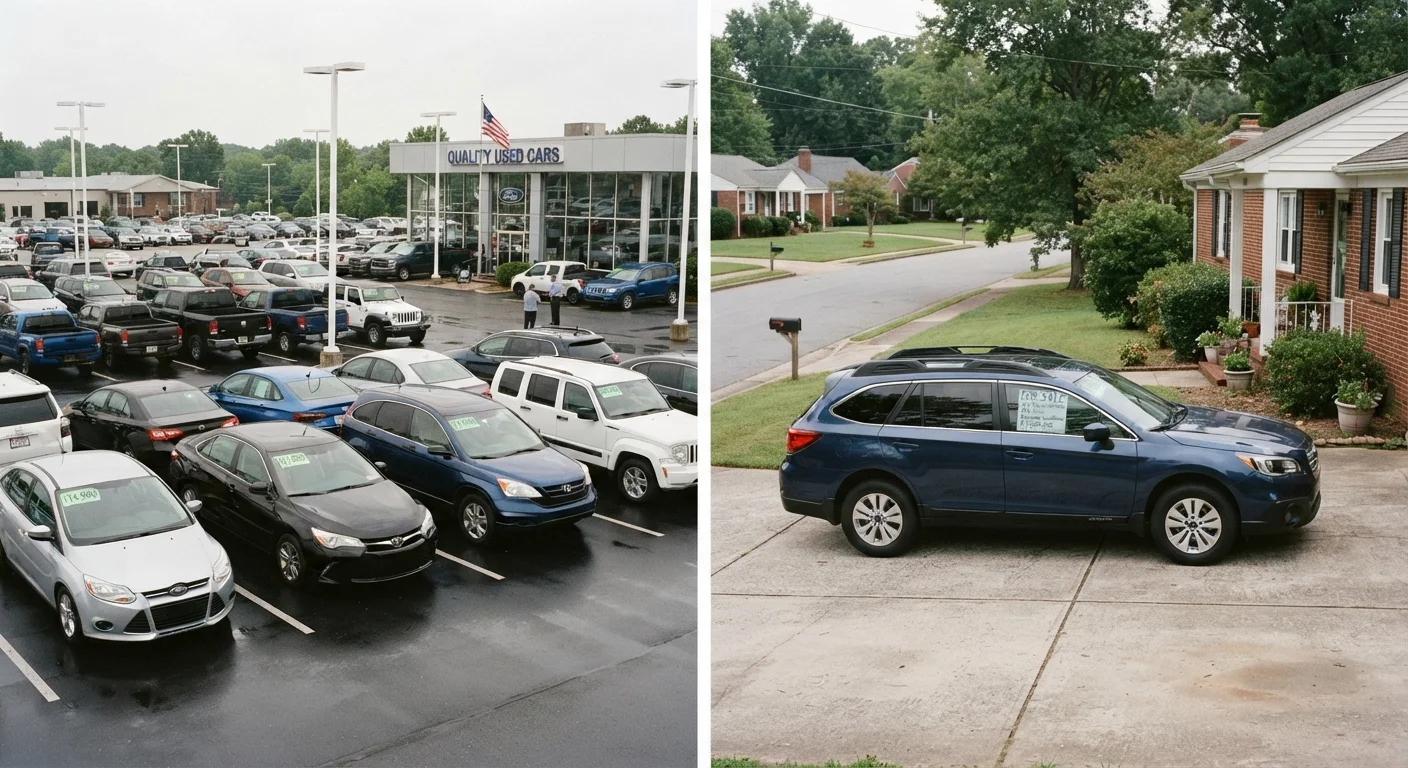
When shopping for a used car, your two primary channels are a licensed dealership or a private individual selling their own vehicle. Each comes with a fundamentally different risk-and-reward profile.
Private sellers tend to ask less for the same vehicle. They have no lot overhead, no sales staff, and no certification costs to recoup. That gap can be meaningful - sometimes several thousand dollars on mid-range vehicles. But lower sticker prices come with fewer guardrails. A private sale is generally sold "as-is," meaning once you hand over a check and sign the title, the car is your responsibility entirely.
Dealerships, particularly franchised ones, operate under state licensing requirements and are subject to consumer protection laws that don't apply to private parties. They can arrange financing on-site, offer certified pre-owned (CPO) programs with limited warranties, and must comply with FTC used-car rules including the Buyers Guide disclosure form. You pay for that structure - both in higher vehicle prices and, often, in add-on fees at closing.
For a broader look at how purchase decisions stack up against leasing, see our comparison of leasing vs. buying.
What Each Path Actually Looks Like
Buying from a private seller usually starts on a platform like Craigslist, Facebook Marketplace, or a dedicated auto-listing site. You contact the owner directly, arrange a meeting, and negotiate face-to-face. If you agree on a price, you handle the title transfer, bill of sale, and any state registration yourself - often at your local DMV. Financing must be arranged in advance through a bank or credit union, since private sellers don't offer loans.
Buying from a dealership involves a sales process, often with a dedicated finance office. The dealer handles title paperwork and can often register the vehicle on your behalf (for a fee). Financing is offered in-house, though you should always compare those rates against what your own bank or credit union offers before signing. CPO vehicles go through a manufacturer-defined inspection process and include some warranty coverage - but the scope varies widely by brand and program.
| Private Seller | Dealership | |
|---|---|---|
| Typical price | Often lower | Typically higher |
| Financing options | Arrange your own in advance | In-house financing available |
| Warranty coverage | None (as-is sale) | CPO or limited warranty possible |
| Paperwork handled by | Buyer (DMV, title transfer) | Dealer (often for a fee) |
| Consumer protections | Minimal legal recourse | State licensing and FTC rules apply |
| Fraud risk | Higher - verify title and VIN carefully | Lower, but add-on pressure is common |
| Best suited for | Experienced cash buyers | First-timers or financing buyers |
Whatever route you take, a professional pre-purchase inspection is non-negotiable. Our pre-purchase inspection checklist walks through exactly what to look for before you commit.
Risk Factors You Need to Weigh
Private sales carry higher fraud risk. Title washing (obscuring a salvage or flood history), odometer rollback, and undisclosed liens are real concerns. Before meeting anyone, pull a vehicle history report using the VIN, verify the seller's name matches the title, and confirm there are no outstanding loans on the vehicle. If the seller is reluctant to allow an independent inspection, treat that as a red flag.
Always Verify the Title Before Paying
Never hand over money without confirming the seller holds a clean, lien-free title in their name. A VIN check through a reputable vehicle history service can surface salvage designations, flood damage, and odometer discrepancies. If a private seller can't produce the physical title at the time of sale, do not complete the transaction - this is one of the most common setups for title fraud.
Dealerships are not risk-free either. Add-on products - extended warranties, paint protection, GAP insurance - are often pushed aggressively in the finance office and can significantly inflate your total cost. Knowing what you want before you sit down matters. Our guide on negotiating at a dealership without feeling outmatched lays out how pricing and add-ons actually work.
For a thorough walkthrough of what to inspect and verify in any used-car transaction, see buying a used car: what to inspect, ask, and verify.
Making the Right Call for Your Situation
If you're financing, a dealership is almost always the more practical route - coordinating an auto loan from a third-party lender for a private purchase is doable, but it adds steps and some lenders won't finance older or high-mileage vehicles at all.
If you're paying cash and have the mechanical knowledge (or access to a trusted independent mechanic), a private sale can represent genuine value. The savings potential is real, but so is the homework required: title verification, lien checks, inspection costs, and doing your own DMV paperwork.
First-time buyers, in particular, benefit from the structured environment of a dealership - not because dealers are inherently more trustworthy, but because the paperwork, disclosure requirements, and dispute pathways are more clearly defined. Our first-time buyer's guide to car ownership covers the full picture from financing to insurance.
This article is for general informational purposes only and does not constitute financial, legal, or professional advice. Vehicle values, fees, and consumer protection laws vary by state. Consult qualified professionals for decisions specific to your situation.