

Why Maintenance Intervals Matter
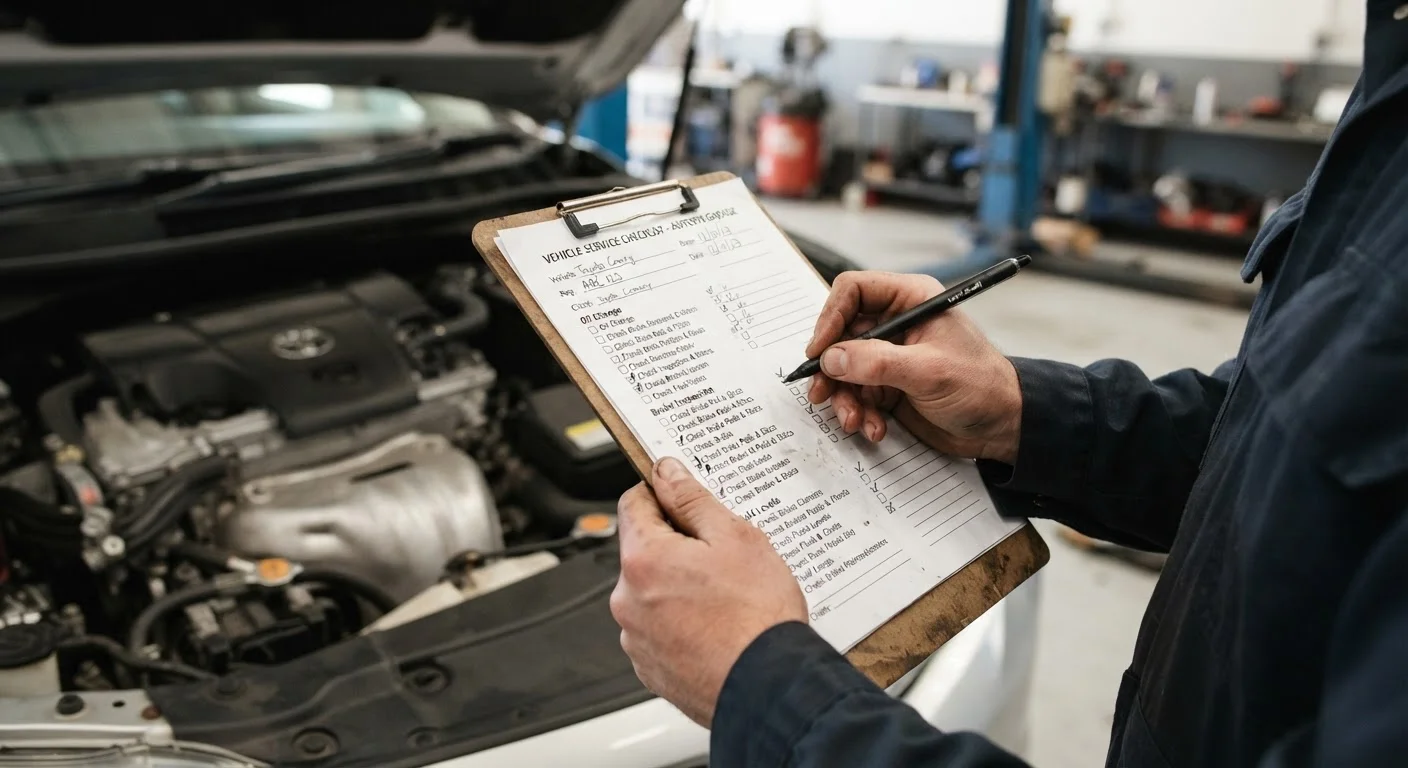
Most vehicle problems don't happen suddenly - they build up gradually when small maintenance tasks get skipped or delayed. Following your car's service schedule isn't just about keeping a warranty valid; it's about avoiding the kind of compounding failures that turn a $40 fluid change into a $2,000 repair bill.
General intervals listed here are common industry benchmarks, but your owner's manual is the authoritative source for your specific vehicle. Driving conditions also matter: frequent short trips, extreme temperatures, towing, or stop-and-go traffic often call for more frequent service than the standard schedule suggests.
Before any long drive, it's worth running through a full check - see the pre-trip vehicle safety checklist for a practical walkthrough of what to inspect.
Common Service Items and Typical Intervals
The table below covers the most frequently discussed maintenance items and their commonly cited service windows. Treat these as general starting points, not hard rules.
| Service Item | Typical Interval | Notes |
|---|---|---|
| Engine Oil & Filter | Every 5,000-10,000 miles | Varies by oil type (conventional vs. synthetic) and vehicle. Check your manual. |
| Tire Rotation | Every 5,000-7,500 miles | Often done alongside oil changes. Promotes even tread wear. |
| Cabin Air Filter | Every 15,000-25,000 miles | More often if driving in dusty or high-pollen environments. |
| Engine Air Filter | Every 15,000-30,000 miles | Inspect annually; replace when visibly dirty or clogged. |
| Brake Inspection | Annually or every 12,000 miles | Pads, rotors, and fluid should all be checked. Replace pads when worn to ~2-3mm. |
| Tire Pressure Check | Monthly | Pressure changes with temperature; check cold, before driving. |
| Battery Test | Every 2-3 years | Most batteries last 3-5 years. Test before winter in cold climates. |
| Coolant Flush | Every 30,000-50,000 miles | Some modern vehicles extend this significantly - verify in your manual. |
| Spark Plugs | Every 30,000-100,000 miles | Wide range depending on plug type (copper vs. iridium/platinum). |
| Transmission Fluid | Every 30,000-60,000 miles | Automatic and manual transmissions differ. Some sealed units require no routine service. |
| Brake Fluid | Every 2-3 years | Absorbs moisture over time, which lowers its boiling point and reduces braking effectiveness. |
| Serpentine Belt | Every 60,000-100,000 miles | Inspect for cracking or fraying; a failed belt leaves you stranded. |
The 3,000-mile oil change recommendation that many drivers still follow is outdated for most modern vehicles. The truth behind common oil change myths explains why that number persists and what intervals actually apply today.
Reading the 30k, 60k, and 90k Milestones
Many automakers structure their maintenance schedules around major service milestones - typically at 30,000, 60,000, and 90,000 miles. These aren't arbitrary; they're designed to cluster multiple service items together so you're not constantly scheduling individual visits.
At 30k, you're generally looking at filters, fluid checks, and an inspection of brakes and belts. At 60k, add spark plugs (on many vehicles), transmission fluid, and a more thorough inspection of rubber components. At 90k, a full recommitment: coolant flush, timing belt replacement on applicable engines, and a comprehensive systems check.
For a plain-language breakdown of what these milestones actually include, the guide to scheduled maintenance intervals is a useful companion reference.