

Key Takeaways
- Your owner's manual - not the internet - is the authoritative source for your vehicle's service schedule.
- Maintenance intervals are based on mileage, elapsed time, or both - whichever comes first.
- The 30k/60k/90k milestones bundle multiple tasks together, not just an oil change.
- Skipping scheduled service can void portions of your warranty and accelerate component wear.
- Severe driving conditions (short trips, towing, extreme heat or cold) often require more frequent service.
Scheduled Maintenance Intervals
Scheduled maintenance intervals are the mileage or time milestones - such as every 30,000 or 60,000 miles - at which your vehicle's manufacturer recommends specific service tasks. These intervals are engineered to keep critical systems working safely and efficiently across the life of the vehicle. Think of them as a structured plan for preventing problems before they become expensive or dangerous.
Intervals are typically defined in two tracks: normal driving conditions and severe driving conditions (frequent short trips, towing, extreme temperatures). Most drivers qualify for normal service, but check your manual to confirm.
What the Mileage Numbers Actually Mean
When your service center mentions a "30k service," they're referring to a cluster of maintenance tasks recommended around the 30,000-mile mark. Automakers group tasks this way because many components wear on similar timelines, making it practical to service them together.
Here's a general sense of what each milestone typically covers - though your manual may differ:
- Every 5,000-10,000 miles: Engine oil and oil filter change (interval depends heavily on whether you use conventional or synthetic oil).
- ~30,000 miles: Air filter, fuel filter (on many models), cabin air filter, tire rotation, and a brake inspection.
- ~60,000 miles: Spark plugs (on many engines), transmission fluid, coolant flush, and drive belts inspection.
- ~90,000 miles: Timing belt replacement (if applicable - some engines use a chain), brake fluid flush, and a comprehensive multi-point inspection.
These are starting points, not universal rules. See our guide to common service milestones for a broader reference by task type.
~$1,200
Estimated average annual vehicle maintenance cost
According to AAA's annual driving cost studies, routine maintenance and tires account for a significant share of the total annual cost of vehicle ownership for the average American driver.
35%
Drivers who don't follow their maintenance schedule
Industry surveys have consistently found that a substantial share of American drivers delay or skip recommended service intervals, often citing cost or convenience as the primary reason.
Why the Owner's Manual Is Your Real Authority
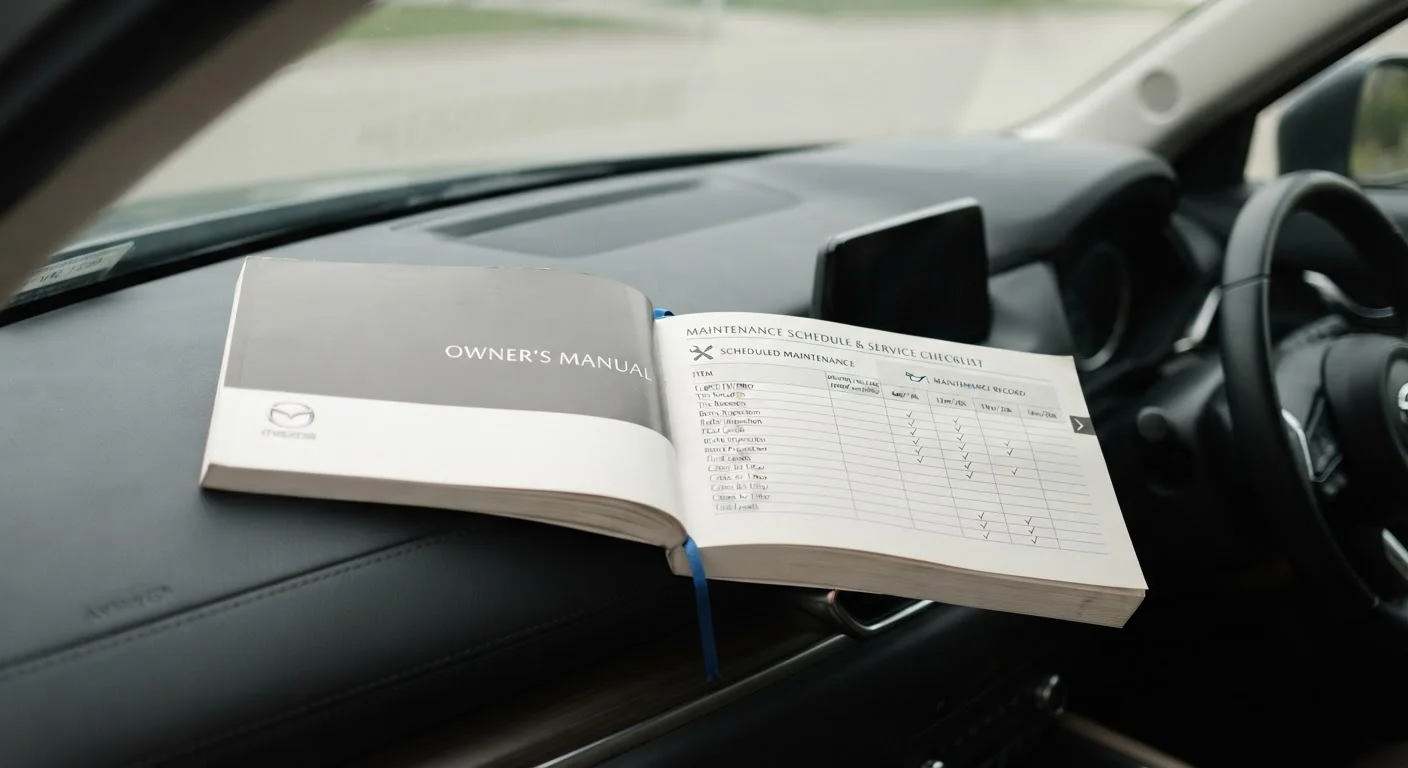
Generic maintenance advice online is a rough guide at best. Your owner's manual contains the maintenance schedule engineered specifically for your vehicle's engine, transmission, and operating environment. It accounts for the exact fluid capacities, approved fluid specifications, and component lifespans your manufacturer tested.
Two cars from the same model year but with different engine options can have meaningfully different schedules. A turbocharged engine may require more frequent oil changes than its naturally aspirated counterpart. A diesel powertrain follows a completely different track.
Photograph Your Manual's Maintenance Pages
Take a photo of the maintenance schedule section in your owner's manual and save it to your phone's camera roll. This gives you instant access when you're at a shop and someone suggests a service - you can quickly verify whether it's actually due for your vehicle at your current mileage.
If you bought your car used and the manual is missing, most automakers offer downloadable versions on their websites, and your state's DMV can sometimes help you obtain one. A dealership can also reference your VIN to pull the correct schedule.
Mileage vs. Time: Which Triggers Service?
Scheduled maintenance is triggered by whichever comes first - mileage or elapsed time. This catches a common oversight among low-mileage drivers who assume their car doesn't need service because they haven't driven much.
Engine oil is the clearest example. Even in a car that sits largely unused, oil breaks down chemically over months. Most manufacturers set a maximum calendar interval (often 12 months) alongside the mileage trigger, so a car driven 3,000 miles in a year still typically needs an annual oil change.
The same logic applies to coolant, brake fluid, and other fluids - they absorb moisture and degrade regardless of miles driven. If your driving is sporadic or you keep a seasonal vehicle, pay close attention to the time-based triggers in your manual.
For a broader look at how preventive upkeep applies to your other major investments, the annual home maintenance calendar illustrates a similar time-based approach to keeping systems in shape.
Dashboard Warnings vs. Scheduled Service
A common misconception is that warning lights serve as your maintenance reminder system. They don't - not fully. Warning lights respond to active problems or sensor triggers, not to gradual wear accumulation. Your transmission fluid could be degraded for 20,000 miles before any light appears.
Many modern vehicles include a maintenance reminder system (sometimes called an "oil life monitor") that uses driving data to estimate when service is due. These are useful tools, but they typically track oil life and basic intervals - they're not a substitute for the full scheduled service list in your manual.
If a warning light does appear, don't assume it's maintenance-related. Our guide to dashboard warning lights explains what each symbol actually indicates and how urgently you need to act. And if the check engine light comes on, this breakdown of check engine light causes covers when to pull over immediately versus when it's safe to schedule a shop visit.
Keeping Records and Staying on Track
Service records do two jobs: they prove your car has been properly maintained (important if you ever sell it or make a warranty claim), and they help you and your mechanic track what's been done and what's coming due.
Keep a simple log - a folder in your glove box works - with dated receipts for every service. If you go digital, your mechanic's shop management software often stores your history and can email you reminders. Some automakers also maintain service histories tied to your VIN through their apps or owner portals.
For first-time owners trying to build good habits from the start, this plain-language car ownership guide covers how maintenance fits into the full picture of running a vehicle responsibly.
This article is for general informational purposes only. Consult your vehicle's owner's manual and a qualified mechanic for guidance specific to your make, model, and driving conditions.