

Key Takeaways
- Proportion-based eating guides healthy meals without requiring calorie tracking.
- Half your plate from vegetables and fruit forms the foundation of most established dietary frameworks.
- Protein, whole grains, and healthy fats each play distinct, complementary roles in a balanced meal.
- Consistency across meals matters more than perfection at any single sitting.
- This approach works alongside - not instead of - guidance from a qualified healthcare professional.
What you will need
Why the Plate Method Works Without Counting
Calorie counting is one tool for managing food intake, but it's not the only one - and for many people, the math creates more stress than clarity. The plate method offers a visual, proportion-based alternative grounded in the same established dietary science. Rather than tracking numbers, you use the physical space on your plate as your guide.
This approach draws from widely recognized dietary frameworks, including the USDA's MyPlate guidance, which organizes meals into food groups rather than calorie tallies. The underlying logic is straightforward: if most of your plate contains nutrient-dense foods in sensible proportions, your overall diet is likely to reflect a reasonable nutritional balance - without requiring a spreadsheet.
If you're newer to nutrition concepts in general, it may help to first review a foundational overview of nutrition before diving into the steps below. And if you want a broader introduction to what a balanced plate looks like conceptually, the basics of a balanced plate provides helpful context.
The Plate Method Has Established Roots
The proportion-based approach described here is consistent with the USDA's MyPlate framework and similar guidance from major health organizations. It's designed as general population guidance - not a clinical prescription. If you have a specific health condition, food allergy, or dietary need, a registered dietitian can tailor these principles to your situation.
Step-by-Step: Building Your Balanced Plate
The following steps walk you through constructing a balanced meal using the plate method. The tools you need are minimal:
What you will need
Standard Dinner Plate (9-10 inches)
Acts as your visual portioning guide - no measuring cups or food scale needed.
Nutrition Label Awareness
Helps identify whole-food options and spot highly processed ingredients when shopping.
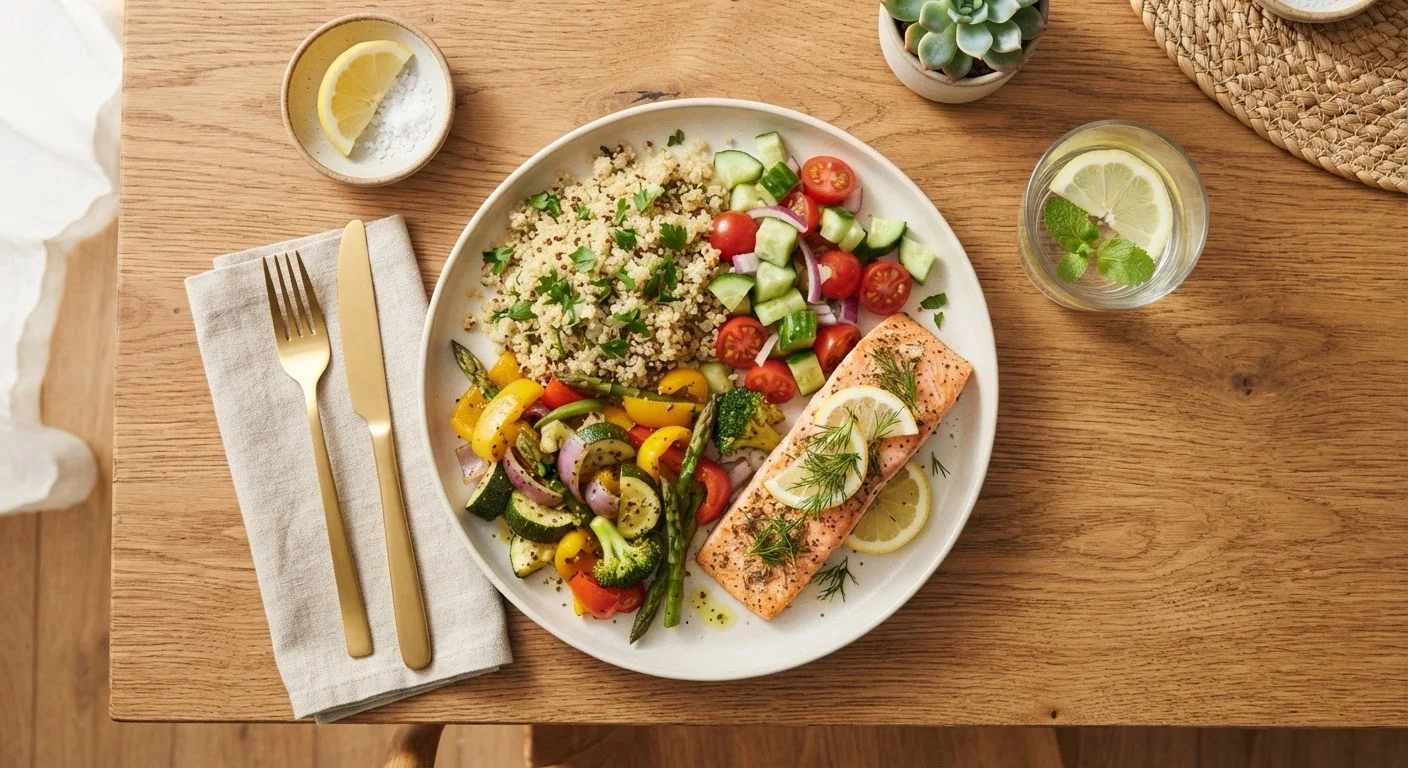
Fill half your plate with non-starchy vegetables and fruit
This is the single highest-impact move you can make. Non-starchy vegetables - think leafy greens, broccoli, peppers, cucumbers, and carrots - are nutrient-dense and high in fiber while contributing relatively few calories. Fruit adds vitamins, natural sweetness, and variety. Aim for color variety across the week, since different pigments generally signal different beneficial compounds.
Dedicate one quarter of your plate to whole-grain or starchy carbohydrates
Whole grains - such as brown rice, quinoa, whole-wheat bread, oats, or corn - provide sustained energy through fiber and complex carbohydrates. Starchy vegetables like sweet potatoes and legumes fit here too. Choosing less-refined options most of the time supports steadier energy levels compared to heavily processed grain products.
Fill the remaining quarter with a quality protein source
Protein supports muscle maintenance, satiety, and numerous bodily functions. Good sources include legumes (beans, lentils, chickpeas), tofu, fish, poultry, eggs, and lean meats. Plant-based proteins do double duty - they also contribute fiber and micronutrients. Variety across the week is more important than any single ideal source.
Add a small amount of healthy fat
Fats are not optional - they support absorption of fat-soluble vitamins (A, D, E, and K) and contribute to satiety. A modest addition of avocado, olive oil, nuts, or seeds completes the meal. "Small" is key: fats are calorie-dense, so a drizzle or a small handful is typically sufficient rather than a large portion.
Choose a low-calorie beverage and a dairy or calcium-rich side if needed
Water, plain sparkling water, or unsweetened tea or coffee are straightforward choices that don't add unnecessary sugar. If dairy works for you, a serving of milk or a calcium-fortified plant alternative can round out your nutrient intake. The U.S. Dietary Guidelines recognize both dairy and fortified plant alternatives as contributors to bone health.
Apply this pattern consistently across meals - not just dinner
The plate method works at breakfast and lunch too, with some natural adjustments. A breakfast bowl with eggs, sautéed spinach, and whole-grain toast fits the same proportions. A lunch salad with legumes and a whole-grain roll mirrors the structure. Consistency across the day and week - rather than perfection at one meal - is what shapes overall dietary quality.
This article is for general informational and educational purposes only and does not constitute medical or dietary advice. Consult a qualified healthcare professional or registered dietitian for guidance specific to your health needs.
Making It Work in Real Life
The plate method is most useful when it becomes a flexible mental template rather than a rigid rule. On days when a full structured meal isn't possible, the same principles still apply directionally - prioritize vegetables when you can, choose whole grains over refined options when the choice is easy, and keep protein present at each meal.
For practical strategies when time is tight, see our guide on eating well on a busy schedule. When you're ready to carry these habits into the grocery store, grocery shopping with nutrition in mind offers a structured approach to making nutritionally sound choices without following a strict diet plan.
This Is General Guidance, Not Medical Advice
The plate method is a helpful framework for most generally healthy adults, but individual nutritional needs vary based on age, activity level, health status, and other factors. People managing diabetes, kidney disease, eating disorders, or other conditions should work with a qualified healthcare provider rather than applying general guidelines independently.
Consult a Professional for Personalized Guidance
This article provides general nutrition education and is not a substitute for personalized medical or dietary advice. If you have questions about your specific nutritional needs, underlying health conditions, or significant dietary changes, consult a registered dietitian or your primary care provider.