

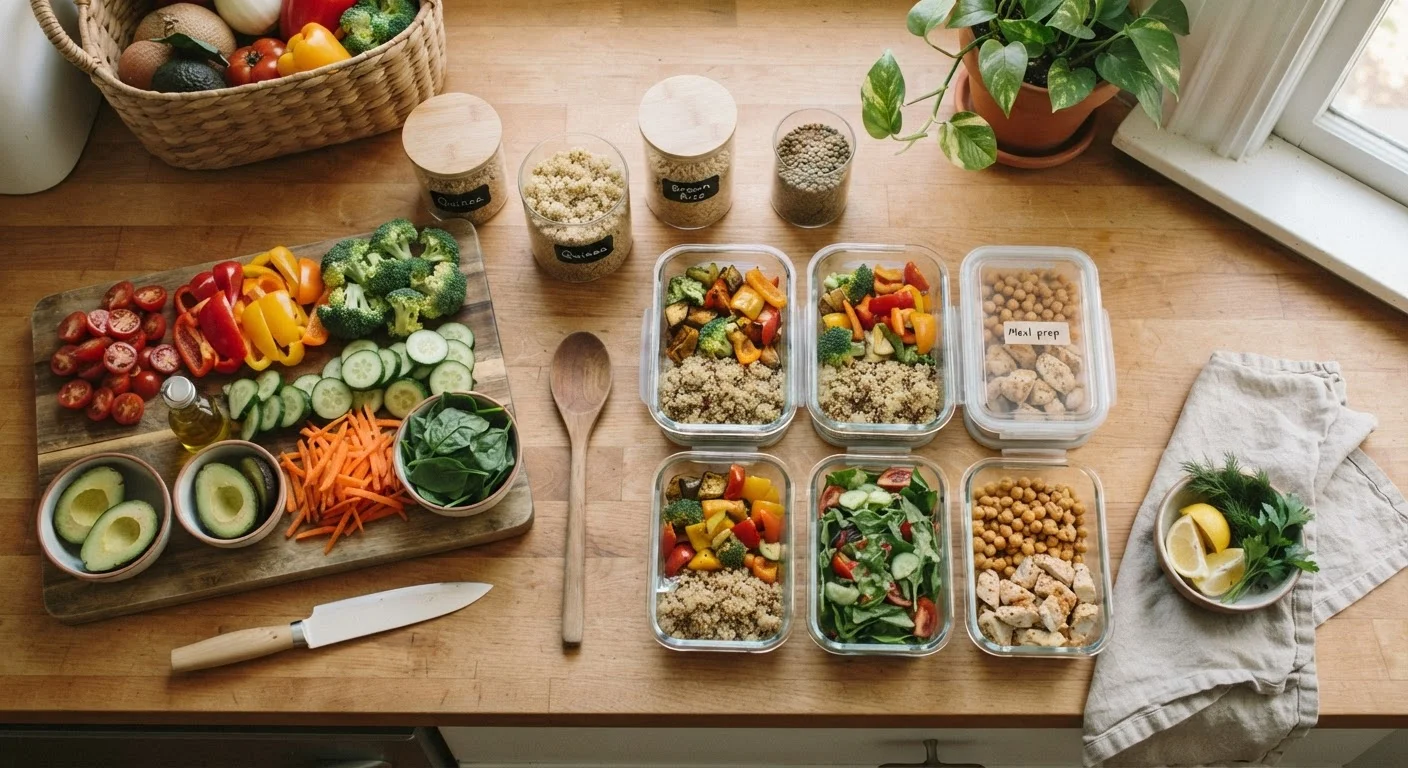
Key Takeaways
- Consistent, simple habits matter more than perfect meals or elaborate cooking routines.
- Stocking a few versatile, nutrient-dense staples dramatically lowers the daily decision burden.
- Planning doesn't require hours - even 15 minutes of weekly thinking ahead pays dividends.
- Most people eat better when they build structure around meals rather than relying on willpower.
- No single food or meal makes or breaks a healthy diet - the overall pattern is what counts.
Why Busy Schedules and Good Nutrition Feel Incompatible
Between work, family, and everything else competing for attention, eating well can feel like one more thing to optimize. Conflicting advice online - cut carbs, eat more protein, never skip breakfast - only adds to the noise. The result for many people is decision fatigue, which too often ends with a fast-food drive-through or skipping meals entirely.
The good news: sound nutrition doesn't require cooking elaborate meals or following a strict plan. What it does require is a handful of consistent, realistic habits. The Daily Health Habits hub offers a broader look at how small daily choices add up - and the same logic applies squarely to food.
This article focuses on evidence-informed principles that hold up even when life gets hectic. No extreme protocols, no guilt - just practical approaches grounded in what nutrition research consistently supports.
Core Practices for Eating Well When Time Is Tight
The following practices aren't rigid rules. Think of them as reliable defaults - the kinds of habits that make nutritious eating much easier without demanding perfection every day.
Keep a small set of versatile staples stocked at all times.
When nutritious ingredients are already at home, healthy meals require far less effort and planning. Staples like canned beans, whole grains, frozen vegetables, and eggs can form the backbone of dozens of quick meals. Reducing the gap between 'nothing to eat' and 'something reasonable' is one of the most effective structural changes a busy person can make.
Anchor your meals around vegetables and a protein source first.
Research consistently shows that diets higher in vegetables and adequate protein support satiety, energy stability, and long-term health. Deciding on a vegetable and a protein before anything else gives your meal a nutritious foundation without requiring calorie counting or complex rules.
Batch-prepare one or two components each week, not full meals.
Full meal prep can feel overwhelming and doesn't suit everyone's palate for leftovers. Preparing just one or two elements - a cooked grain, a chopped vegetable, a boiled batch of eggs - gives you flexible building blocks without the monotony. This approach takes roughly 20 to 30 minutes and pays off across multiple meals.
Choose default 'good enough' meals for your most chaotic days.
Having pre-decided fallback meals for high-stress days removes decision fatigue at the worst possible moment. A 'good enough' meal doesn't need to be perfect - it just needs to be reliable, reasonably nutritious, and fast. This prevents the mental exhaustion that leads to skipping meals or defaulting to less nourishing options.
Eat at somewhat regular intervals rather than waiting until you're very hungry.
Extreme hunger tends to drive faster eating, larger portions, and stronger cravings for high-calorie foods - outcomes that work against most people's nutrition goals. While meal timing is an individual matter, general dietary guidance supports not letting hunger build unchecked. Even a small, balanced snack between meals can help maintain steadier energy and more measured food choices.
For a deeper look at how these habits work together over time, see our article on nutrition habits that crowd out poor choices.
Start Before the Store: A Little Planning Goes a Long Way
Much of what ends up on your plate is decided before you ever open the refrigerator. A brief weekly planning habit - even 10 to 15 minutes - reduces the number of stressed, last-minute food decisions you have to make.
When you shop with intention, you're far more likely to have the right ingredients on hand. Our guide to grocery shopping with nutrition in mind offers a practical framework for making smarter choices at the store without overhauling your routine. If budget is also a concern, stretching a tight grocery budget covers how to keep meals varied while spending less.
The 'Good Enough' Meal Standard
Aiming for nutritional perfection at every meal is an unrealistic standard that most people can't sustain. A more useful benchmark: does this meal include a vegetable, a protein, and something filling? If yes, you're doing well. Imperfect meals eaten consistently beat perfect meals that never happen.
Putting It All Together Without the Pressure
A common misconception is that eating well requires consistency across every single meal. Nutrition science generally points to overall dietary patterns - not individual choices - as what shapes long-term health outcomes. One fast-food lunch doesn't define your diet; how you eat most of the time does.
~35%
Of U.S. adults skip breakfast regularly
According to National Health Interview Survey data, meal skipping is common among working-age adults, often tied to time constraints rather than intentional dietary choices.
10-15 min
Weekly planning time shown to improve dietary patterns
Research published in nutrition and behavioral health journals suggests that even minimal structured meal planning is associated with greater diet quality and reduced reliance on convenience foods.
If you're curious about specific eating approaches you may have seen mentioned online, a plain-language reference on common eating patterns can help you sort through what the evidence actually says about each. And for those looking to support digestive health alongside better eating, gut health habits worth building into your day covers that territory well.
For a straightforward approach to building a nutritious meal without tracking numbers, see building a balanced plate without counting calories.
Individual Nutrition Needs Vary
The principles in this article reflect general dietary guidance and are intended for healthy adults. People managing chronic conditions, food allergies, pregnancy, or other specific health considerations may have different needs. A registered dietitian can help tailor eating patterns to your individual circumstances.
This article is for general informational and educational purposes only and is not a substitute for personalized medical or nutritional advice. Consult a qualified healthcare provider or registered dietitian for guidance specific to your health needs.