

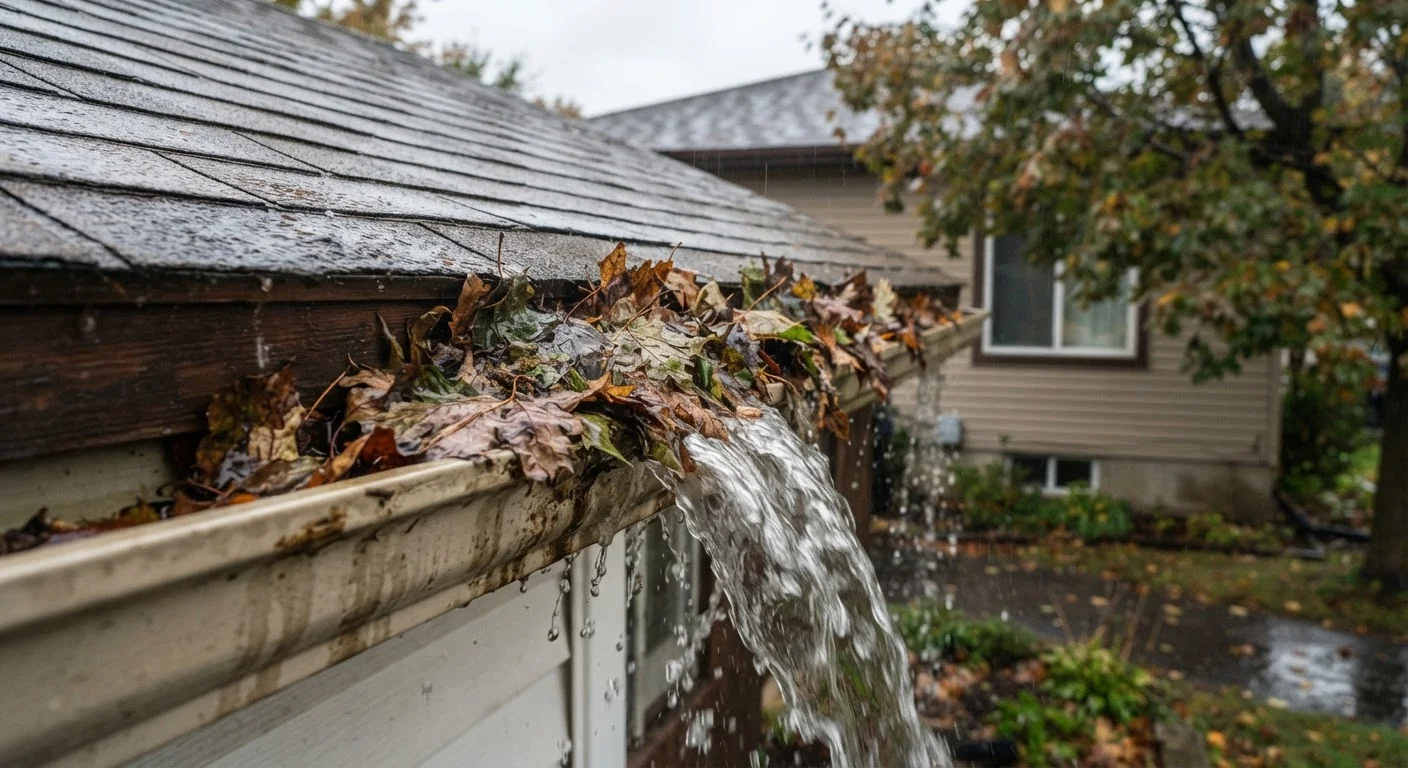
Key Takeaways
- Gutters typically fail due to neglect, improper installation, or infrequent inspection - not age alone.
- Clogged or sagging gutters can redirect water into your foundation, siding, and crawl space.
- Cleaning gutters at least twice a year significantly reduces the risk of water damage.
- Downspout placement and slope angle are just as important as keeping gutters clear.
- Many gutter problems are visible from the ground before they become expensive repairs.
Why Gutters Deserve More Attention Than They Get
Gutters are easy to overlook - they sit above eye level, do their job quietly, and only become visible when something goes wrong. But a properly functioning gutter system is one of the most important defenses your home has against water intrusion. When gutters fail, the consequences reach well beyond a soggy yard: water can work its way into your siding, soffit, and foundation, contributing to problems like crawl space moisture that are difficult and expensive to reverse. Our guide on keeping a crawl space dry illustrates just how far downstream gutter neglect can travel.
The good news is that most gutter failures follow predictable patterns. Understanding the common mistakes behind them - and correcting those habits - puts you well ahead of the problem.
Water Damage Starts Sooner Than You Think
A gutter that overflows consistently during rain can begin saturating the soil against your foundation within a single season. Over time, this leads to basement seepage, crawl space moisture, and in serious cases, structural shifting. Addressing gutter issues early is one of the most cost-effective forms of home maintenance you can practice.
The Mistakes That Lead to Gutter Failure
Gutter problems rarely appear without warning. In almost every case, a failure can be traced back to one or more of the maintenance gaps listed below. Review these honestly against your own habits - most homeowners recognize at least two or three.
Cleaning gutters only once a year - or not at all.
Why it happens: Many homeowners assume gutters only need attention in the fall after leaves drop, so spring and summer buildup goes unaddressed.
Ignoring sagging or pulling sections of gutter.
Why it happens: A slight sag looks minor, so homeowners defer it - not realizing that standing water in a sagging section adds significant weight and accelerates bracket failure.
Allowing downspouts to discharge water directly against the foundation.
Why it happens: Downspout extensions or splash blocks are often overlooked during installation or get moved and never replaced.
Skipping inspection of gutter slope (pitch).
Why it happens: Homeowners focus on debris removal but rarely check whether water is actually flowing toward the downspout rather than pooling.
Using caulk or sealant as a permanent fix for joint leaks.
Why it happens: Sealant is easy to apply and provides immediate results, so it becomes a repeated patch rather than a cue to investigate the underlying joint failure.
It's worth noting that gutter issues often connect to broader home maintenance patterns. Deferred upkeep in one system tends to accelerate wear in adjacent ones - a cycle covered in depth in our piece on the hidden costs of deferred home maintenance.
What a Basic Gutter Inspection Actually Looks Like
You don't need to climb a ladder to catch early warning signs. From the ground, look for sections that visibly bow or pull away from the fascia, staining on siding below the gutter line (a sign of persistent overflow), and peeling paint or rust streaks indicating standing water. After rain, watch whether water exits the downspout or spills over the gutter edge.
~$10,000
Average cost of water damage repair per incident
According to general estimates from home insurance industry data, interior water damage claims commonly reach five figures when foundation or structural elements are involved.
2x/year
Minimum recommended gutter cleaning frequency
Home maintenance guides from building and extension services consistently recommend cleaning gutters in spring and fall as a baseline schedule.
If you're already conducting ground-level roof checks, add gutters to that same walkthrough. Our article on roof maintenance from the ground up offers a practical framework for what to look for without leaving solid ground. For any work at height - rehanging gutters, clearing second-story sections, or inspecting steep rooflines - use proper ladder safety practices or hire a qualified professional.
This article is for general home maintenance information purposes only. Always consult a licensed contractor or qualified professional before undertaking work that involves heights, structural components, or electrical systems near your roofline.