

| Average U.S. home size | ~2,300 sq ft (U.S. Census Bureau, 2022) |
| Percentage of Americans who say clutter causes stress | ~54% (Various consumer surveys; figures vary by study) |
| Common recommendation for declutter session length | 20-45 minutes (Widely cited by professional organizers to limit decision fatigue) |
| Items in a typical American home | ~300,000 (Frequently cited estimate; original source: LA Times feature on clutter research) |
| Organizing categories in the KonMari method | 5 (clothing, books, papers, komono, sentimental) (Marie Kondo's published framework) |
Why the Vocabulary Matters
Home organization content is full of shorthand - declutter, capsule wardrobe, negative space - that can feel like insider language if you're just getting started. A shared vocabulary isn't about sounding sophisticated; it's a practical tool. When you know exactly what a term means, you can follow a strategy accurately, explain your goals to someone helping you, and troubleshoot when a method isn't working.
This glossary focuses on the concepts that appear most often in organizing guides, podcasts, and room-by-room walkthroughs. Whether you're tackling a junk drawer or an entire basement, these definitions give you a reliable starting point. For a practical application of these ideas, see our room-by-room organization walkthrough.
Decluttering
The deliberate process of removing items from a space that are no longer needed, used, or valued. It is distinct from tidying, which simply moves existing items into neater arrangements without reducing their number.
One-In-One-Out Rule
A maintenance habit where every new item brought into the home is matched by removing one existing item of the same category. It prevents gradual accumulation after an initial declutter.
Negative Space
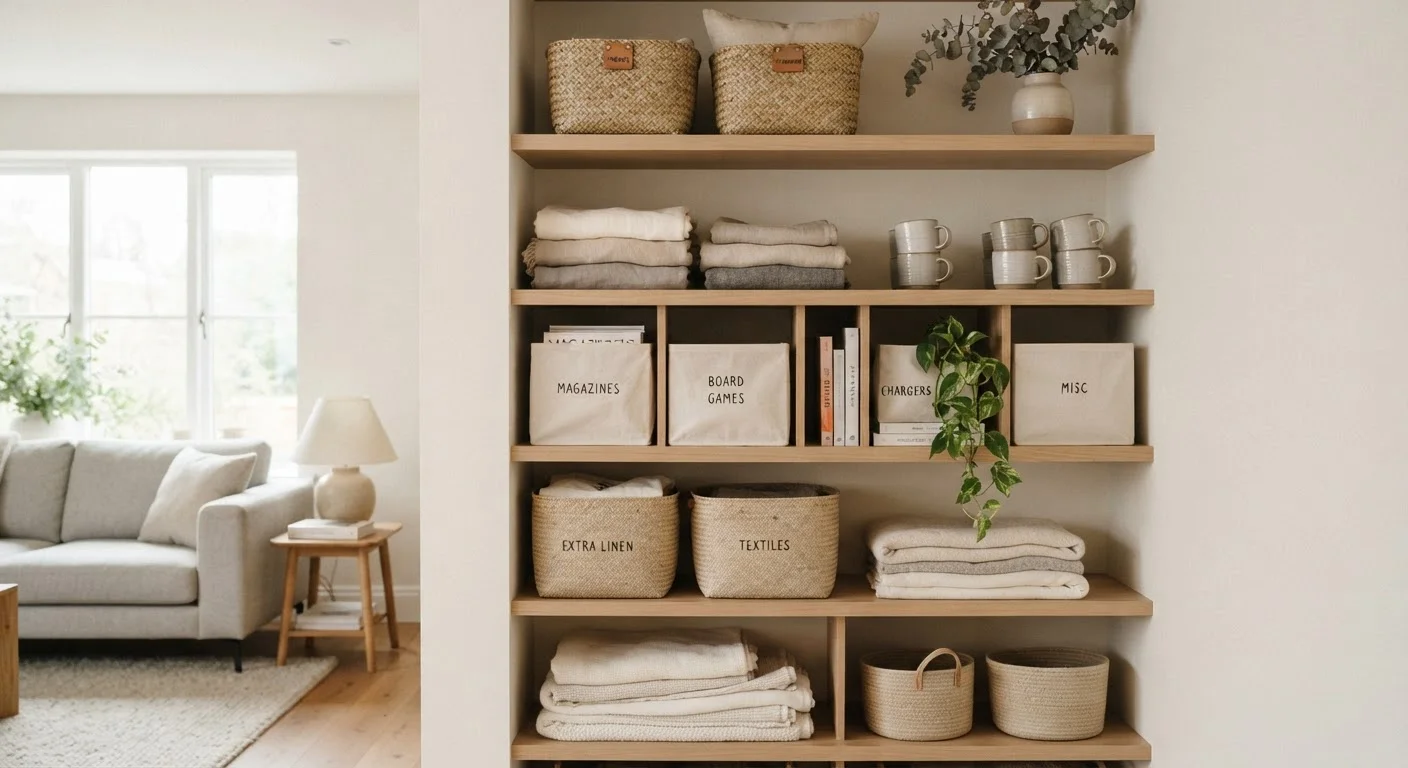
The intentionally empty areas left in a room or on a shelf after organizing. In home organization, negative space reduces visual noise and makes the remaining items easier to see and access.
Zoning
Dividing a room or storage area into dedicated sections based on activity or category - for example, a 'bill-paying zone' at a desk or a 'breakfast station' in a kitchen cabinet. Zones reduce time spent searching for items.
Category Grouping
Storing all items of the same type together in one location, regardless of which room you typically use them in. This method surfaces duplicates quickly and makes inventory easier to manage.
Decision Fatigue
The mental exhaustion caused by making too many choices in a short period. In organizing contexts, it explains why long sorting sessions become less productive over time - a reason many organizers recommend working in short, focused intervals.
Capsule Collection
A curated, smaller set of items - most often applied to clothing or kitchen tools - where each piece is versatile and intentional. The goal is quality and function over quantity.
Pass-Through Clutter
Items temporarily placed in a space on their way to another destination but never moved along - mail left on a counter, shoes dropped near (not in) a closet. Identifying pass-through clutter often reveals the need for a landing zone.
Landing Zone
A designated spot near an entry point - typically by the front door - where everyday items like keys, bags, and mail are consistently placed. A well-set-up landing zone prevents items from scattering throughout the home.
Sunk Cost Bias
The tendency to keep an item because of what was paid for it, even when it no longer serves a purpose. Recognizing this bias helps people make more practical decisions during a declutter session.
Touch-It-Once Principle
A workflow habit where each item handled during sorting is immediately placed in its correct location rather than set aside 'for later.' It reduces the number of decisions made about the same object.
Staging Area
A temporary holding space - often a table or cleared floor section - where items are gathered before being sorted, donated, or relocated. It keeps the decluttering process visible and contained.
Core Concepts at a Glance
The quick-reference card below captures the most frequently cited statistics and benchmarks you'll encounter when reading about home organization - helpful context for setting realistic expectations before you begin.
| Average U.S. home size | ~2,300 sq ft (U.S. Census Bureau, 2022) |
| Percentage of Americans who say clutter causes stress | ~54% (Various consumer surveys; figures vary by study) |
| Common recommendation for declutter session length | 20-45 minutes (Widely cited by professional organizers to limit decision fatigue) |
| Items in a typical American home | ~300,000 (Frequently cited estimate; original source: LA Times feature on clutter research) |
| Organizing categories in the KonMari method | 5 (clothing, books, papers, komono, sentimental) (Marie Kondo's published framework) |
If you're brand new to the process, our guide on starting from zero walks through realistic first steps and core principles without overwhelming you.
These Terms Shift Across Methods
Home organization is not a single standardized field, so some terms are used differently depending on the system or guide you're following. For example, 'capsule' may refer to a clothing wardrobe in one context and a kitchen tool set in another. When following a specific method, use its own definitions as the primary reference. This glossary reflects the most common general usage across multiple approaches.
Once you're familiar with the language, you might also explore how digital tools and physical labels compare as tracking methods - knowing terms like zoning and category grouping makes those decisions easier to reason through.