

Key Takeaways
- Vertical storage expands capacity by using wall height instead of floor area.
- Horizontal storage keeps items more accessible but consumes valuable floor footprint.
- Visual clutter is affected by storage direction - height can make small rooms feel taller or more cramped depending on placement.
- Most small spaces benefit from combining both approaches strategically.
- Rental restrictions and ceiling height both affect what vertical storage solutions are realistic.
Option A
Vertical Storage
The upward-reaching, wall-maximizing approach.
Best for: Renters and homeowners with limited floor space who want to expand capacity without spreading out.
Option B
Horizontal Storage
The grounded, easy-access, low-profile solution.
Best for: Spaces where accessibility, stability, and a lower visual profile are priorities over raw capacity.
If your apartment has very little floor space but standard or tall ceilings
Vertical Storage
Wall-height shelving and stacked units free up floor area dramatically, making rooms feel more open and walkable.
If you frequently need quick, easy access to stored items
Horizontal Storage
Low, wide storage keeps everything at eye or hand level, reducing the need to reach, climb, or search up high.
If you want to make a small room feel taller without major renovation
Vertical Storage
Floor-to-ceiling shelving draws the eye upward, creating a sense of height that low furniture simply cannot replicate.
If you share the space with young children or have mobility considerations
Horizontal Storage
Accessible, low-profile storage eliminates the need for step stools and keeps frequently used items safely within reach.
If you want to reduce visual clutter across an entire room
Vertical Storage
Consolidated, tall storage units concentrate items in one zone, leaving more open floor and wall space elsewhere in the room.
The Core Difference: Floor Footprint vs. Wall Height
Every small space presents the same challenge: you have more stuff than room. The question isn't whether to store things - it's which dimension to use. Vertical storage builds upward, using wall height to stack and shelve items above eye level. Horizontal storage spreads outward along the floor plane, relying on width and depth rather than height.
The fundamental trade-off is footprint versus capacity. A tall bookshelf occupying 2 square feet of floor can hold far more than a low sideboard taking up 8 square feet - but the sideboard keeps everything within easy reach. Understanding this trade-off is the starting point for making smarter storage decisions in any tight space.
For a broader look at how spatial logic affects small rooms, see our furniture arrangement guide for compact spaces.
| Criterion | Vertical Storage | Horizontal Storage |
|---|---|---|
| Floor footprint | Minimal - uses wall height | Larger - spreads along floor |
| Storage capacity | High when ceiling is tall | Moderate, limited by width |
| Accessibility | Lower for high items | High - items at hand level |
| Visual effect on room height | Makes room feel taller | Keeps upper space open |
| Best for | Infrequently accessed items | Daily-use essentials |
| Rental compatibility | May require wall anchoring | Freestanding, no drilling needed |
| Stability concerns | Tall units need secure anchoring | Low center of gravity, stable |
Where Vertical Storage Genuinely Wins
In rooms where floor space is critically limited - a studio apartment, a narrow hallway, or a small bedroom - vertical storage delivers the biggest return per square foot of floor used. Wall-mounted shelves, floor-to-ceiling bookcases, and stackable units all leverage the one dimension most renters underuse: ceiling height.
Visually, tall storage units draw the eye upward, which can make a low-ceilinged or box-shaped room feel more expansive. This effect works best when the unit runs close to the full ceiling height and is placed against a wall rather than floating in the middle of the room.
~50%
Wall height typically left unused in average rooms
Interior design professionals commonly note that most households use only the bottom half of their walls for storage, leaving significant vertical capacity untapped.
8-10 ft
Standard ceiling height in U.S. homes
The U.S. Census Bureau reports that standard ceiling heights in American homes typically range from 8 to 10 feet, giving most households meaningful vertical storage potential.
There are real limitations, though. Items stored above shoulder height are less accessible day-to-day, making vertical storage better suited for things you need infrequently - seasonal items, reference books, spare linens. Wall-mounted options may also require anchoring into studs, which some rental agreements restrict. Always check your lease before drilling into walls.
Where Horizontal Storage Holds Its Own
Horizontal storage isn't simply a compromise - in many situations, it's genuinely the smarter choice. Low, wide storage like benches with internal compartments, under-bed drawers, or wide console tables keeps everyday items accessible without any reaching or rearranging. That accessibility matters especially for frequently used items: kitchen tools, kids' toys, shoes near the front door.
Horizontal pieces also tend to anchor a room visually. A low media console or a wide storage ottoman grounds the space without competing with sight lines, keeping the upper half of the room open and airy. In rooms with lower ceilings, this can actually feel more comfortable than tall shelving that crowds the eye.
The trade-off, of course, is floor footprint. Every wide unit you add is floor area subtracted from movement and living. In very small rooms, this adds up quickly. Our article on organizing small apartments realistically explores how to weigh these choices room by room.
Combining Both: The Most Practical Approach
In most real-world small spaces, the most effective storage strategy isn't choosing one direction - it's layering both intentionally. A common approach: use vertical storage for items you access occasionally (upper shelves, stacked bins), and horizontal storage for everyday essentials at reachable height.
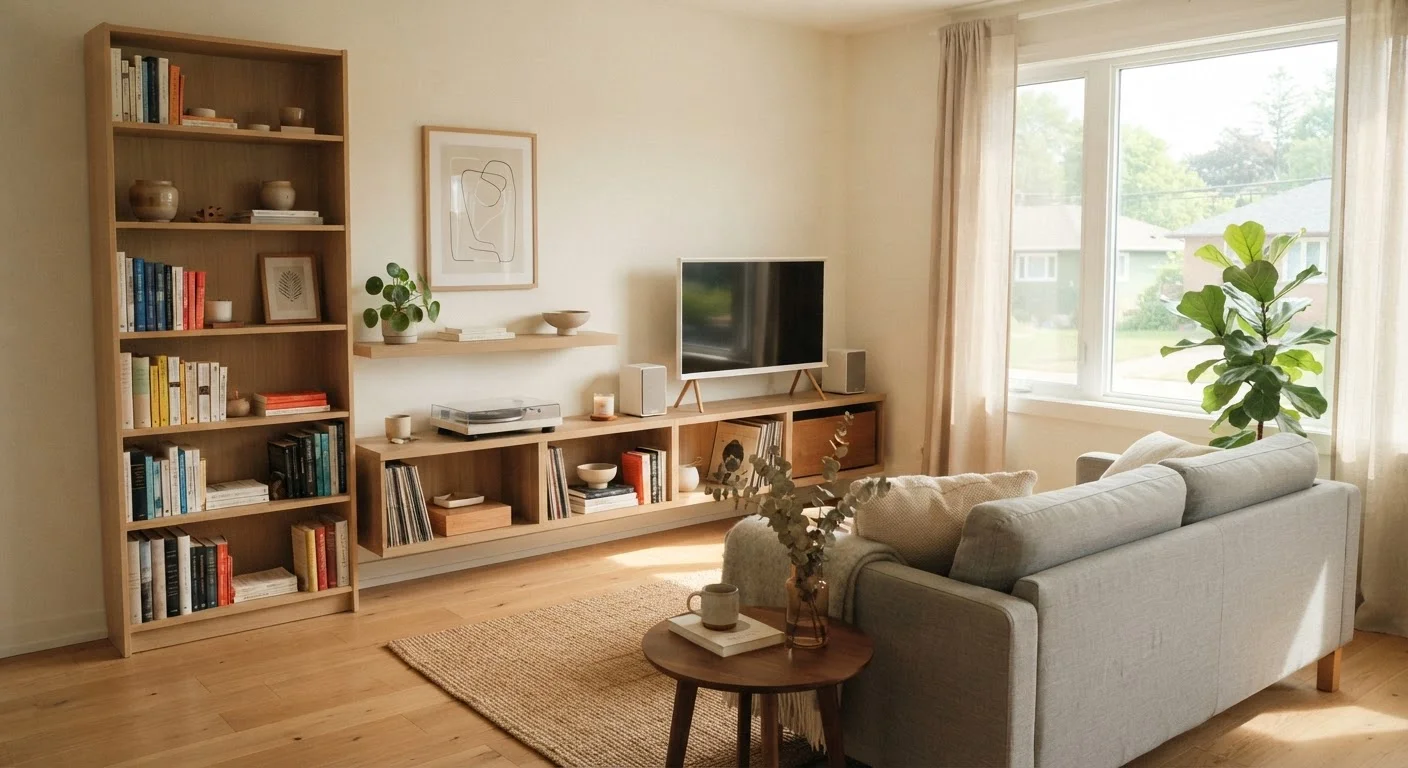
For example, in a small bedroom, a wardrobe with high shelves above the hanging rod handles seasonal items vertically, while a low storage bench at the foot of the bed handles frequently needed extras horizontally. In a living room, floor-to-ceiling shelving on one wall handles books and display items, while a low storage ottoman in the seating area handles remote controls, blankets, and everyday clutter.
Anchoring Tall Units Is a Safety Essential
Freestanding tall shelving units - particularly those over 4 feet in height - should be secured to wall studs to prevent tipping, especially in homes with children or pets. Anti-tip straps are widely available and straightforward to install. If your rental agreement prohibits wall anchoring, look for units specifically designed with wide bases or interlocking configurations for added stability.
The visual balance between the two directions also affects how tidy a room feels. Too much vertical storage can make a space feel like a warehouse; too much horizontal storage can make it feel cluttered and low. A mix of both, with deliberate open space left between items, tends to read as organized rather than overstuffed. For guidance on keeping storage visually clean, our closet organization guide separates practical from purely aesthetic approaches.