

Key Takeaways
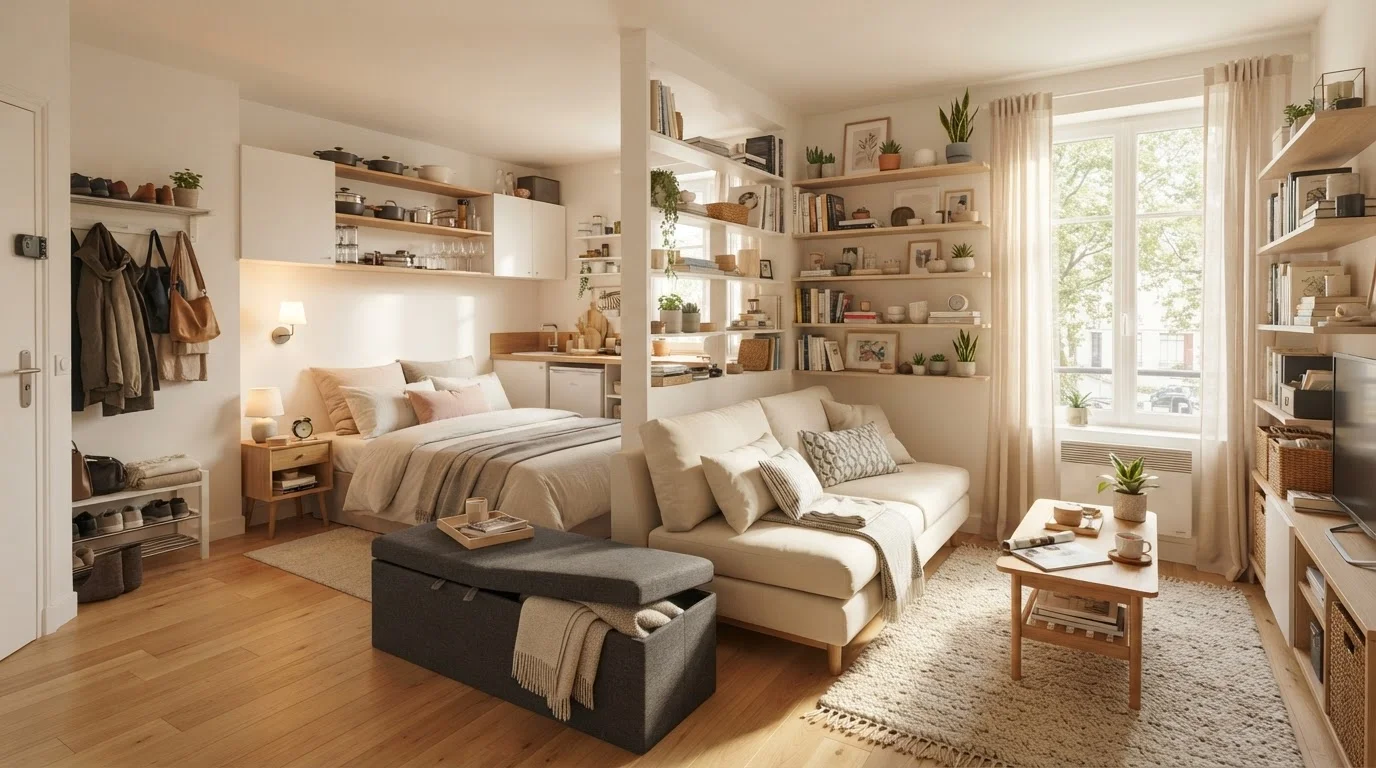
- Vertical wall space is often the most underused storage opportunity in small apartments.
- Furniture that serves more than one purpose reduces clutter without sacrificing comfort.
- Regular decluttering prevents small spaces from feeling overwhelming over time.
- Consistent systems - not perfection - are what keep compact homes manageable long-term.
Why Small Spaces Demand a Different Approach
Living in a small apartment isn't just a matter of having less room - it's a different relationship with every object you own. In a larger home, disorder tends to spread invisibly. In a compact space, a single pile of mail or a bag left on the floor can make an entire room feel unlivable.
That's not a personal failing. It's physics. Limited square footage means there's less buffer between everyday life and visual chaos. The strategies that work in a sprawling house - stashing things in spare rooms, dealing with clutter seasonally - simply don't translate.
What does work is a shift from reactive tidying to intentional systems. For renters and owners alike, the goal is a space where everything has a home, and returning items to that home takes almost no effort. The room-by-room organization walkthrough covers broader home strategies, but small apartments benefit most from the targeted practices below.
Practices That Actually Work in Tight Spaces
The following approaches are practical, budget-conscious, and don't require purchasing a full set of matching containers to get started. Focus on the ones that match your current pain points first.
Use vertical wall space as your primary storage zone.
Floor space in a small apartment is precious, but walls often sit empty. Mounting shelves, pegboards, or hooks above eye level keeps items accessible without eating into the livable footprint. This shift in thinking - up, not out - is one of the most impactful changes a small-space resident can make.
Choose furniture that pulls double duty.
Every piece of furniture in a small apartment should earn its place by serving more than one purpose. Multi-function items reduce the total number of objects in a room without reducing what the room can do. This is especially valuable when a single room serves as living area, bedroom, and workspace.
Establish a dedicated zone for every category of belonging.
When items don't have an assigned home, they end up wherever there's a flat surface - which quickly makes compact spaces feel chaotic. Assigning zones creates a mental map of the apartment so putting things away becomes automatic rather than effortful.
Declutter on a consistent schedule, not just when things feel unmanageable.
In a small apartment, clutter accumulates faster and becomes disruptive sooner than in a larger home. Regular, low-effort decluttering sessions prevent items from reaching a crisis point. A monthly 15-minute scan of surfaces is easier to maintain than a quarterly overhaul.
Use the inside of cabinet and closet doors for hidden storage.
Cabinet and closet doors represent free square footage that most people overlook entirely. Over-the-door organizers, adhesive hooks, and slim hanging racks can hold cleaning supplies, shoes, pantry items, or accessories without taking up any shelf or floor space.
Renters: Check Before You Install
Some storage upgrades - like wall anchors, mounted shelving brackets, or adhesive hooks - may affect your security deposit depending on your lease terms. Before drilling or making permanent changes, review your rental agreement and check with your landlord. For deposit-safe decorating ideas, see our guide to renting and redecorating.
Quick Wins You Can Do Today
Organizational momentum matters. Starting with small, visible changes makes the bigger systems easier to adopt over time. These actions take under 30 minutes and produce immediate results.
If you share your apartment, getting a partner or roommate aligned on where things go is just as important as the systems themselves. The guide to organizing shared spaces offers practical ways to find common ground when tidiness standards differ.
Making the Most of What You Already Have
Before buying new storage products, do a full survey of what's already in the apartment. Most people have underused space in at least three places: the tops of cabinets, the backs of doors, and the area under the bed. Addressing those zones often eliminates the need for additional furniture entirely.
Furniture placement also matters more than most people realize in compact rooms. Pushing everything against the walls, for example, is a common instinct that often makes a small space feel more cramped, not less. The guide to furniture arrangement in tight spaces explains the spatial logic in plain terms.
“The home should be the treasure chest of living. In a small space, that means being intentional about what earns a place inside it.”
— Le Corbusier, Influential architect and urban planner
Similarly, some widely repeated design rules - like always using light colors in a small room - don't hold up as universally as they're presented. The interior design myths article breaks down which rules are worth keeping and which ones to ignore.
When it comes to tracking what you own and where it lives, simple physical labels often outperform elaborate digital systems in a home setting. The comparison of digital tools vs. physical labels can help you decide which approach fits your household.
Finally, staying organized doesn't require constant spending. Many effective storage solutions cost very little - repurposed boxes, tension rods, and basic hooks are reliable staples. For ideas on stretching your household budget without sacrificing function, budget shopping strategies offer a useful starting point.