
Renting and Redecorating: What You Can Actually Change Without Losing Your Deposit

Key Takeaways
- Always read your lease carefully before making any changes to a rental unit.
- Removable, damage-free products let you personalize without risking your deposit.
- Document the unit's condition thoroughly before and after any decorating.
- Textiles, lighting, and furniture placement require no landlord permission.
- When in doubt, ask your landlord in writing before making a permanent change.
What you will need
Why Renters Often Under-Decorate - and Why That's a Shame
Many renters hold back from personalizing their space out of fear: fear of losing a deposit, fear of landlord disapproval, or simply the assumption that renting means living in a space that never truly feels like home. That hesitation is understandable, but it's also largely unnecessary. Most of the changes that make a home feel warm and personal - layered lighting, textiles, art, plants, and considered furniture placement - require no permanent modifications at all.
The real challenge isn't creativity; it's knowing where the line is. As our article on interior design myths that keep rooms looking flat explains, many of the "rules" people follow are simply habits. Renters often assume they can't create a stylish space without painting or renovating - that's rarely true.
Read Your Lease Before Anything Else
Lease terms vary significantly. Some explicitly prohibit hanging anything on walls; others allow minor modifications with written notice. No decorating tip overrides what your lease says. When a clause is unclear, contact your landlord in writing and keep the response on file.
Understanding what you can and can't do starts with the documents you already have. From there, a few reversible techniques go a long way.
Your Toolkit: Damage-Free Decorating Methods
The market for renter-friendly products has expanded considerably. Below are the categories worth knowing before you start, along with how to use them safely.
Adhesive hanging strips and hooks
Hang framed art, mirrors, and lightweight shelves on walls without drilling holes.
Removable peel-and-stick wallpaper
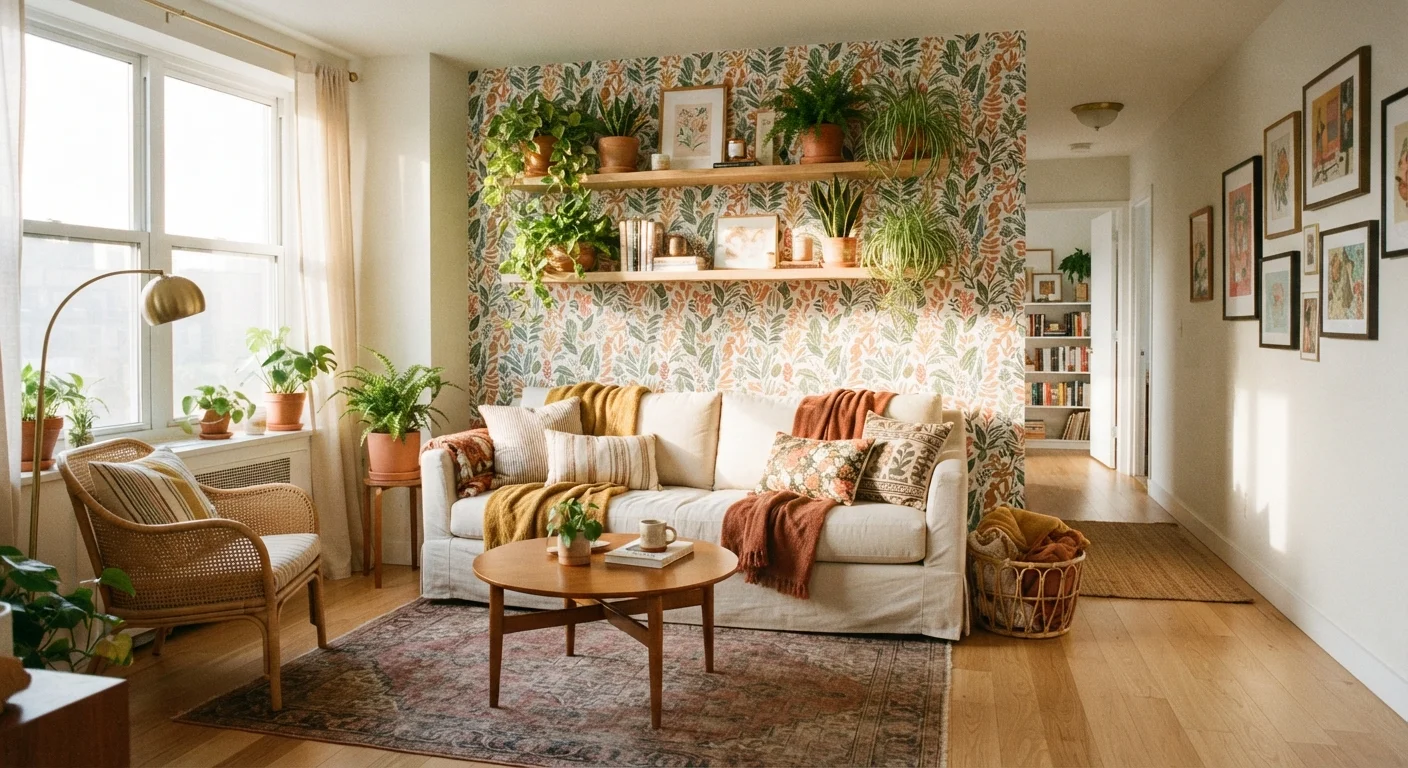
Create an accent wall or add pattern to a room without permanent paint or traditional wallpaper.
Peel-and-stick backsplash tiles
Add a decorative finish to kitchen or bathroom surfaces that removes cleanly.
Area rugs
Define zones, add warmth, and protect existing flooring without any modification.
Plug-in or battery-powered lighting
Improve room ambiance and illuminate dark corners without electrical work.
Lightweight spackling compound
Fill small nail holes cleanly before vacating to restore walls to original condition.
Beyond products, the most powerful tools are ones you already own: your furniture, your eye for arrangement, and your ability to shop secondhand for textiles and art that reflect your style without a large budget. For a broader framework on building a cohesive interior, see our complete decorating guide.
Document Everything With Timestamps
Before moving in and again before moving out, photograph every wall, floor, fixture, and surface. Email the photos to yourself or your landlord so the timestamps are verifiable. This single habit resolves the majority of deposit disputes without any argument.
The steps below walk through the full process from lease review to move-out restoration.
Review your lease and document existing conditions
Pull out your lease and read every clause related to alterations, painting, and hanging items. Note what's explicitly prohibited versus what requires written permission. Then walk through the entire unit and photograph every scuff, nail hole, stain, and worn area already present. This documentation protects your deposit regardless of what decorating you choose to do.
Start with furniture arrangement and textiles
The fastest, lowest-risk way to transform a rental is through items that never touch the walls or floors permanently. Rearrange furniture to improve traffic flow or create a focal point. Layer rugs over hard floors to add warmth and define zones. Swap out throw pillows, hang curtains from existing rods, and add blankets. None of these require permission, and all of them have a significant visual impact. For ideas on making the most of limited square footage, see our guide on keeping a small apartment organized.
Use damage-free hanging products for wall art
Adhesive strips and hooks rated for the appropriate weight allow you to hang framed art, mirrors, and lightweight shelves without drilling. Follow the manufacturer's instructions exactly - particularly the surface-preparation and removal steps - to avoid peeling paint when you take them down. Test one hook on an inconspicuous area first to confirm compatibility with your wall finish.
Apply removable wallpaper or peel-and-stick tiles
Removable wallpaper has improved dramatically in quality and is now widely available in patterns ranging from subtle textures to bold graphics. Apply it to a single accent wall for maximum effect with minimum material. Peel-and-stick backsplash tiles work similarly in kitchens and bathrooms. In both cases, clean and dry the surface thoroughly before application, and follow removal instructions carefully to avoid leaving adhesive residue.
Upgrade lighting without touching wiring
Swap out lampshades on existing fixtures for an instant refresh. Add floor lamps and table lamps to create layered lighting - one of the most overlooked decorating upgrades. Battery-powered LED puck lights or plug-in sconces can illuminate dark corners or create ambiance without any electrical work. Store the original lampshades safely so you can reinstall them before moving out. Electrical work of any kind should always be left to a licensed electrician - do not attempt to modify hardwired fixtures yourself.
Restore everything before your final walkthrough
Before your lease ends, remove all adhesive products using the manufacturer's removal method, patch any approved nail holes with lightweight spackling compound, and repaint only if your lease requires it or your landlord agreed in writing. Return any swapped fixtures (such as showerheads or cabinet hardware) to their original state and store your aftermarket versions. A final walkthrough alongside your landlord - if possible - lets you address concerns before the formal inspection.
Handling Disputes and Moving Out Cleanly
Even renters who've been careful sometimes face deposit disputes. The most effective protection is documentation - photos taken at move-in and move-out, written records of any landlord-approved changes, and receipts for any repair materials you purchased. If your landlord withholds part of your deposit, most states require them to provide an itemized statement within a set time window; check your state's tenant rights laws for specifics.
Never Assume Verbal Permission Is Enough
If your landlord says it's okay to paint or hang shelves in conversation, get that approval in writing via text or email before you start. Verbal agreements are difficult to prove if a deposit dispute arises later. A brief follow-up message - 'Just confirming you said it's okay to...' - is sufficient.
Deposit rules and tenant protections vary by state and sometimes by city - what applies in one jurisdiction may not apply in another. If you're uncertain about your rights, a local tenant advocacy organization or legal aid service can help clarify without charge. Managing your deposit wisely also connects to broader financial habits; our hub on saving and debt covers practical ways to protect and grow the money you've already set aside.
With the right approach, a rental can be just as expressive and comfortable as any owned home - it simply requires a little more planning upfront.