

Key Takeaways
- A simple written plan-before buying anything-prevents costly, mismatched impulse purchases.
- A cohesive home relies on a consistent color story across rooms, not identical styles.
- Anchor each room with one functional furniture piece before adding decorative layers.
- Texture, lighting, and small personal objects make a space feel genuinely lived-in.
- Avoiding the most common decorating errors is more valuable than following strict design rules.
Start With a Decorating Plan, Not a Shopping List
The single most common mistake when decorating from scratch is heading straight to a store or scrolling through online listings before you have a clear direction. Without a plan, rooms end up filled with items that each looked appealing in isolation but don't work together.
Begin by walking through your empty or sparsely furnished space with a notepad. For each room, write down three things: its primary function, the mood you want it to carry (calm, energizing, cozy, social), and any hard constraints like low ceilings or awkward windows. This simple exercise does more than any mood board to keep your decisions grounded.
Next, sketch a rough floor plan - it doesn't need to be precise. Draw the walls, doors, and windows to scale as best you can. Knowing how much floor space a sofa must fit into, or whether a dining table will clear a doorway, saves significant expense later. Many people discover that the furniture size they imagined won't actually work in their real space.
Prioritize Rooms You Use Most
Rank your rooms by how frequently you use them before you start spending. Focusing your early energy and budget on high-traffic areas - living room, bedroom, kitchen - means you'll immediately feel the improvement in your daily life. Lower-priority rooms like formal dining spaces or guest rooms can be addressed later without any loss.
Once you have your notes and sketches, identify which rooms you spend the most time in and prioritize those. A beautifully styled guest room that sits empty most of the year is a lower priority than a living room or kitchen where your daily life happens. Phasing your decorating in order of use frequency also spreads cost over time, which is easier to manage without financial strain.
Choosing a Color Direction That Works Throughout
Color is the fastest way to create a cohesive home, or to make it feel chaotic. You don't need every room to be the same shade - in fact, that often feels clinical. What you need is a consistent color story: a small set of tones that relate to each other and appear in some form across multiple rooms.
A practical approach is to pick one neutral base (a warm white, a soft greige, a cool grey), one or two supporting mid-tones, and one accent used sparingly. These three tiers give you enough variety to make each room feel distinct while the eye reads the whole home as intentional.
Test Colors Before You Commit
Paint sample pots are a small investment that prevents large regrets. Apply swatches in multiple spots on the same wall to account for how light hits different areas. Leave them for at least 48 hours and check them at morning, midday, and evening before making a final decision. The same color can appear three different shades under different light conditions.
To test a color before committing, paint a large swatch directly on the wall - at least 12 inches square - and observe it at different times of day. Natural light shifts dramatically from morning to evening and changes how any paint color reads. This step alone prevents the most common color regret homeowners experience.
For anyone who finds color decisions overwhelming, consider drawing inspiration from one item you already own and love - a rug, a piece of artwork, a blanket. Pull the tones already present in that object and build your palette outward from there. Also worth exploring: common design myths that may be limiting your color choices.
Furnishing Room by Room Without Overspending
Resist the urge to furnish multiple rooms simultaneously. Instead, complete one room to a functional, satisfying level before moving to the next. This approach keeps you from spreading your attention and budget too thin.
Within each room, work in order of scale: start with the largest piece that anchors the space (a bed frame, a sofa, a dining table), then build outward to mid-size pieces (side tables, shelving, chairs), and finish with small accessories last. This sequence prevents the common problem of buying decor before realizing the large furniture dominates the room differently than expected.
47%
Homeowners who regret impulse furniture purchases
A commonly cited figure in consumer surveys on home furnishing suggests nearly half of homeowners report regretting at least one major furniture purchase made without adequate planning.
3-5
Colors in a cohesive home palette
Interior design educators generally recommend limiting a whole-home color palette to three to five related tones to maintain visual flow across rooms.
When assessing what you actually need, pair your furnishing plan with good organization habits. A well-organized room needs fewer decorative pieces because the space itself is clear and intentional. The room-by-room home organization walkthrough offers practical guidance on this before you start adding furniture.
For rooms with unusual dimensions or challenging features - very low ceilings, narrow hallways, oddly placed windows - don't fight the architecture. Choose furniture that acknowledges the room's proportions rather than trying to visually correct them with oversized pieces.
Layering in Texture, Light, and Personal Touches
Furniture and color establish the bones of a room. What makes it feel genuinely inhabited - rather than staged - is layering. Layering means introducing varying textures, intentional lighting, and objects that reflect who you are.
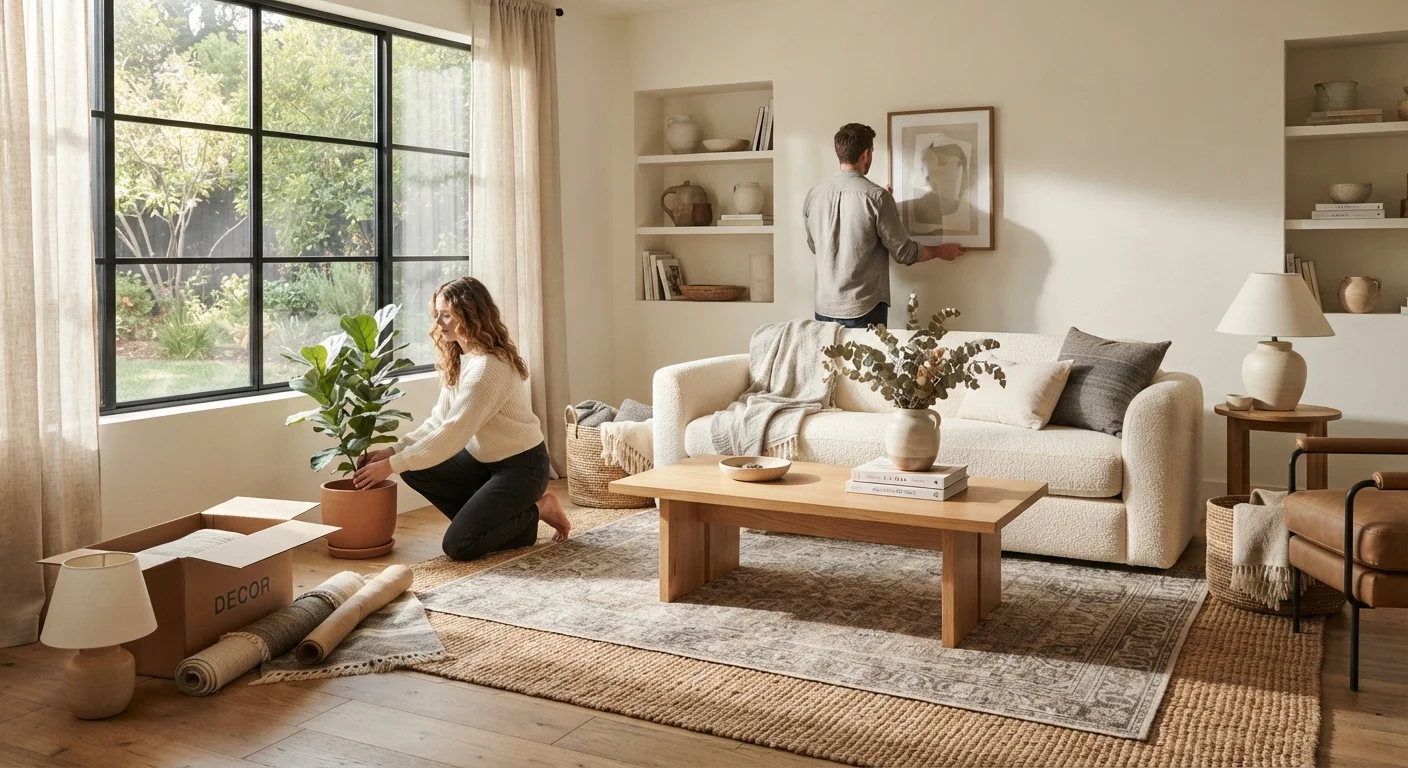
Texture can come from many sources that don't require significant spending: a woven throw over a chair, linen curtains, a jute rug under a coffee table, a ceramic bowl on a shelf. The goal is to give the eye different surfaces to travel across. A room where everything is the same material and finish tends to feel flat even when it's technically well-furnished.
Before buying any lamp or overhead fixture, decide what you want the room to feel like at night, then work backward to the lighting you need. Evening ambiance is set almost entirely by artificial light, so this decision matters more than most people realize.
Interior designers consistently note that lighting is treated as an afterthought in most home projects, yet it has a larger effect on atmosphere than almost any other single element.
When in doubt about whether two patterns can coexist in a room, vary their scale significantly - a large-scale print alongside a small-scale one rarely clashes, even if the motifs differ.
Pattern mixing becomes visually manageable when scale contrast is introduced, a principle used widely in textile and interior design to add visual interest without creating chaos.
Lighting is frequently underestimated. Overhead fixtures alone create a flat, often harsh effect. Layering in table lamps, floor lamps, or simple plug-in sconces at different heights introduces warmth and dimension. Warm-toned bulbs (generally in the 2700K-3000K color temperature range) tend to make rooms feel more inviting than cool daylight bulbs.
For personal touches, keep a simple rule: if an object has a story or meaning, it earns its place. If it was purchased purely to fill a gap, it probably doesn't. Rooms that feel authentic rather than showroom-perfect tend to include a mix of generations - something inherited or found alongside something newly chosen. For more insight into what actually makes a room feel alive rather than just photogenic, see why rooms that look great in photos feel empty in person.
Common Decorating Mistakes and How to Avoid Them
Even with a solid plan, certain pitfalls catch most first-time decorators. Knowing them in advance is a genuine advantage.
- Buying everything at once: Filling a room in a single trip usually produces a matched-set look that reads as generic. Allow your space to evolve over weeks and months.
- Rugs that are too small: A rug that doesn't extend under the front legs of the main seating makes a room feel disconnected. When uncertain, size up.
- Ignoring scale: A large open-plan room with small furniture feels sparse; a small room with an oversized sectional feels cramped. Your floor sketch prevents this.
- Neglecting window treatments: Bare windows can make a finished room feel unfinished. Curtains hung near the ceiling (rather than just above the window frame) visually raise the ceiling height.
- Decorating around trends: Trend-driven rooms can feel dated within a few years. If a style genuinely appeals to you, incorporate it through lower-cost accessories rather than major furniture. For signs that a space has drifted too far into a passing trend, this guide on when décor trends stop working is a useful reference.
Don't Decorate Before Organizing
Adding decor to a disorganized space rarely solves the underlying problem - it often makes it harder to spot. Before styling any room, spend time clearing surfaces and establishing storage. Decorating a space that works functionally always produces better results than decorating over clutter. If you're unsure where to start, starting from zero with decluttering is a helpful first step.
As your home comes together over time, remember that decorating and maintenance go hand in hand. A well-decorated home still needs its systems properly cared for. The complete homeowner's maintenance overview is a worthwhile companion resource once your space starts taking shape.