

Key Takeaways
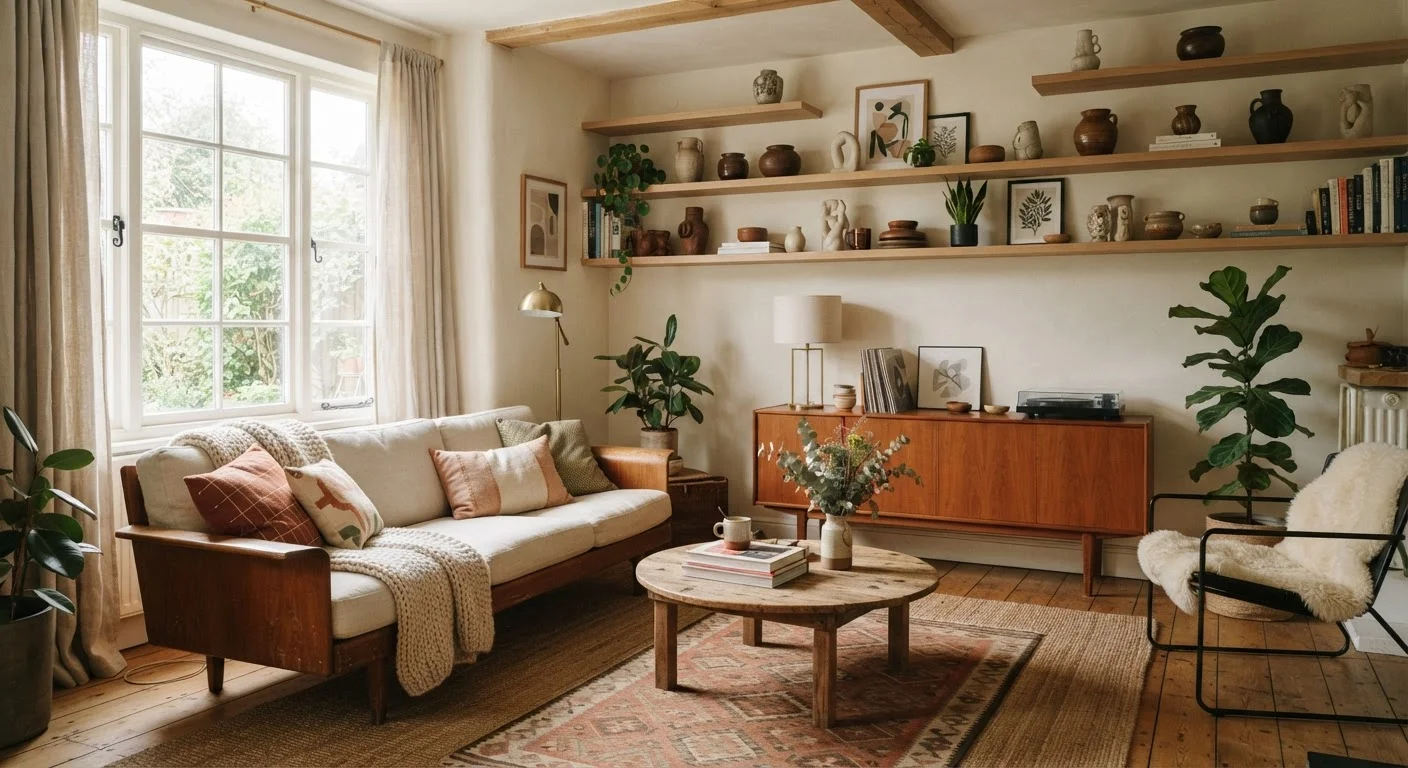
- Certain secondhand categories - like solid wood furniture and ceramics - integrate seamlessly into modern interiors.
- Cohesion comes from repeating a color, material, or finish, not from matching everything to one era.
- Thrifted pieces can add character and texture that brand-new rooms often lack.
- Knowing what to look for - and what to avoid - saves time and prevents buyer's regret at thrift stores.
Why secondhand pieces often outperform new ones
Brand-new rooms furnished entirely from retail often share a common problem: they feel complete but not quite alive. Everything matches, but nothing has weight or story. Secondhand and vintage pieces solve this quietly - they introduce materials, proportions, and textures that weren't designed to complement anything in particular, which means they require you to make considered choices about placement and pairing.
That process, it turns out, is what produces rooms that look styled rather than staged. If you've ever read about why photo-ready rooms feel empty in person, thrifted layering is part of the answer. The categories below are worth prioritizing because they integrate naturally into modern spaces - and because they reward patience over impulse buying.
How to create cohesion across eras
The fastest way to make secondhand pieces look intentional rather than random is to choose a unifying element - a finish, a material, or a repeating color - and apply it consistently. For example, all-brass hardware across lamps, frames, and pulls creates a thread that connects otherwise unrelated pieces. You don't need a theme or a period; you need one deliberate throughline the eye can follow.
Six secondhand categories worth hunting for
Solid wood furniture with simple lines
Pieces made from solid wood - dressers, side tables, bookcases, dining chairs - are among the most reliable secondhand finds. Because they're structurally durable and made to last decades, they tend to survive heavy use without losing integrity. Look for clean profiles without ornate carved detailing; simpler shapes from the mid-20th century adapt well to contemporary rooms. A light sanding and fresh coat of stain or paint can modernize the look without erasing the piece's character. Avoid particleboard or laminate items that have begun to chip or swell - those rarely recover well.
Simple-lined solid wood pieces from any era blend naturally into a contemporary room.
Ceramic and stoneware vessels
Handmade and vintage ceramics - bowls, pitchers, vases, planters - punch well above their price tag in terms of visual impact. The slight irregularities of older stoneware add warmth and texture that mass-produced items often lack. Neutral glazes in cream, sage, terracotta, and slate work across most modern palettes. Group odd numbers of pieces at varying heights on a shelf or mantle for an effortless, styled look. Check for chips along the rim or base before purchasing; cosmetic marks are generally fine, but deep cracks may affect usability for anything holding liquid.
Vintage ceramics add organic warmth that new, factory-made decor rarely replicates.
Mirrors with architectural frames
A secondhand mirror with a strong frame - arched, gilded, or with interesting molding - can become the focal point of an entryway, bathroom, or bedroom wall. Unlike furniture, mirrors don't require structural assessment; the main things to evaluate are the frame's condition and whether the glass has significant fogging or silvering deterioration along the edges. Ornate frames actually play well against clean modern walls - the contrast reads as intentional rather than mismatched. Leaning a large mirror against a wall rather than hanging it is a low-commitment way to introduce an older piece into a modern space.
An ornate vintage mirror against a plain modern wall creates intentional, striking contrast.
Woven textiles and rugs
Vintage flat-weave rugs, kilims, and woven throws carry color and pattern in a way that grounds a room. Because they sit on the floor or drape over furniture, they don't need to match everything - they just need to share at least one color with the broader palette. When evaluating a used rug, check for moth damage (small irregular holes in the pile), fraying edges, and odors that survive airing out. A thorough professional cleaning is generally worth the cost for a quality piece. Textiles also benefit from layering: a smaller vintage rug over a simple jute or sisal base rug creates depth without visual chaos.
A vintage rug grounds a room when it shares even one color with your existing palette.
Lamps and pendant shades
Lighting is one of the highest-impact areas in any room, and secondhand lamps offer tremendous variety at low cost. Ceramic bases, brass fixtures, and glass pendants from older eras often have more craft and material quality than equivalent new options. The electrical components - wiring, sockets, and plugs - should be inspected carefully, and rewiring by a qualified electrician is always advisable for lamps that show any wear or are more than a few decades old. A new shade can completely transform an older base, making it easy to modernize a thrifted lamp without losing what made it interesting in the first place.
Rewiring a vintage lamp is a small investment that unlocks a high-quality, one-of-a-kind lighting piece.
Original artwork and framed prints
Original paintings, lithographs, and vintage framed prints found at estate sales or thrift stores can add genuine personality to a wall in a way that mass-produced art rarely does. Abstract works are particularly versatile - they don't carry the visual weight of a specific subject or style. If a frame is beautiful but the art isn't quite right, the two can be separated and recombined with other finds. Look for works that echo the room's existing tones rather than trying to match exactly. Artwork doesn't need to match your furniture - it just needs to feel considered.
Abstract vintage art is one of the most versatile secondhand finds for any modern interior.
What to avoid when thrifting for home decor
Some secondhand categories carry real risks worth knowing about. Upholstered furniture can harbor pests or deep odors that are difficult to fully eliminate. Old cribs, car seats, and safety equipment may not meet current standards and should generally be avoided. Anything with peeling paint manufactured before 1978 may contain lead - consult local guidelines before refinishing. When in doubt, focus on hard goods with no fabric components, or items you can fully clean and inspect before bringing inside.
Putting it all together without overcomplicating it
Working secondhand finds into a modern interior doesn't require design expertise - it requires editing. Bring pieces home one or two at a time, live with them before committing to a permanent arrangement, and remove anything that isn't earning its place. The goal isn't a curated-looking room; it's a room that reflects thoughtful choices made over time.
If you're starting from scratch or rethinking a full space, the complete approach to decorating a home from scratch offers a practical room-by-room framework. And if you want to understand which secondhand purchases actually make sense versus which are better bought new, weighing secondhand vs. new for everyday items is a useful companion read before your next thrift run.