

Key Takeaways
- Photo-ready rooms are optimized for a single camera angle, not for how people actually live in them.
- Missing sensory layers - texture, scent, sound absorption - are what make a space feel hollow in person.
- Small, low-cost additions like throw blankets, books, and soft lighting close the gap between staged and lived-in.
- Over-decluttering removes the personal objects that signal a home is actually inhabited.
- Lighting direction and warmth matter far more in person than they appear to in photographs.
Why the Gap Between Photos and Reality Exists
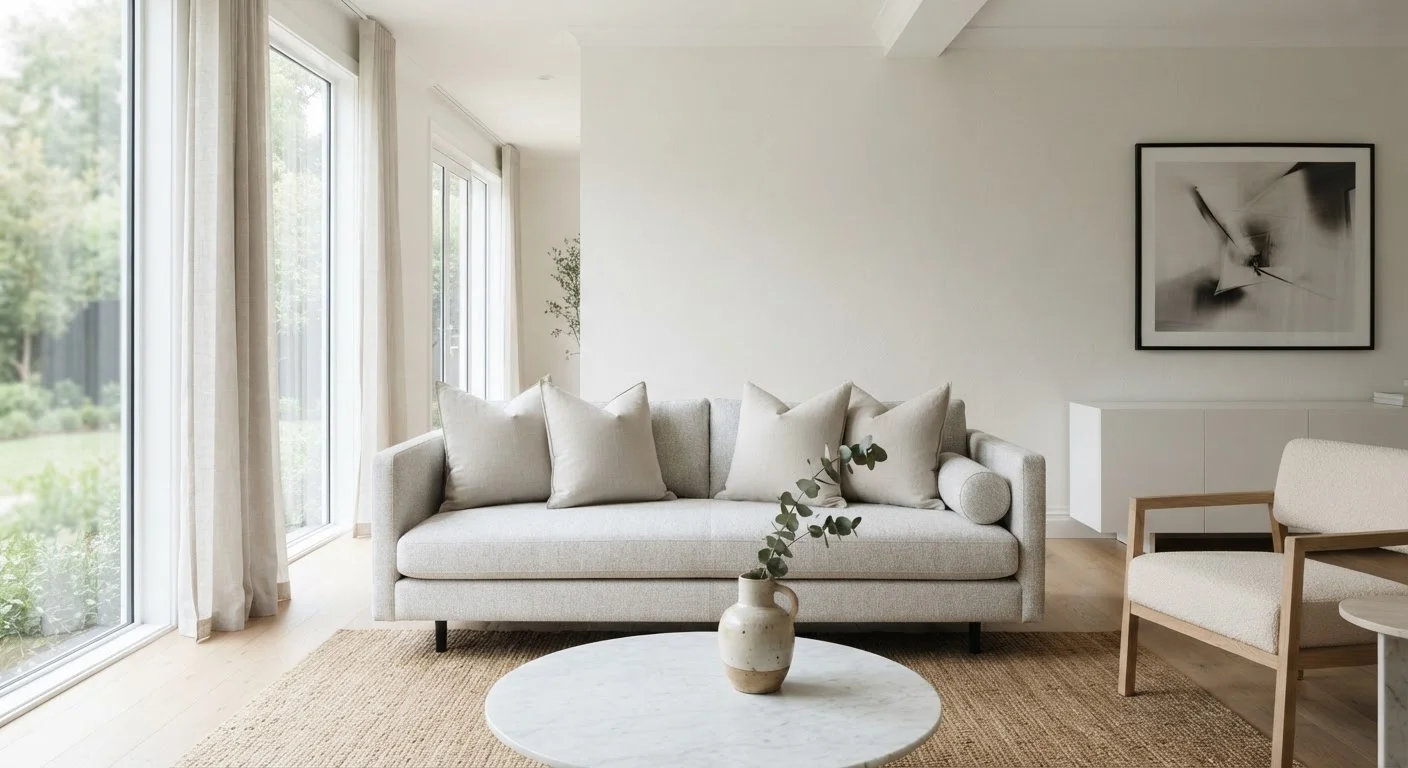
Scroll through any home décor account and rooms look effortlessly inviting - layered, warm, and perfectly composed. Then you recreate the look and step back, only to feel like you're standing in a furniture showroom. The disconnect is real, and it's not a failure of taste or budget.
Photographs flatten three-dimensional space into a single frame. They compress depth, hide uneven lighting, and can't capture temperature, smell, or the way sound bounces off bare walls. A room styled for a photo is optimized for roughly a 90-degree camera angle and two seconds of attention. A room you actually live in needs to work from every angle, at every time of day. Those are genuinely different design problems.
Understanding this gap is the first step toward closing it. The mistakes below are the most common reasons a space looks right on screen but feels off the moment you walk in. For a broader framework on building a cohesive interior from the ground up, see The Complete Approach to Decorating a Home from Scratch.
Common Mistakes That Make Rooms Feel Hollow
Removing every personal object to achieve a 'clean' look.
Why it happens: Decluttering advice is often taken too far - people associate tidiness with style and strip out anything that isn't 'decorative.'
Relying entirely on overhead lighting.
Why it happens: Most rooms come with a ceiling fixture, so it becomes the default. Overhead light is also the easiest to show off in a photo without appearing in the frame.
Choosing furniture and surfaces that look sleek but feel cold or hard.
Why it happens: Materials like polished marble, glass, and lacquered wood photograph beautifully but absorb almost no sound and offer no tactile softness.
Copying a room layout designed for a different-sized space.
Why it happens: Inspiration images rarely include room dimensions, so a furniture arrangement that works in a large open-plan space gets transposed into a smaller one where it creates awkward traffic flow.
Ignoring scent and sound as part of the room's atmosphere.
Why it happens: Interior décor content is almost entirely visual, so sensory elements beyond sight are rarely discussed or noticed until they're absent.
If your space still feels off after addressing the mistakes above, it may also be worth examining whether broader interior design myths are keeping your room looking flat - common decorating rules that seem logical but often work against you.
Building Warmth Without Starting Over
The good news: none of these fixes require a renovation or a significant budget. Most of the work involves addition rather than replacement - layering soft materials over hard surfaces, introducing objects that reflect how you actually spend time, and adjusting light sources you already own.
90°
Camera angle a staged room is optimized for
Interior photographers typically work within a narrow field of view, which means the same room can look entirely different from any other vantage point.
2-3 layers
Lighting sources recommended per room
Interior designers generally suggest combining ambient, task, and accent lighting to create depth and warmth that a single overhead fixture cannot achieve.
Start by spending five minutes in a room with the lights off, then turn on only the lamps you have. If a lamp points upward or toward a wall, it creates ambient glow. If every light points straight down, the room will feel clinical regardless of what's in it. Swap one overhead fixture for a warm-toned floor lamp and the character of the room shifts noticeably.
Personal objects matter more than most décor advice acknowledges. A stack of books you've actually read, a ceramic piece bought on a trip, a plant that's grown slightly lopsided - these signal that someone lives there. Adding greenery is one of the most effective ways to introduce organic irregularity that photographs can never fully replicate. On the question of furniture placement in tighter spaces, arranging furniture in small rooms follows similar principles: work with how the space is used, not just how it photographs.
Don't Over-Correct Into Clutter
Adding warmth doesn't mean filling every surface. The goal is intentional layering - a few meaningful objects, varied textures, and thoughtful lighting - not accumulation. If you find yourself unsure where to stop, the Home Organization hub has practical guidance on keeping spaces functional without stripping them bare.