

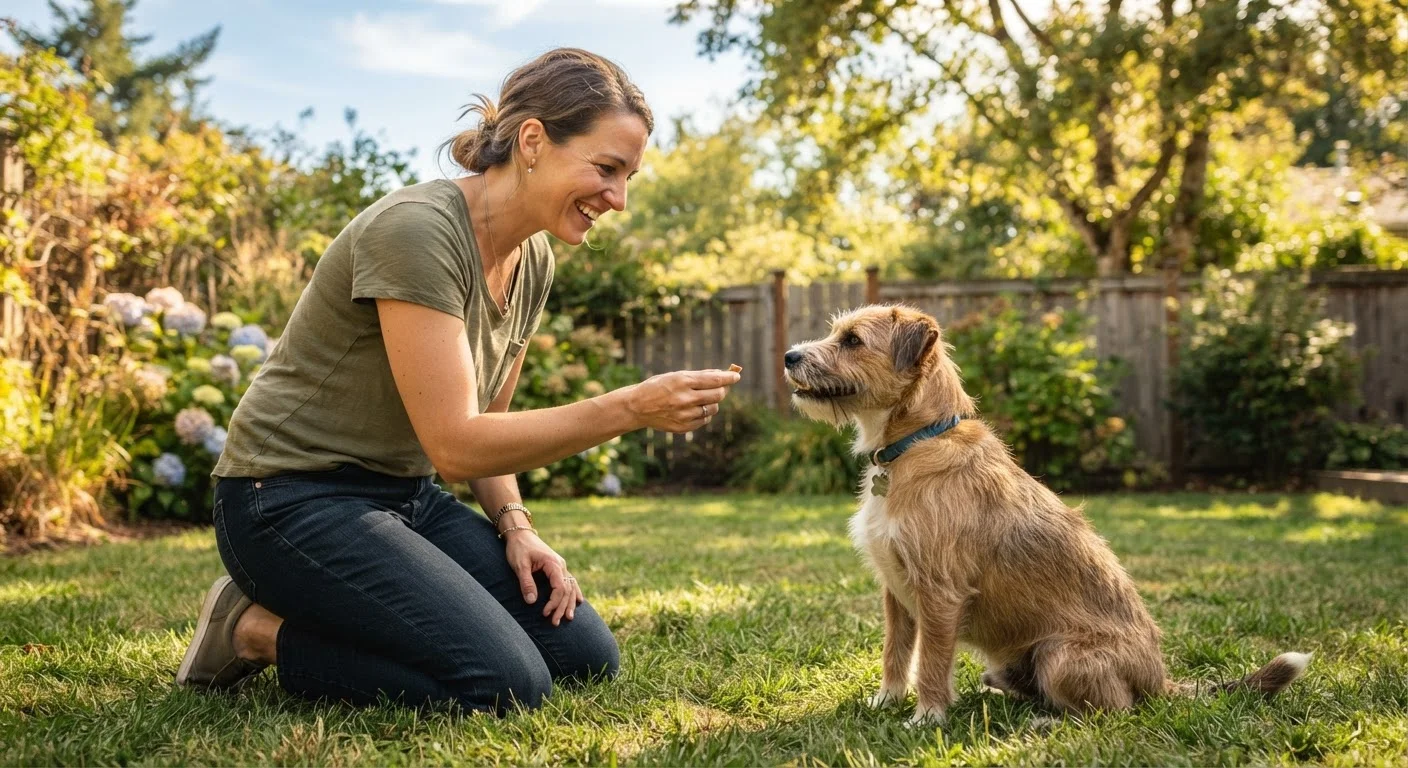
Key Takeaways
- Short, consistent sessions of 5–10 minutes are more effective than long, infrequent ones.
- Positive reinforcement — rewarding desired behavior immediately — is the foundation of at-home training.
- Sit, stay, and recall are the three commands that deliver the most practical safety and control.
- Timing your reward within two seconds of the correct behavior helps your dog connect action to outcome.
- Distractions should be introduced gradually, only after a command is reliable in a quiet setting.
What you will need
Why At-Home Training Works
Professional classes offer structure and socialization, but they are not the only path to a well-mannered dog. Most foundational obedience can be built at home with nothing more than consistency, good timing, and a handful of treats. In fact, training in your own environment has a practical advantage: your dog is learning the rules of the exact spaces where those rules matter most.
If you are preparing to bring a new dog home, the foundation guide for new dog owners covers the mindset and routines to establish before training even begins. And if you have ever wondered whether group classes might suit your situation better, this comparison of training approaches lays out the honest trade-offs.
The backbone of effective at-home training is positive reinforcement: rewarding the behavior you want the moment it happens. This approach is widely supported by animal behaviorists and veterinary professionals. It builds a dog's confidence, strengthens your relationship, and produces behaviors that hold up under real-world conditions.
What you will need
Training Treats
Small, soft, high-value rewards delivered immediately after the correct behavior to reinforce the command.
Treat Pouch or Pocket
Keeps rewards accessible so you can deliver them within the critical two-second window.
Clicker
A handheld device that produces a precise click sound to mark correct behavior the instant it happens, before the treat is delivered.
Standard Leash (4–6 ft)
Used during recall training to practice in a controlled setting before moving to off-leash environments.
Long Line (15–30 ft)
Allows your dog freedom to move during recall practice while keeping them safe and giving you control.
Step-by-Step: Teaching Sit, Stay, and Come
The three commands below are the most practical starting point for any dog owner. Sit builds impulse control. Stay teaches your dog to hold a position under mild pressure. Recall — the "come" command — is a genuine safety skill that can prevent dangerous situations. Work through them in order, ensuring each is reliable before building on it.
Consistency Matters More Than Perfection
Every person in your household should use the same cue words and hand signals for each command. Mixed signals — one person saying "down" to mean lie down while another uses it to mean off the couch — create confusion that stalls progress. Agree on your vocabulary before you start, and stick to it.
Set up your training environment
Choose a low-distraction space — a quiet room or a fenced yard. Remove toys, other pets, and anything that competes for your dog's attention. Have your treats portioned and ready before you bring your dog in. Sessions should run 5–10 minutes maximum to keep your dog mentally fresh and engaged.
Teach "Sit"
Hold a treat close to your dog's nose, then slowly move your hand up and slightly back over their head. As their nose follows the treat upward, their rear will naturally lower to the ground. The moment their bottom touches the floor, say "sit" clearly once, then immediately deliver the treat and calm verbal praise. Repeat 5–8 times per session.
Teach "Stay"
Ask your dog to sit. Open your palm toward them like a stop signal and say "stay" in a calm, neutral tone. Take one small step backward, pause one second, then step back and reward. Gradually increase the distance and duration over multiple sessions — do not rush. Release your dog from the stay with a consistent release word such as "okay" or "free" before they break position on their own.
Teach Recall ("Come")
Attach a leash or long line for safety. Crouch down to your dog's level, open your arms slightly, say "come" in a warm and upbeat tone, and gently guide the leash toward you if needed. When your dog reaches you, reward with a high-value treat and enthusiastic praise. Never call your dog to you for something they find unpleasant (baths, nail trims, crating) — this poisons the cue. For building a rock-solid recall in real-world situations, see our full recall training guide.
Gradually add distractions
Once each command is reliable in a quiet setting (roughly 8 out of 10 correct responses), introduce mild distractions: a family member in the background, training outdoors, or a new room. Increase difficulty one variable at a time — more distance, more duration, or more distraction — never all three simultaneously. If your dog struggles, dial back to an easier version and rebuild confidence before progressing.
Use High-Value Treats for New Commands
When introducing a command for the first time, use a treat your dog finds especially motivating — small pieces of cooked chicken, cheese, or commercial training treats work well. Once the behavior is reliable, you can gradually shift to praise, play, or lower-value rewards. Keeping some variety in rewards maintains enthusiasm over time.
Avoid Punishment-Based Corrections
Physical corrections, harsh verbal reprimands, or withholding necessities as punishment can damage the trust between you and your dog and are not supported by current animal behavior science. If your dog isn't responding, shorten the session, reduce the difficulty, and end on a success. See common training myths debunked for more on why these methods often backfire.
This article is for general informational and educational purposes only. For dogs with behavioral challenges, fear responses, or aggression, consult a certified professional trainer or your veterinarian before proceeding independently.