

Key Takeaways
- Scratching is a biological need, not defiance or spite from your cat.
- Cats scratch to condition their claws, stretch, and mark territory with scent.
- Stress and boredom can increase the frequency and intensity of scratching.
- Providing appropriate scratching surfaces is the most effective long-term solution.
- Punishment does not stop scratching — it only adds stress and erodes trust.
Cat Scratching Behavior
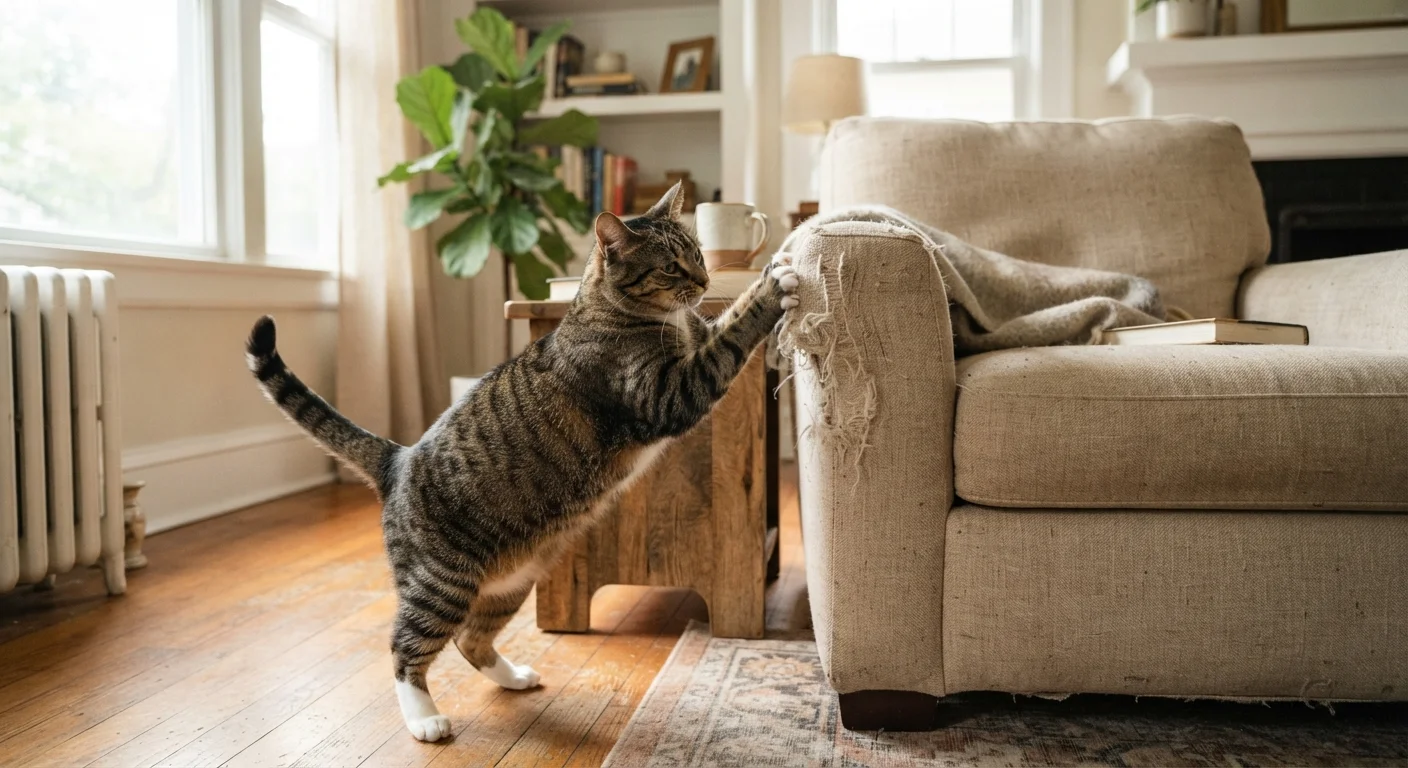
Scratching is an instinctive, biologically driven behavior in cats — not a sign of bad manners or spite. Cats scratch to maintain their claws, stretch their muscles, mark their territory, and manage stress. It is a normal part of feline life that every cat will engage in regardless of breed or age.
When a cat scratches, scent glands in the paw pads release pheromones that leave both a visual mark and a chemical signal — a dual communication system that serves social and territorial functions.
Scratching Is Not Misbehavior — It's Biology
Many cat owners interpret furniture scratching as a form of defiance or destruction. In reality, a cat scratching your sofa is following deeply embedded instincts that exist for very practical reasons. Understanding those reasons is the foundation for addressing the behavior constructively.
Cats scratch for four primary purposes:
- Claw maintenance: Scratching strips away the outer sheath of the nail, keeping claws sharp and healthy. It is the feline equivalent of filing your nails.
- Muscle and tendon stretching: The act of dragging claws downward engages the muscles from shoulder to toe — a full-body stretch that feels good and keeps cats limber.
- Territory marking: Scent glands in the paw pads leave an invisible chemical marker on scratched surfaces. The visible scratch marks serve as a secondary, visual signal to other animals.
- Stress relief: Scratching releases tension. It is a self-soothing mechanism, similar to how people might pace or fidget when anxious.
Because scratching serves these real physiological and psychological functions, simply trying to stop it entirely is not realistic — or fair to your cat. The goal is redirection, not elimination.
Start With Placement, Not the Post Itself
Before buying a new scratching post, try relocating the one you already have to sit directly beside the furniture your cat targets. Location is often the single biggest factor in whether a cat uses a scratching alternative. Once the habit forms in the right spot, you can gradually shift the post to a more convenient location.
Why Your Cat Chooses That Specific Spot
Cats are deliberate about where they scratch, and their choices are not random. The location and surface matter for reasons rooted in communication and comfort.
Furniture in high-traffic areas — the living room couch, a chair by the front door — tends to be prime scratching real estate because these spots carry the most human scent and social activity. Scratching there allows a cat to layer their own scent into the busiest parts of the shared environment, which is a form of claiming space rather than expressing ownership in a human sense.
Surface texture also plays a role. Most cats prefer something that offers resistance and shreds satisfyingly — the weave of upholstered furniture is often more appealing than a thin, flimsy scratching post. Orientation matters too: some cats prefer horizontal surfaces while others strongly favor vertical ones.
Scratching and Territorial Communication
In multi-cat households, scratching behavior can intensify because cats are communicating with one another through the scent marks they leave. If you have more than one cat, providing multiple scratching surfaces in different rooms — rather than a single shared post — can reduce competition and stress-related scratching.
If your cat recently started scratching in new places or ramped up the intensity, consider what has changed in the household. As explored in our guide on pet anxiety, many behaviors that look like destruction are actually stress responses in disguise.
How to Redirect the Behavior Effectively
Redirecting scratching does not require punishment — which is counterproductive and can damage your relationship with your cat. Instead, focus on making appropriate alternatives more appealing than the furniture.
Match the preference: Observe your cat. Do they scratch vertically or horizontally? Do they go for carpet-like fabric or something rougher? Offer scratching surfaces that mimic those preferences. Sisal rope, corrugated cardboard, and carpet-covered posts each appeal to different cats.
Location matters: Place scratching posts and pads near the furniture your cat currently targets. A post tucked in a corner of a rarely-used room is likely to be ignored. Cats want to scratch in the spaces they inhabit.
Height and stability: A post needs to be tall enough to allow a full stretch — generally at least 28 to 32 inches for an adult cat — and stable enough not to wobble. An unstable post is a deterrent, not an incentive.
Positive reinforcement: When your cat uses the appropriate surface, acknowledge it with calm praise or a small treat. Cats respond to positive associations, not corrections.
Building these habits early is easier than reversing them later. Establishing a consistent daily care routine helps cats feel secure, which can also reduce stress-driven scratching over time.
When Scratching Becomes a Bigger Signal
Excessive scratching — especially when sudden or paired with other behavior changes — can sometimes indicate an underlying issue worth discussing with a veterinarian. Skin irritation, overgrown nails, or anxiety disorders may all manifest through intensified scratching behavior.
Keep an eye on the broader picture of your cat's behavior. Changes in litter box habits, appetite, or social interaction alongside increased scratching are worth noting and mentioning to your vet. Monitoring litter box habits is one useful way to track behavioral shifts across time.
For a deeper look at the roots of feline behavior challenges, understanding why behavioral problems develop can help you approach the issue with context rather than frustration.
This article is for general informational purposes only and does not constitute veterinary advice. Always consult a licensed veterinarian for guidance specific to your cat's health and behavior.