

Key Takeaways
- Wet food contains significantly more moisture, which can support urinary and kidney health in cats and dogs.
- Dry kibble is generally more calorie-dense per gram and easier to store, portion, and serve.
- Neither format is universally superior — the right choice depends on your pet's health, age, and preferences.
- Many veterinarians consider a mixed feeding approach a practical middle ground for most healthy pets.
- Always consult your veterinarian before making major changes to your pet's diet.
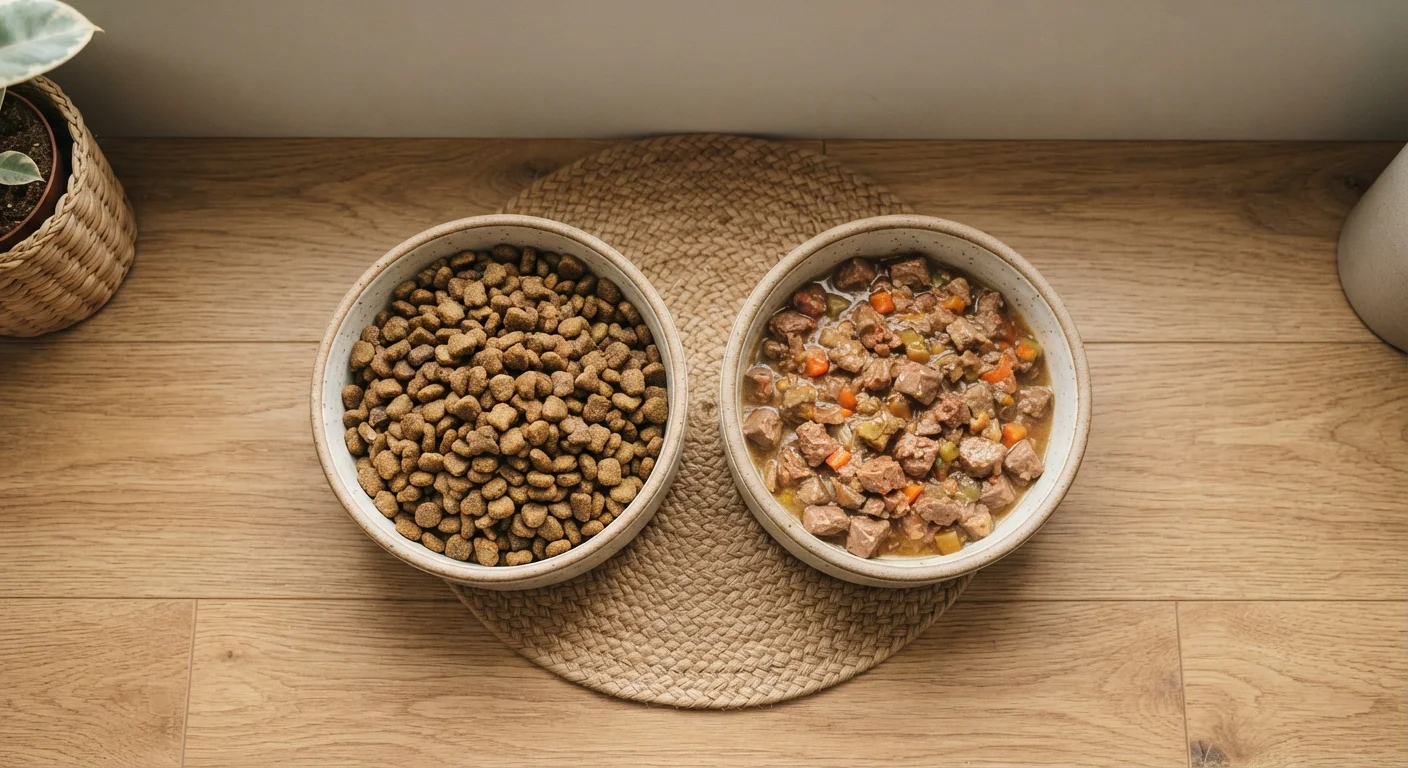
Option A
Dry Food (Kibble)
The convenient, shelf-stable everyday staple.
Best for: Pet owners seeking an affordable, easy-to-store option that supports routine dental maintenance.
Option B
Wet Food (Canned)
The moisture-rich, palatable alternative.
Best for: Pets with low thirst drive, urinary concerns, or picky appetites who benefit from higher hydration in meals.
If your cat or dog has a history of urinary tract issues or kidney disease
Wet Food (Canned)
The high moisture content — typically 70–80% water — helps increase daily fluid intake, which supports urinary tract and kidney function. Always confirm with your vet.
If you need an affordable, convenient option for a healthy adult pet
Dry Food (Kibble)
Kibble stores easily, costs less per serving, and can support dental health through mechanical chewing action — though it should not replace professional dental care.
If your pet is a picky eater or has a reduced appetite
Wet Food (Canned)
Wet food's stronger aroma and softer texture tend to be more palatable to finicky pets, making it easier to maintain consistent caloric intake.
If you want a balanced approach for a healthy pet at any life stage
Dry Food (Kibble)
A primarily dry diet, supplemented occasionally with wet food for palatability and hydration, is a well-tolerated approach for many healthy dogs and cats. Discuss specifics with your vet.
If your senior pet has dental pain, missing teeth, or jaw weakness
Wet Food (Canned)
Wet food's soft consistency is far easier for pets with compromised dental health or chewing difficulties to manage comfortably.
What Actually Differs Between the Two Formats
At their core, dry kibble and wet canned food are simply different delivery formats for balanced pet nutrition — but those formats carry real physiological consequences. The most significant difference is moisture content. Kibble typically contains around 10% water, while wet food averages 70–80%. That gap is meaningful: cats in particular evolved as desert animals with a low thirst drive, and many do not drink enough water to compensate for a fully dry diet. Dogs tend to drink more freely, but hydration gaps can still emerge.
Caloric density is another key distinction. Because kibble has most of its water removed, it packs more calories per gram than wet food. This means portion sizes and calorie counts look very different between the two, which matters for weight management. Overfeeding is a common risk with calorie-dense kibble when portions aren't measured carefully.
For a deeper look at how feeding format interacts with life stage, see The Life Stage Approach to Pet Nutrition, which covers how nutritional needs shift from puppyhood through senior years.
| Criterion | Dry Food (Kibble) | Wet Food (Canned) |
|---|---|---|
| Moisture Content | ~10% water | ~70–80% water |
| Caloric Density | Higher per gram | Lower per gram |
| Hydration Support | Minimal | Significant |
| Dental Benefit | Some surface abrasion | Minimal to none |
| Palatability | Moderate | Generally higher |
| Cost Per Serving | Lower | Higher |
| Storage Convenience | Shelf-stable, easy | Refrigerate after opening |
| Best for Weight Management | With careful portioning | Easier volume control |
Hydration, Dental Health, and Common Trade-Offs
The hydration advantage of wet food is well-established. Pets that consume more moisture through their food tend to produce more dilute urine, which may reduce the concentration of minerals that form crystals or stones — a concern especially relevant for cats prone to feline lower urinary tract disease (FLUTD). For pets with kidney disease, veterinarians frequently recommend wet food as a way to support fluid intake without relying on the animal drinking more water voluntarily.
Dental health claims around dry food are more nuanced. While the mechanical action of chewing kibble does provide some surface abrasion on teeth, most standard kibble shapes and sizes don't reach far enough into the gum line to meaningfully reduce tartar. Specially formulated dental diets — which use larger, textured kibble designed to scrub teeth — are different from standard dry food. Neither format replaces professional dental cleanings. Wet food does not actively harm teeth, but it also provides no abrasive benefit.
A Note on Dental Health Claims
The idea that dry food significantly cleans teeth is widely repeated but often overstated. Standard kibble provides minimal dental benefit for most pets. If dental health is a priority, ask your veterinarian about diets specifically designed for dental support, as well as tooth-brushing routines. Professional dental cleanings remain the most reliable tool for managing oral health in dogs and cats.
From a cost and convenience standpoint, dry food holds a clear edge. It stores at room temperature, doesn't spoil quickly after opening, and generally costs less per calorie than wet food. Wet food requires refrigeration after opening and has a shorter window before it should be discarded.
See what the research actually says for a closer look at the evidence behind dental health claims and palatability differences.
How to Decide — and What Your Vet Should Know
No single feeding format fits every pet. A young, healthy Labrador with no urinary history and an enthusiastic appetite may thrive on a quality dry diet. An older cat with chronic kidney disease almost certainly benefits from the hydration boost wet food provides. A mixed approach — dry food as the primary diet with wet food added regularly — is a strategy many veterinarians consider reasonable for healthy pets, offering both practicality and palatability.
What matters most is that the food is nutritionally complete and appropriate for your pet's species, size, age, and health status. Look for an AAFCO (Association of American Feed Control Officials) statement on packaging that confirms the diet meets nutritional standards for your pet's life stage. For help decoding labels, Pet Nutrition Labels, Decoded walks through what those guaranteed analysis panels and ingredient lists actually mean.
70–80%
Average moisture content in wet pet food
Compared to approximately 10% in dry kibble, this difference meaningfully affects daily fluid intake, particularly in cats.
~60%
of cats affected by dental disease by age 3
According to general veterinary estimates, dental disease is one of the most common health conditions in cats and dogs, underscoring the limits of relying on food format alone for oral care.
If you're uncertain which format — or which combination — is right for your pet, bring the question to your veterinarian. They can factor in bloodwork, body condition score, dental health, and any existing medical concerns to give guidance tailored to your animal. This article is for general informational purposes only and is not a substitute for professional veterinary advice. For broader context on keeping your pet healthy, visit the Pet Health & Wellness hub.
This article is for general informational purposes only and does not constitute veterinary or medical advice. Always consult a licensed veterinarian before making changes to your pet's diet or health care routine.