

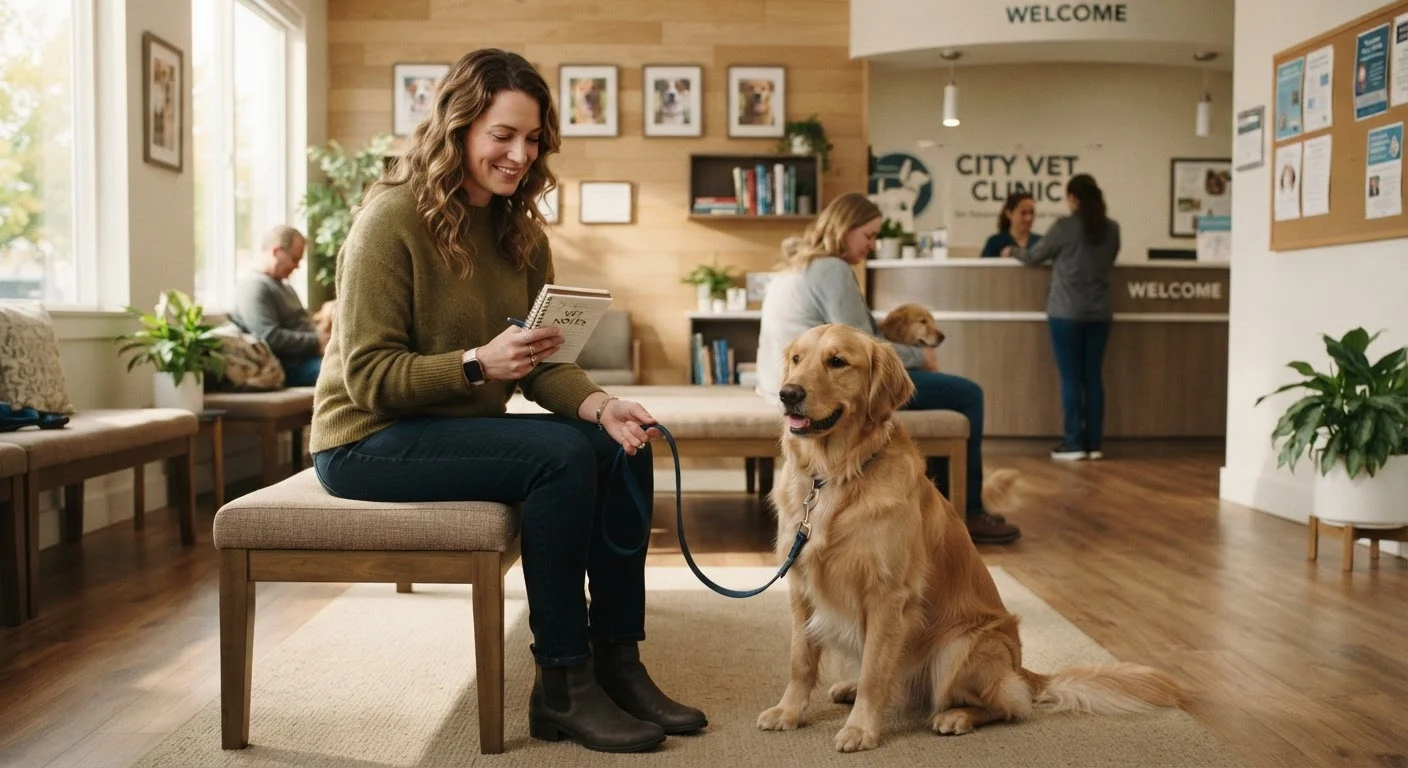
Key Takeaways
- Bringing complete records helps your vet make faster, more informed decisions.
- Noting symptoms before the visit ensures nothing important gets forgotten in the moment.
- Preparing questions in advance makes appointments more productive for both you and your vet.
- Tracking your pet's health at home between visits builds a valuable baseline over time.
- Consistent preparation leads to better continuity of care across every vet visit.
Summary
22 items · 20–40 minutes
Why Preparation Makes Every Vet Visit Count
Vet appointments are often short — typically 15 to 30 minutes — which means the information you bring in matters. A well-prepared owner helps the veterinarian spend less time gathering background and more time actually evaluating your pet. Whether this is a routine wellness checkup or a concern-driven visit, walking in organized puts you both in a better position to catch problems early and make good decisions together.
This checklist is designed for any pet owner — whether you have a new puppy or a senior cat — who wants a reliable, repeatable routine. For a deeper look at what vets are doing during those exams, see our breakdown of what a wellness exam covers. And if you're still figuring out how often your pet should be seen, our guide on how often to take your pet to the vet is a good starting point.
Don't Wait for Your Appointment If Symptoms Are Severe
This checklist is for routine and scheduled visits. If your pet is showing signs of a possible emergency — such as difficulty breathing, collapse, uncontrolled bleeding, or suspected poisoning — do not wait. Contact an emergency veterinary clinic immediately. Our guide on when to seek emergency vs. routine vet care can help you assess the urgency.
What to Bring to the Appointment
Arriving with the right documents and physical items removes guesswork and helps the veterinary team do their job efficiently. If you don't already maintain a home health file for your pet, our article on keeping a pet health record at home walks you through exactly what to track.
Documents & Records
Physical Items
Symptoms & Observations to Report
Questions to Ask Your Vet
Tools That Help You Stay Organized
You don't need anything elaborate to stay prepared — but a few simple tools make the habit easier to maintain consistently.
Pet health notebook or binder
Store vaccine records, medication lists, and vet visit summaries in one accessible place.
Smartphone camera
Capture short video clips of symptoms, unusual behavior, or physical changes to show your vet.
Bathroom scale
Monitor your pet's weight at home between visits to catch gradual changes early.
Stool sample collection kit
Collect a fresh fecal sample for parasite screening — available at most veterinary clinics.
Pet health tracking app
Log medications, symptoms, and appointment notes digitally for easy reference and sharing.
Questions Worth Asking Your Vet
Good questions lead to better care. Veterinarians welcome owners who come prepared — it signals engagement and often surfaces information that changes recommendations. Don't rely on memory; jot your questions down beforehand. If your pet is showing signs that feel urgent, our guide on emergency vs. urgent care vs. regular vet can help you decide whether to wait for a scheduled visit or seek faster attention.
For broader context on keeping your animals healthy long-term, explore our Pet Health & Wellness hub.
Be Honest — Even If It Feels Awkward
Veterinarians need accurate information to make sound recommendations. If your pet has been eating table scraps, missed doses of medication, or had access to potential toxins, say so plainly. There is no judgment — only the goal of giving your pet the best possible care. Incomplete information can lead to missed diagnoses or inappropriate treatment decisions.