

Key Takeaways
- Free-feeding and poor portion control are the primary drivers of gradual pet weight gain.
- Treats can account for a surprising share of daily caloric intake without owners realizing it.
- Pets have different caloric needs at different life stages, and feeding guidelines need to change accordingly.
- Vets use body condition scoring — not just scale weight — to assess whether a pet is overweight.
- Consistent meal schedules and measured portions are the most reliable tools for healthy weight management.
Why Weight Gain in Pets Happens So Slowly
A dog or cat gaining half a pound over several months rarely triggers alarm bells. That's exactly the problem. Gradual weight gain in pets is almost invisible day to day — owners simply adjust to a slightly rounder silhouette without connecting it to feeding habits. By the time extra weight becomes obvious, it's often been accumulating for a year or more.
The mechanics are straightforward: when caloric intake consistently exceeds energy burned, excess energy is stored as fat. Pets are highly efficient at this process, especially as they age, become less active, or are spayed or neutered — all of which reduce metabolic rate. A difference of just 10–20 extra calories per day can result in meaningful weight gain over a full year. For a small cat, that might be a handful of extra kibble or a single treat.
Understanding the feeding habits that quietly drive this process is the first step toward better pet health outcomes. The mistakes below are among the most common — and most correctable.
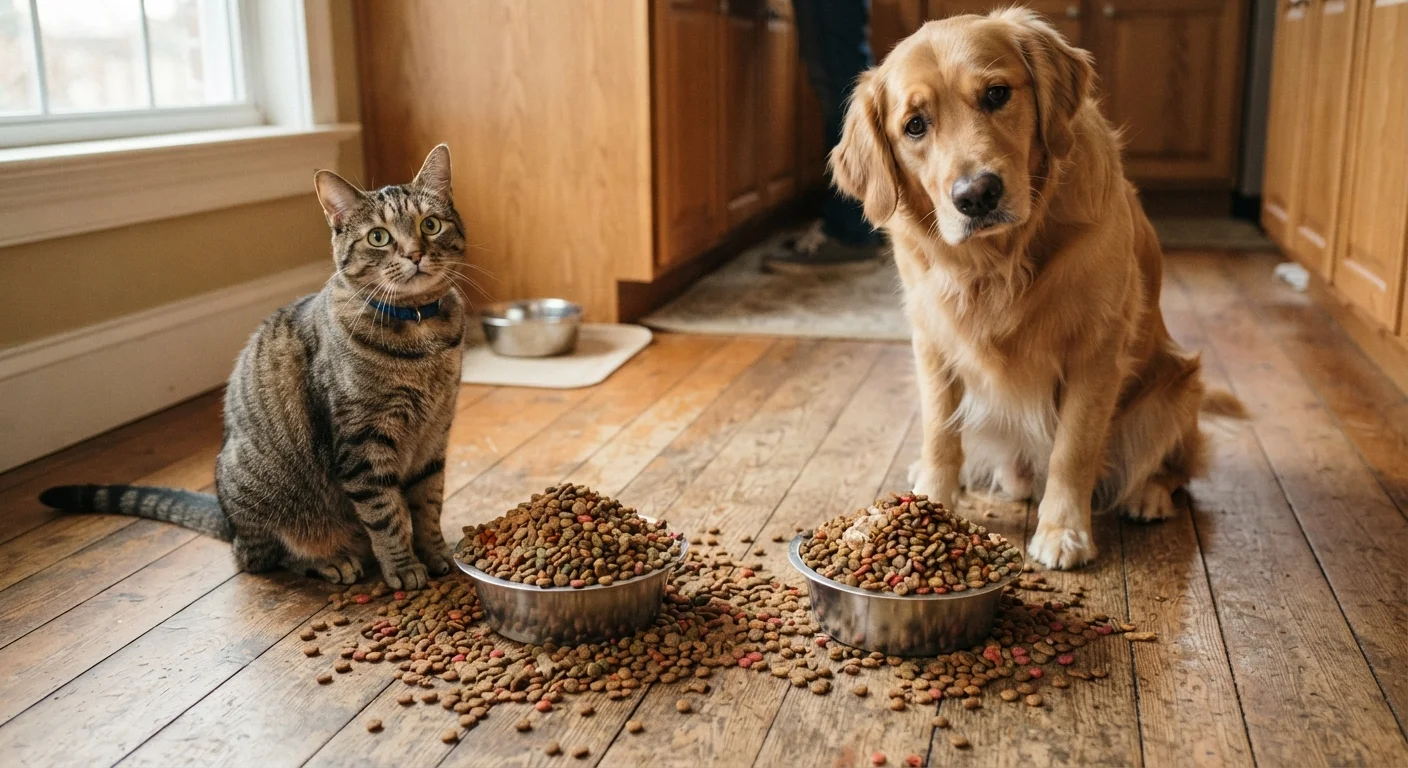
Free-feeding dry kibble throughout the day without measuring portions.
Why it happens: Many owners assume that pets self-regulate and will stop eating when full. In reality, most dogs and many cats will overeat when food is available continuously.
Using the feeding guide on food packaging as a precise prescription rather than a general starting point.
Why it happens: Package guidelines are designed for the average active adult animal. They don't account for a sedentary lifestyle, neutering, or individual metabolism — and they tend to err on the generous side.
Treating treats as separate from the daily food budget.
Why it happens: Owners mentally file treats under "love" rather than "calories," which makes it easy to give them without tracking frequency. Multiple household members may each give treats independently.
Failing to adjust food portions as a pet ages or becomes less active.
Why it happens: Once a feeding routine is established, it tends to stick. Owners may not connect reduced activity — due to age, injury, or a lifestyle change — to a need for fewer calories.
Supplementing a complete commercial diet with table scraps or extra food "just to make sure" the pet is satisfied.
Why it happens: Pets are skilled at appearing hungry even when they're not. Begging behavior is reinforced when owners respond with food, creating a loop that's hard to break.
Getting Feeding Right: What Consistent Habits Actually Look Like
Correcting these habits doesn't require a rigid or complicated routine. In practice, meaningful change comes from a few consistent actions: measuring food by weight or volume rather than eyeballing, scheduling set meal times, and tracking treat intake as part of the daily caloric picture rather than as something separate from it.
~60%
U.S. cats and dogs estimated overweight or obese
Association for Pet Obesity Prevention surveys have consistently found that a majority of U.S. household dogs and cats are above their ideal body weight.
10%
Recommended daily treat calorie limit
Most veterinary nutritionists suggest treats should account for no more than 10% of a pet's total daily caloric intake to avoid unintentional overfeeding.
It also means revisiting your pet's feeding plan whenever their life circumstances change — after a move from active to indoor-only living, after a sterilization procedure, or as they enter their senior years. What worked at age two may actively cause harm at age eight.
If you're unsure where your pet stands right now, a body condition assessment from your vet is a useful starting point. For a broader look at the health risks associated with extra weight, this overview of pet obesity covers what vets see and why it matters. The goal isn't perfection — it's building the kind of steady, informed routine that supports long-term wellbeing for your animal.
Always Involve Your Vet Before Changing a Pet's Diet
Weight management in pets is not one-size-fits-all. Underlying health conditions like thyroid disorders or joint pain can both contribute to weight gain and complicate dietary changes. Before significantly altering what or how much your pet eats, consult your veterinarian to rule out medical causes and get a safe, tailored plan.
This article is for general informational purposes only and is not a substitute for personalized veterinary advice. Always consult a licensed veterinarian regarding your pet's health, weight, and nutritional needs.