

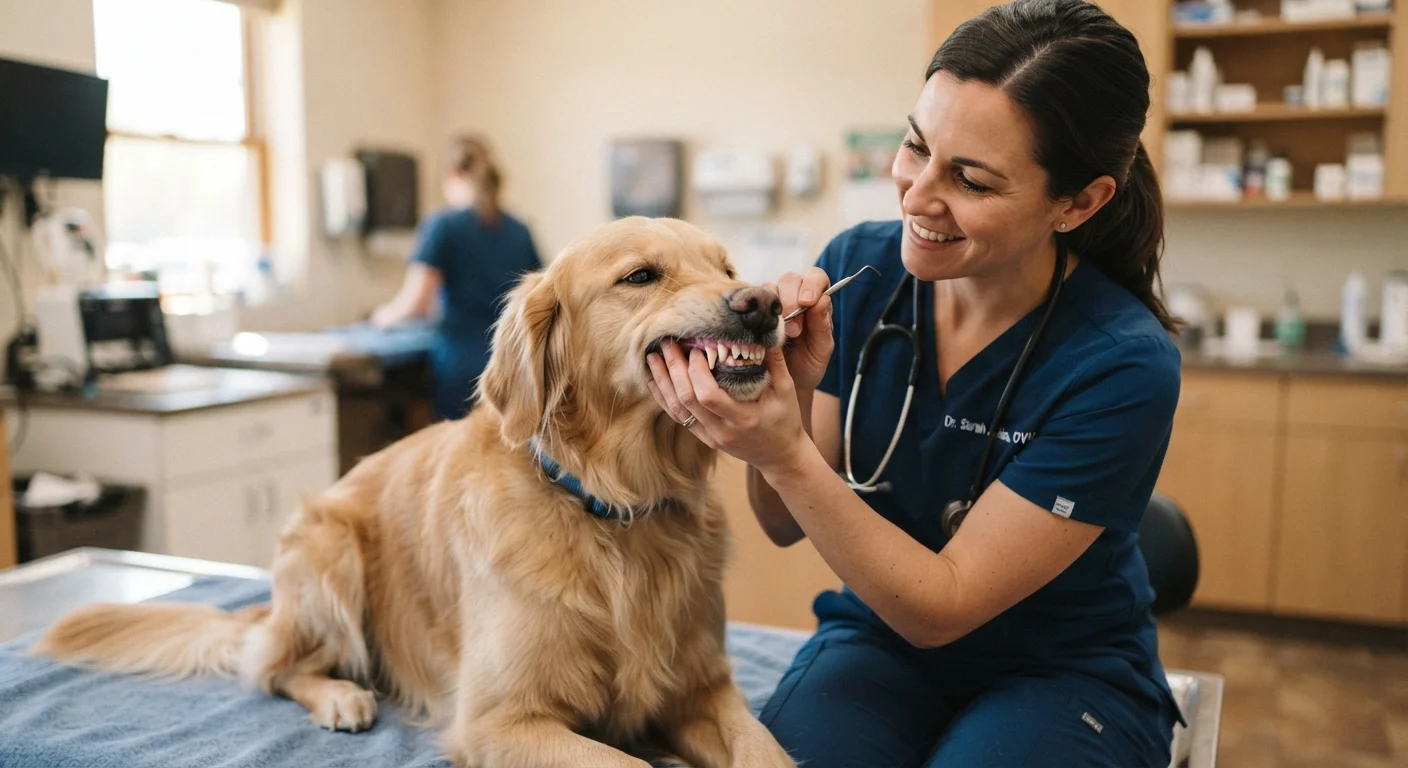
Key Takeaways
- Most dogs and cats show signs of dental disease by age three.
- Dental disease can silently affect the heart, kidneys, and liver if left untreated.
- Plaque hardens into tartar within days, making daily home care essential.
- Annual professional cleanings under anesthesia remain the veterinary standard.
- Pets rarely show obvious pain from dental disease, so owners must be proactive.
Pet Dental Disease
Dental disease in pets refers to the progressive deterioration of teeth, gums, and surrounding bone caused by plaque and tartar buildup. It ranges from mild gingivitis — inflammation of the gums — to advanced periodontitis, where tooth roots and jawbone are damaged. It is the most commonly diagnosed health condition in adult dogs and cats.
Periodontal disease is graded on a scale of 1 to 4 by veterinarians, with Stage 1 representing reversible gingivitis and Stage 4 indicating severe bone loss and often requiring tooth extraction.
Why Dental Disease Shows Up So Early
Plaque — a sticky film of bacteria — begins forming on a pet's teeth within hours of a meal. Without removal, it mineralizes into hard tartar (also called calculus) within a matter of days. Tartar cannot be brushed away at home; it requires professional scaling. This rapid cycle means that even young, otherwise healthy pets accumulate significant buildup quickly.
Smaller dog breeds are particularly vulnerable. Their teeth are often crowded into smaller jaws, creating tight spaces where plaque accumulates faster. Flat-faced breeds like bulldogs and Persian cats face similar crowding challenges. But no breed is immune — without consistent dental care, large dogs and mixed breeds follow the same trajectory.
The speed of progression surprises many owners who assume dental disease is an "old pet" problem. In reality, the American Veterinary Dental College reports that most dogs and cats show signs of periodontal disease by age three. That's a very short window between a pet's first teeth and clinically significant disease.
80%
Dogs showing dental disease by age three
The American Veterinary Dental College estimates that by age three, around 80% of dogs have some form of periodontal disease.
70%
Cats affected by dental disease by age three
Cats follow a similar trajectory, with the majority showing early-stage periodontal disease by their third year of life.
24–48 hrs
Time for plaque to begin hardening into tartar
Plaque can begin mineralizing into tartar within one to two days without removal, underscoring the value of daily brushing.
The Systemic Risk Most Owners Don't Know About
Dental disease doesn't stay confined to the mouth. Inflamed, infected gum tissue allows oral bacteria to enter the bloodstream — a process that can affect organs well beyond the jaw. Research has linked advanced periodontal disease in pets to changes in heart valve health, kidney function, and liver enzymes.
This is why veterinarians frame dental care as part of broader preventive health — not a cosmetic extra. If you're building a full preventive routine for your pet, oral health belongs alongside vaccinations and parasite control. See our guide to preventive pet care for how dental hygiene fits into the complete picture.
Pain from dental disease is also frequently missed. Pets are wired to conceal discomfort — a survival instinct that makes them stoic even when experiencing significant oral pain. Signs your pet may be in pain are often subtle and easy to overlook, which is why relying solely on behavioral cues is not a reliable detection strategy.
“Periodontal disease is the most common clinical condition occurring in adult dogs and cats, and is entirely preventable with appropriate care. By three years of age, most pets have some evidence of periodontal disease.”
— American Veterinary Dental College, Leading professional body for veterinary dental standards in the United States
What Prevention Actually Looks Like
The veterinary gold standard for prevention combines two elements: daily home care and annual professional cleanings under anesthesia.
Home Care
Daily tooth brushing with a toothpaste formulated for pets is the single most evidence-supported home strategy. Human toothpaste contains fluoride and other ingredients that are harmful if swallowed by animals — always use a pet-specific product. Introduce brushing gradually, especially with young pets, pairing it with positive reinforcement to build tolerance.
Dental chews, prescription dental diets, and water additives with veterinary approval can offer supplemental support, but none replace brushing or professional care. Look for products that carry the Veterinary Oral Health Council (VOHC) seal — this indicates the product has met independently evaluated efficacy standards.
Professional Cleanings
A professional veterinary dental cleaning involves scaling above and below the gumline, dental X-rays to assess root and bone health, and a full oral examination — all conducted under general anesthesia. This is the only way to address disease where it actually develops: beneath the visible gumline.
For a deeper look at what routine dental care involves and why it matters systemically, see our article on pet dental health and its broader effects.
Look for the VOHC Seal on Dental Products
The Veterinary Oral Health Council (VOHC) independently evaluates pet dental products and awards a seal to those that meet efficacy standards for plaque or tartar control. When choosing dental chews, diets, or water additives, the VOHC seal is a reliable indicator that the product has been tested — not just marketed — for dental benefit.
Starting Early Matters Most
Building dental habits during puppyhood or kittenhood pays off substantially over a pet's lifetime. Pets acclimated to mouth handling and tooth brushing early are far easier to care for as adults. A habit established in the first few months becomes routine rather than a battle.
New pet owners often underestimate how quickly foundational habits need to form — dental care included. Common early missteps often include delaying dental routines until disease is already visible. By then, professional intervention is usually needed before home care can be effective.
If your pet is already an adult and dental care hasn't been consistent, it's not too late to start — but a veterinary exam and likely a professional cleaning should come first to establish a clean baseline. From there, home care and scheduled cleanings can maintain what's been restored.
Dental health connects directly to the everyday habits that support long-term pet wellbeing. Small, consistent actions compound over time into meaningful health outcomes.
This article is for general informational purposes only and is not a substitute for professional veterinary advice. Always consult a licensed veterinarian for guidance specific to your pet's health needs.