

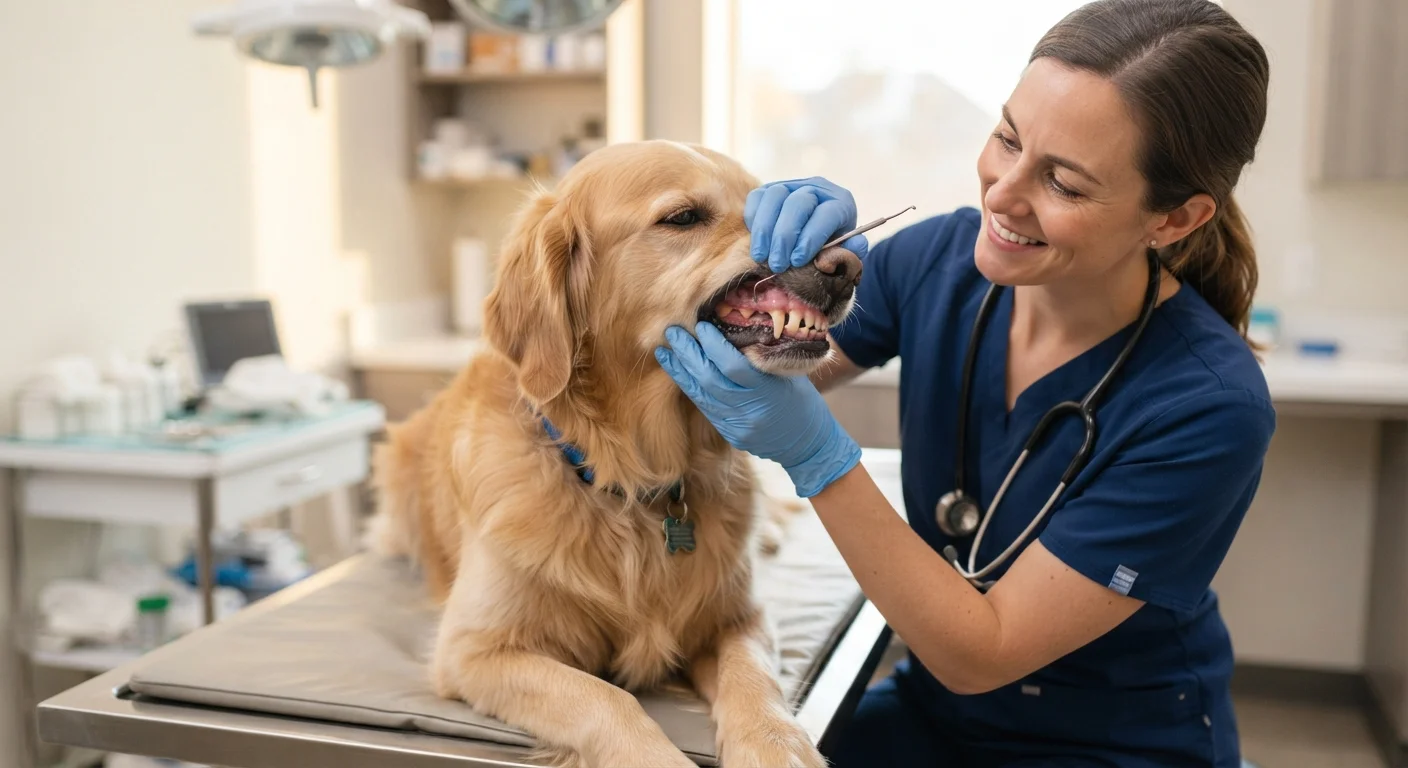
Key Takeaways
- Dental disease can affect a pet's heart, kidneys, and liver, not just their mouth.
- Most dogs and cats show signs of dental disease by age three.
- Daily toothbrushing is considered the single most effective at-home dental care habit.
- Professional veterinary cleanings are necessary even with consistent home care.
- Bad breath in pets is often a symptom of disease, not just normal pet odor.
- Early intervention is far less costly and disruptive than treating advanced dental disease.
Pet Dental Health
Pet dental health refers to the ongoing care of your pet's teeth, gums, and mouth to prevent disease. It includes at-home practices like toothbrushing and professional cleanings performed by a veterinarian. Good oral health isn't just about fresh breath — it's directly linked to the overall health of your pet's internal organs.
Periodontal disease — infection and inflammation of the structures supporting the teeth — is the most common clinical condition diagnosed in adult dogs and cats, according to the American Veterinary Dental College.
Why Dental Health Is a Whole-Body Issue
Most pet owners associate dental care with freshening breath or preventing tooth loss. While those are real concerns, veterinarians understand oral disease as a systemic problem — one that can affect organs far removed from the mouth.
When bacteria build up in a pet's mouth and cause infection in the gums, those bacteria can enter the bloodstream. Over time, this bacterial load has been associated with changes in the heart, kidneys, and liver. The connection isn't simply theoretical; it's a core reason the veterinary community treats dental health as part of preventive medicine rather than cosmetic maintenance.
As part of a broader approach to preventive pet care, dental hygiene sits alongside vaccinations, parasite control, and weight management — foundational habits that reduce long-term health risks.
Dental Health Is Recognized as Preventive Care
Many veterinary organizations, including the American Animal Hospital Association (AAHA), include dental care in their preventive care guidelines for dogs and cats. This reflects the understanding that oral health directly influences overall health outcomes. Discuss your pet's dental care plan at your next wellness visit.
What Dental Disease Actually Looks Like
Periodontal disease develops in stages. It starts with plaque — a soft film of bacteria — accumulating on tooth surfaces. When plaque hardens, it becomes tartar, which bonds to the tooth and can only be removed with professional tools. Left untreated, the infection spreads below the gumline, causing bone loss, loose teeth, and chronic pain.
According to the American Veterinary Dental College, most dogs and cats already show some evidence of periodontal disease by the time they reach age three. Many owners don't notice because pets instinctively mask discomfort. Dental disease in pets starts earlier than most owners realize, making early and consistent care critical.
Visible signs to watch for include:
- Persistent bad breath that goes beyond typical "dog breath"
- Yellow or brown deposits on the teeth near the gumline
- Red, swollen, or bleeding gums
- Changes in eating habits or reluctance to chew hard food
- Pawing at the face or drooling more than usual
80%
Dogs showing dental disease by age three
The American Veterinary Dental College reports that approximately 80% of dogs show signs of periodontal disease by their third year of life.
70%
Cats affected by dental disease by age three
Similarly, around 70% of cats show evidence of oral disease by age three, according to veterinary dental guidelines.
#1
Most common clinical condition in adult pets
Periodontal disease is cited as the single most diagnosed health condition in adult dogs and cats seen by veterinarians.
Building a Dental Care Routine at Home
The most impactful thing a pet owner can do between vet visits is brush their pet's teeth. Daily brushing removes the soft plaque before it hardens into tartar. It's the one habit with the strongest evidence behind it, and it's far more effective than any treat, chew, or water additive on its own.
Starting slow matters. Pets introduced gradually to the process — first tolerating a finger near the mouth, then a small amount of pet-safe toothpaste, then a soft brush — are more likely to accept it as routine. Never use human toothpaste; many formulas contain xylitol and fluoride, both toxic to animals.
Make Toothbrushing Easier From the Start
Introduce the toothbrush gradually — start by letting your pet lick pet-safe toothpaste off your finger before ever introducing a brush. Pair each session with calm praise or a brief play reward afterward. Consistency over weeks builds tolerance far better than forcing a full brushing session from day one.
Supplemental tools like dental chews carrying the Veterinary Oral Health Council (VOHC) seal can help slow plaque and tartar accumulation between brushings. These are add-ons, not replacements. Water additives and dental diets may offer modest additional benefit when chosen with veterinary guidance.
These habits fit naturally into the everyday habits that support a longer, healthier life for your pet.
What Happens at a Professional Dental Cleaning
Professional veterinary dental cleanings are performed under general anesthesia. This isn't optional — it's necessary for the veterinarian to safely examine below the gumline, take dental X-rays, and clean every surface of every tooth without causing the pet distress or risking injury.
During the procedure, the team removes tartar above and below the gumline, probes for pockets of infection, takes X-rays to evaluate root and bone health, and polishes the teeth to slow future plaque adhesion. If a tooth is too damaged to save, extraction may be recommended to eliminate a source of chronic pain or infection.
Pre-anesthetic bloodwork is typically recommended, particularly in older pets, to assess organ function before anesthesia — including kidney values that a urinalysis can help evaluate. Your pet's annual wellness exam is also a natural opportunity for your vet to assess dental health and recommend a cleaning schedule tailored to your pet.
This article is for general informational purposes only and does not constitute veterinary medical advice. Always consult a licensed veterinarian for guidance specific to your pet's health needs.