

Key Takeaways
- The first vet visit establishes a health baseline that guides all future care decisions.
- Bring any records, including vaccination history, from wherever your pet came from.
- Vets perform a nose-to-tail physical exam and assess behavior, weight, and development.
- Ask about vaccination schedules, parasite prevention, and nutrition at this appointment.
- Follow-up visits are often needed within weeks, especially for young pets.
Start here
Why the First Visit Is Different
Prepare
What to Bring to the Appointment
Understand
What the Vet Will Actually Do
Engage
Questions Worth Asking
Follow through
After the Visit: What Comes Next
Why the First Visit Is Different
A new pet's first vet visit isn't just a check-up — it's the starting point for their entire healthcare record. Whether you've adopted a puppy, a senior cat, or a rescue of unknown history, this appointment gives your veterinarian the information they need to understand what's normal for your individual animal.
Unlike follow-up visits where a vet compares findings against previous records, the first visit involves building that baseline from scratch. The vet will assess weight, temperature, heart rate, and development — establishing reference points that matter enormously in future appointments. It's also the visit where early problems are most commonly caught before they've had time to progress.
Aim to schedule the appointment within the first one to three days of bringing your pet home. This is general guidance, not a strict rule, but acting quickly matters — especially for young animals or pets with unknown histories. See our pet care basics hub for foundational guidance as you get started.
Schedule Within the First Few Days
Most veterinarians and shelter adoption agreements recommend a first wellness visit within 48 to 72 hours of bringing a new pet home. Even if your pet looks perfectly healthy, early exams can catch congenital issues, parasites, or infections that aren't visible to the untrained eye. Calling ahead to book before your pet arrives home is a smart move.
What to Bring to the Appointment
Arriving prepared makes the visit more productive for both you and the vet. Here's what to gather beforehand:
- Medical and vaccination records — Any paperwork from a breeder, shelter, or previous owner. Even incomplete records help.
- A fecal (stool) sample — Collected within 12 to 24 hours of the appointment in a sealed bag or container. Vets use this to screen for intestinal parasites.
- Your pet's current food — Or at minimum, the brand and type. This helps the vet assess nutritional adequacy.
- A list of observed behaviors or concerns — Anything unusual you've noticed, even if it seems minor.
- Questions you want answered — Write them down in advance so you don't forget under the pressure of the moment.
For a comprehensive checklist, see our article on veterinary visit prep — it covers records, symptom tracking, and the questions most worth asking at any appointment.
Baseline exam
A first-time physical assessment used to establish what's normal for your individual pet, providing a reference point for all future veterinary visits.
Core vaccines
Vaccinations recommended for all pets of a given species, regardless of lifestyle, because the diseases they prevent are widespread or particularly dangerous.
Fecal flotation test
A laboratory test performed on a stool sample to detect common intestinal parasites such as roundworms, hookworms, and giardia.
Parasite prevention
Medications or treatments — applied monthly or otherwise — that protect pets from fleas, ticks, heartworm, and intestinal worms. Your vet recommends specific options based on your region and pet.
Auscultation
The process of listening to a pet's heart and lungs with a stethoscope to detect murmurs, abnormal rhythms, or respiratory problems.
What the Vet Will Actually Do
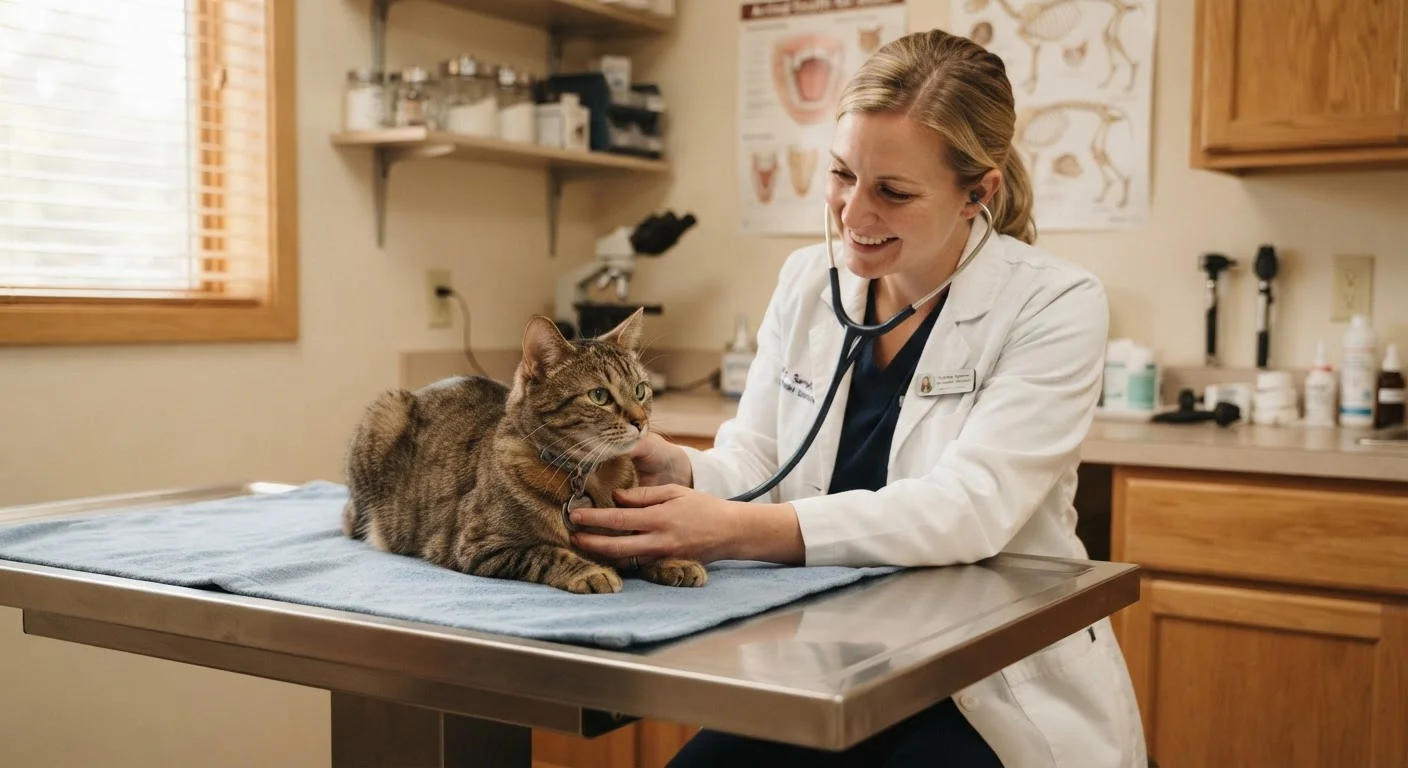
Most first visits follow a recognizable structure. The vet or a technician will start by gathering basic information — your pet's weight, temperature, heart rate, and breathing rate. Then the hands-on exam begins.
A standard nose-to-tail physical assessment typically covers:
- Eyes and ears — Checking for discharge, infection, or structural issues
- Mouth and teeth — Looking at gum color, tooth development, and early dental health
- Skin and coat — Signs of parasites, irritation, or poor condition
- Abdomen — Feeling for organ size and detecting tenderness
- Lymph nodes and joints — Assessing for swelling or discomfort
- Heart and lungs — Listening for murmurs, arrhythmias, or respiratory issues
Depending on your pet's age and background, the vet may recommend vaccinations, a deworming treatment, or initial parasite prevention. They'll also review the fecal sample results if available. To understand how this visit compares to future routine exams, see what a wellness exam covers.
Bring a Carrier or Leash — Every Time
Even if your pet is calm at home, a veterinary waiting room is full of unfamiliar smells and animals. Dogs should always be on a leash or in a carrier, and cats and small animals should always travel in a secure, enclosed carrier. This protects your pet, other animals in the clinic, and the staff.
Questions Worth Asking
Your vet is your single most valuable resource during this appointment. Don't leave without covering the essentials:
- What vaccinations does my pet need now, and what's the recommended schedule going forward?
- What parasite prevention is appropriate for my area and my pet's lifestyle?
- Is my pet's weight appropriate for their age and breed?
- What should I be feeding, and how much?
- Are there early signs of anything I should monitor?
- When should we come back?
If you've recently brought home a dog, you may also have questions about behavior and early training. Those concerns are just as valid to raise with your vet — some behavioral issues have medical roots. Our first two weeks with a new dog guide is a helpful companion resource during this period.
Don't Skip Questions to Save Time
First vet visits can feel rushed, but the information exchanged here shapes your pet's care for years. If you feel a concern was brushed past or you didn't understand an answer, it's completely appropriate to ask the vet to clarify or slow down. A good veterinary team will welcome the engagement — never leave confused about your pet's care plan.
After the Visit: What Comes Next
The first visit rarely stands alone. Young pets — especially kittens and puppies — typically need a series of follow-up appointments spaced weeks apart to complete their initial vaccination series. Rescue animals with unknown histories may need additional diagnostic work. Your vet will outline a specific schedule before you leave.
Keep all documentation from this visit in a dedicated folder or digital record. This paper trail becomes important if you ever need to board your pet, travel internationally, or see a different clinic in an emergency.
As your pet matures, first-visit records evolve into a long-term health story. Understanding what vets check during annual wellness exams will help you stay engaged with your pet's health year after year.
This article is for general informational purposes only and does not constitute veterinary medical advice. Always consult a licensed veterinarian for guidance specific to your pet's health needs.