

Key Takeaways
- A price book records what you actually pay for recurring purchases, building a personal reference database.
- Even a few weeks of entries reveals the difference between a genuine sale and an inflated 'regular' price.
- Tracking unit prices — not just sticker prices — makes comparisons across sizes and stores meaningful.
- A price book works best when limited to the 20–40 items you buy most consistently.
- Any format works: notebook, spreadsheet, or a notes app on your phone.
What you will need
What a Price Book Is and Why It Still Works
A price book is exactly what it sounds like: a running log of what you pay for specific items, where you buy them, and when. The concept predates smartphones by decades — frugal households kept these in binders long before price-comparison apps existed. The core logic holds up because it hasn't changed: if you don't know what something normally costs, you can't reliably tell whether a "sale" is real.
Retail pricing strategies rely on shoppers having short memories. Prices cycle up and down, promotional labels appear on items that aren't meaningfully discounted, and package sizes quietly shrink while price tags stay flat. A price book creates a record that outlasts your memory of last month's grocery run.
This is especially valuable paired with unit price math, which helps you compare across package sizes — not just total shelf price. Together, the two habits address the most common ways everyday shoppers overpay without realizing it.
Start Small, Then Expand
Don't try to track everything at once. Start with just 10 items you buy every single week — things like coffee, laundry detergent, or cooking oil. Once logging those feels automatic, add more. A small, maintained price book outperforms a large, abandoned one every time.
What You'll Need Before You Start
The barrier to starting a price book is low. You don't need a special tool or prior budgeting experience — just a consistent format and a habit of recording at the point of purchase.
What you will need
Notebook or binder
Record price entries by hand at home after each shopping trip — no tech required.
Spreadsheet (e.g., Google Sheets)
Organize entries by item and store, and calculate unit prices automatically with simple formulas.
Grocery receipts
Primary source for accurate price and weight/quantity data used to calculate unit prices.
Calculator or phone
Calculate unit prices (price ÷ quantity) when the shelf label doesn't display them.
How to Build and Use Your Price Book
Follow these steps to set up a price book that's practical enough to actually maintain. The goal is a lightweight reference you consult before shopping, not a complex data project.
Choose your format
Pick one format and commit to it: a dedicated notebook, a simple spreadsheet, or a note in your phone. Consistency matters more than sophistication. A spreadsheet makes sorting easier; a notebook requires no device. Either works as long as you'll actually use it after every shopping trip.
Select your core items
Look back at two or three recent receipts and identify the items that appear most often. These are your candidates. Aim for 20–40 recurring purchases — things you buy at least once a month. Skip one-off or highly variable items like fresh produce priced by weight; price books work best on consistent, packaged goods.
Set up your entry columns
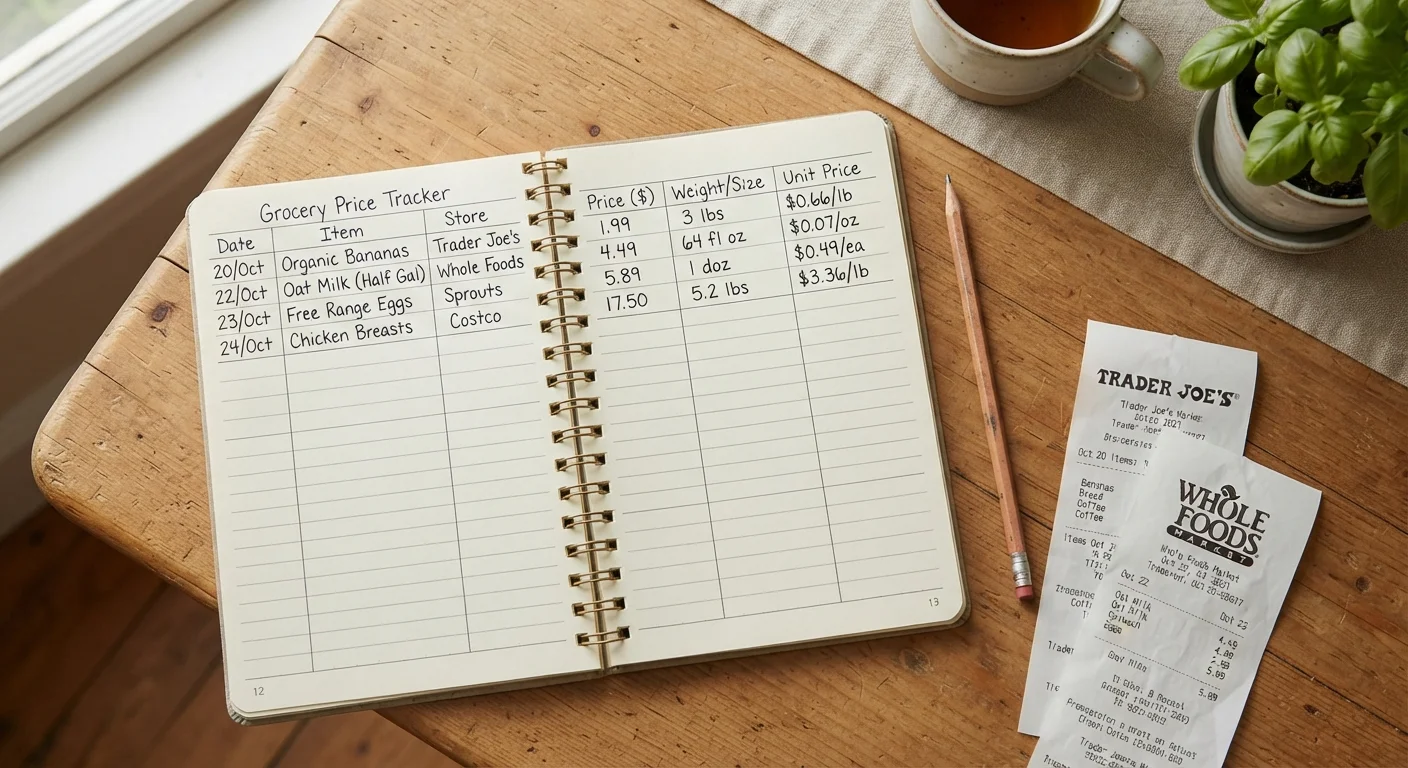
For each item, record the following fields:
- Item name and brand (be specific — different sizes are different entries)
- Store name
- Package size (weight, count, or volume)
- Total price paid
- Unit price (total price ÷ package size)
- Date of entry
Unit price is the most important column — it's what makes comparisons across package sizes and stores meaningful.
Log prices after every shopping trip
The habit that makes a price book work is consistent entry. Spend five minutes after each trip transferring the relevant prices from your receipt into your book. You don't need to log every item — only those on your core list. After four to six weeks, patterns will emerge: you'll see what a normal price looks like versus a genuine low.
Identify your threshold price for each item
Once you have several entries for an item, find the lowest unit price you've recorded at any store. That becomes your threshold — the price point at which stocking up makes sense. When you see a price at or below that level, buy enough to last until the next expected sale cycle (typically four to eight weeks for most packaged goods).
Sale Tags Don't Always Mean Lower Prices
A price book will quickly reveal that items flagged as 'on sale' are sometimes priced at — or above — what other stores charge regularly. Without your own historical data, promotional signage is the only reference point you have. Your log changes that dynamic entirely.
Once your price book has four to six weeks of entries, you'll have enough data to set a threshold price — the maximum you're willing to pay for each item. When a store's price falls below that threshold, you stock up if storage allows. This is how price books compound savings over time.
For a broader framework that puts this habit in context, see principles for building a durable budget. A price book feeds directly into the spending-awareness habits that make long-term budgeting work.
Keeping It Useful Without Burning Out
The most common reason price books get abandoned: they grow too large. Tracking 80 items across five stores is a data project, not a shopping habit. Keep your list to the 20–40 items you buy most regularly — pantry staples, cleaning supplies, personal care products. These recurring purchases are where small per-unit savings add up to real money over a year.
Pair your price book with a structured weekly shopping list so your threshold prices are in hand before you walk into a store. The list tells you what to buy; the price book tells you when the price is right.
Price books fit naturally alongside other enduring smart shopping habits that don't require extreme couponing or hours of research — just consistent, low-effort tracking that compounds over time.
This article is for general informational purposes only and does not constitute financial or budgeting advice tailored to your individual situation. Consult a qualified financial professional for guidance specific to your circumstances.