

Key Takeaways
- Unit price shows cost per standard measure, making package-size comparisons accurate instead of misleading.
- Bigger packages are not always cheaper per unit — promotions on smaller sizes can flip the math.
- Most grocery shelf tags already display the unit price; knowing where to look is half the skill.
- Calculating unit price yourself takes seconds: divide the total price by the quantity or weight.
- Unit pricing works alongside other savings habits and requires no coupons, apps, or loyalty cards.
Unit Price
A unit price is the cost of a product broken down to a standard measure — typically per ounce, per fluid ounce, per count, or per pound. It lets you compare the true cost of two different package sizes or brands on equal footing, rather than comparing total sticker prices that may reflect very different amounts of product.
Retailers in most U.S. states are required by law to display unit pricing on shelf tags, though the specific regulations and exemptions vary by state. The unit of measure used (weight, volume, count) must be consistent within a product category for the comparison to be valid.
What Unit Price Actually Means
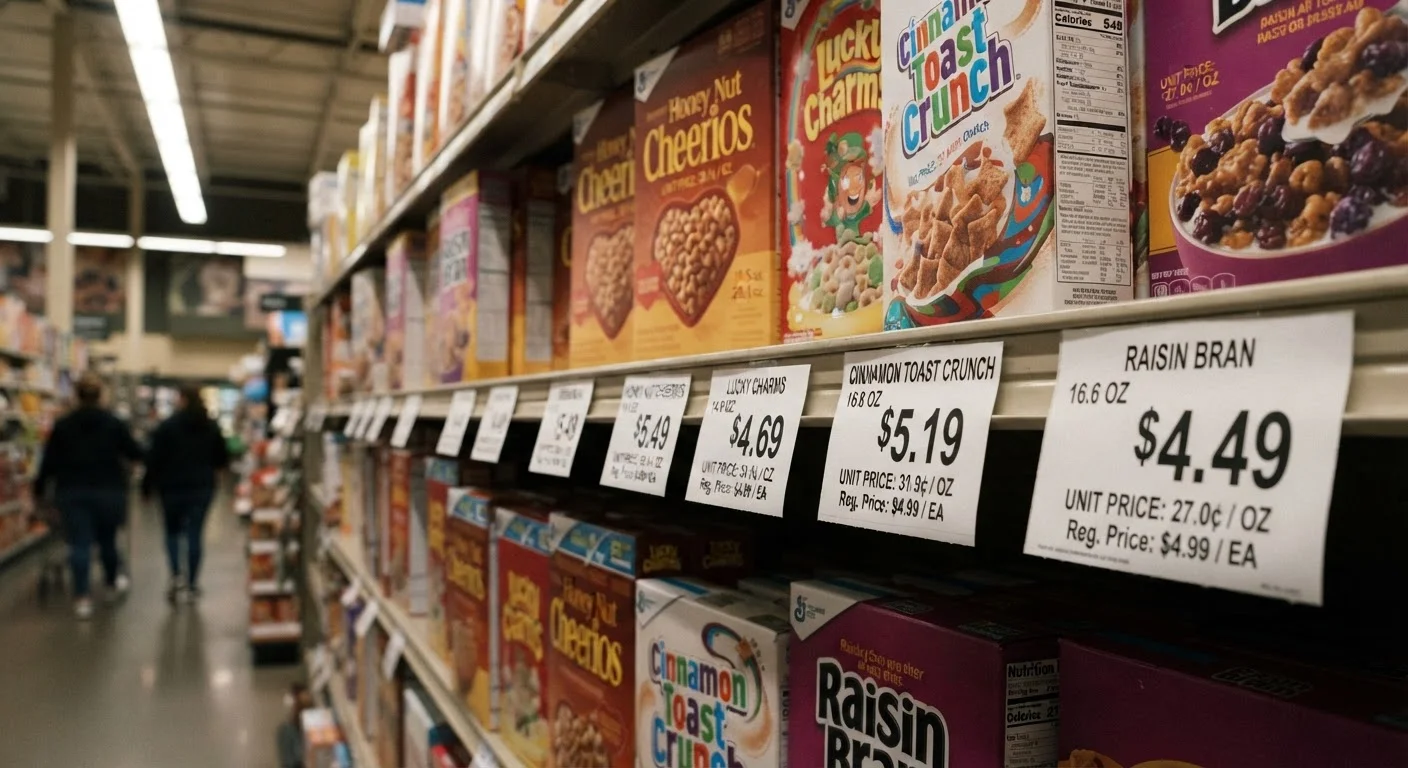
Walk down any grocery aisle and you will see two numbers on every shelf tag: the total price you pay at checkout, and a smaller, quieter number that most shoppers skip right past. That second number is the unit price — and it is doing the comparison math for you.
Unit price expresses what you are paying for a consistent, standard amount of a product: per ounce, per fluid ounce, per count, per pound, or per square foot for something like aluminum foil. Because it standardizes the measure, it lets you compare a 12-ounce jar against a 24-ounce jar — or a store brand against a name brand — without doing any mental gymnastics about total package size.
The total sticker price tells you what leaves your wallet. The unit price tells you what you actually get for it. Those are two very different pieces of information, and conflating them is how shoppers routinely overpay without realizing it.
Unit Price Requirements Vary by State
Most U.S. states have laws requiring grocery retailers to display unit pricing on shelf tags, but the specifics — which stores must comply, which product categories are covered, and how the unit must be expressed — differ by jurisdiction. Some states exempt smaller stores or certain product types. If a unit price is missing from a tag, calculating it yourself takes only a few seconds.
How to Calculate It When the Tag Doesn't Show It
Even when the shelf tag includes a unit price, it is worth knowing how the number is produced — both to verify unusual tags and to calculate it yourself when a tag is missing or hard to read.
The formula is straightforward: divide the total price by the total quantity. If a 32-ounce bottle of dish soap costs $3.84, the unit price is $3.84 ÷ 32 = $0.12 per ounce. A 20-ounce bottle of the same brand on sale for $2.60 works out to $2.60 ÷ 20 = $0.13 per ounce. The larger bottle wins — but only by doing this math do you know that with confidence.
This calculation takes about 10 seconds on a phone calculator, and pairing it with a few other low-effort habits can meaningfully reduce your monthly grocery bill without changing what you eat.
~60%
Shoppers who rarely check unit prices
Consumer behavior research consistently finds that a majority of shoppers focus on total package price rather than cost per unit when making purchase decisions in the grocery aisle.
Up to 30%
Potential per-unit cost difference between sizes
Grocery industry analyses have documented cases where different package sizes of the same product carry per-unit price differences of 20–30%, illustrating the financial impact of skipping unit price checks.
$1,500+
Average U.S. annual household grocery spend per person
According to U.S. Bureau of Labor Statistics Consumer Expenditure Survey data, food-at-home spending represents a significant share of household budgets, making small per-unit savings compound meaningfully over time.
Why Bigger Is Not Always Cheaper Per Unit
The assumption that bulk automatically equals better value is one of the most persistent myths in grocery shopping. It is often true — but not reliably so, and trusting the assumption without checking can cost you money.
Several scenarios flip the expected math:
- Sales on standard sizes: A promotional discount on a mid-size package can push its unit price below the bulk option sitting right next to it.
- Store brand vs. name brand: A store-brand standard size frequently undercuts the per-unit cost of a name-brand bulk package.
- Package reformulations: Manufacturers sometimes reduce the contents of a package (a practice called shrinkflation) while holding the price steady, quietly worsening the unit price without changing how the package looks on the shelf.
Value and low price are not the same thing, and unit pricing is one of the clearest tools for seeing the difference.
Building Unit Price Awareness Into Your Routine
Unit pricing is most powerful when it becomes a reflex rather than an occasional calculation. A few practical ways to build that habit:
- Check the unit measure first. Before comparing prices, confirm both tags use the same unit. Ounces vs. pounds, or count vs. weight, will produce misleading comparisons if you mix them.
- Track your staples over time. A simple price book — even a notes app on your phone — lets you record the unit prices of items you buy regularly, so you recognize a genuine deal versus an inflated one.
- Apply it beyond food. Paper towels (cost per sheet), laundry pods (cost per load), and bottled water (cost per fluid ounce) all respond to the same logic.
Unit pricing is one of those enduring shopping habits that holds up regardless of income level, store type, or economic climate. It requires no app, no loyalty card, and no coupon clipping — just a habit of looking at the right number on the shelf tag.
Use Your Phone's Calculator at the Shelf
There is no need to do mental arithmetic in the aisle. Open your phone's calculator, enter the price, divide by the package weight or count, and compare. The extra 15 seconds it takes can surface savings that no coupon in your wallet would have caught.
When Unit Price Alone Is Not the Full Answer
Unit price is a powerful filter, but it is one input — not the final answer. A few factors legitimately affect whether the lowest unit price is the right choice for you:
- Perishability: A better unit price on a large quantity of a perishable item only saves money if you use it all before it spoils. Waste erases any per-unit advantage.
- Storage constraints: Buying in bulk requires space. If you cannot store the product properly, the savings calculation changes.
- Quality differences: Unit pricing equalizes cost per measure — it does not equalize quality, concentration, or performance. A more concentrated cleaning product at a higher unit price may deliver more uses per ounce than a cheaper, more diluted version.
Used with those caveats in mind, unit price math gives everyday shoppers a reliable, no-cost way to make more informed decisions at the shelf — no sale event or promotional strategy required.