

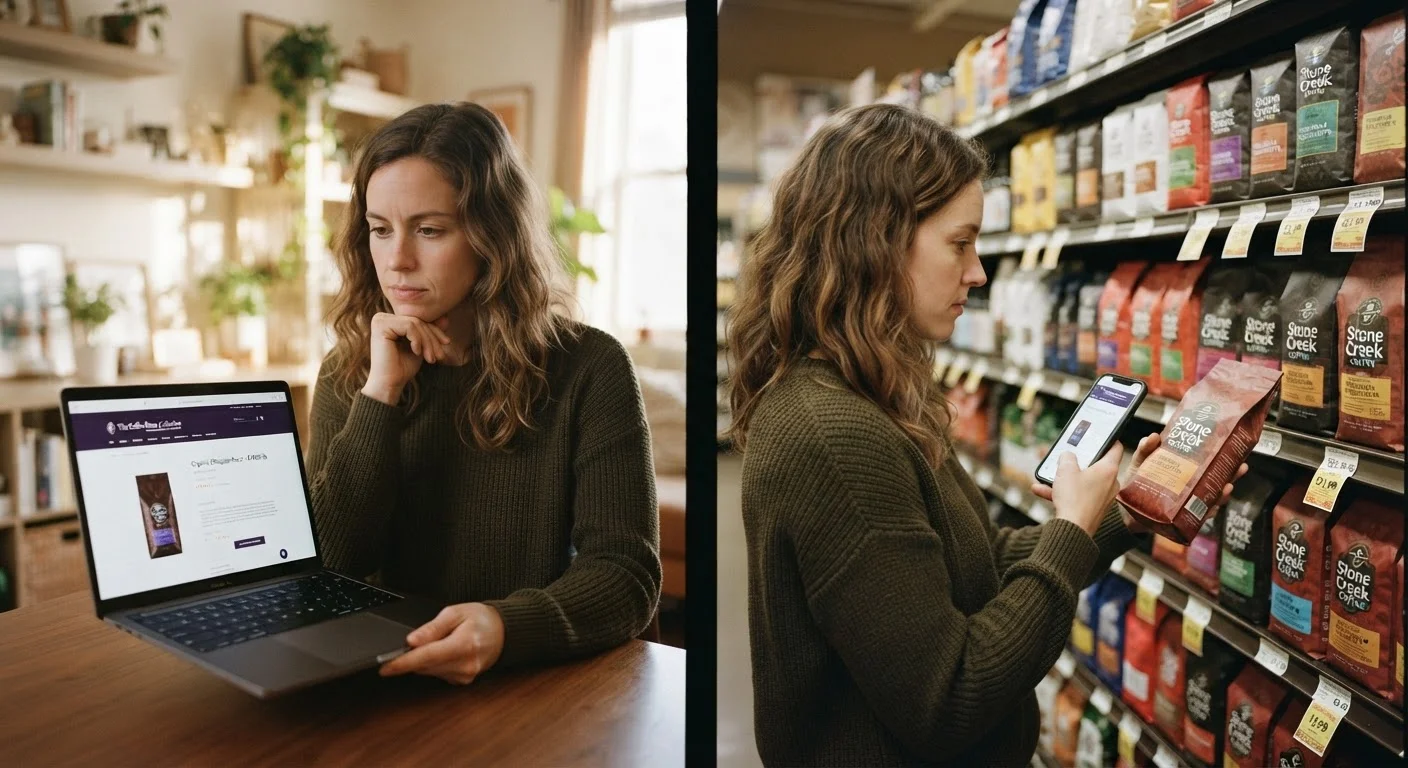
Key Takeaways
- Online prices often look lower but hidden costs like shipping and returns can close the gap.
- Dynamic pricing means the same item can cost more online than in-store on any given day.
- In-store purchases can include perks — immediate availability, easier returns — that have real dollar value.
- Your total cost of ownership, not just sticker price, determines where you actually save money.
- The best channel depends on the product category, timing, and your specific purchase situation.
The Myth That Launched a Thousand Carts
The idea that online shopping automatically saves money is one of the most durable assumptions in consumer culture — and one of the least examined. It made intuitive sense when e-commerce first scaled: no storefronts, no local staff, no real-estate overhead. Lower costs for the seller should mean lower prices for you, right?
That logic has eroded substantially. Today's retail landscape is more complex: brick-and-mortar chains have aggressive online presences, pure online players have opened physical stores, and pricing algorithms have replaced simple cost-plus models. The result is a market where neither channel reliably wins on price — and where assuming otherwise can cost you real money. For a grounded comparison, see online vs. in-store shopping: which actually saves you more.
Myth
Online retailers always charge less than physical stores for the same product.
Fact
Prices vary by channel, timing, and retailer — neither online nor in-store is universally cheaper.
This assumption held more weight in the early days of e-commerce, when lower overhead gave pure-play online sellers a structural pricing edge. Today, many major retailers operate both channels and price them strategically rather than automatically cheaper online. Research by retail analysts has found that for certain categories — particularly everyday consumables and commodity electronics — in-store prices at warehouse clubs or clearance racks routinely beat online listings when you factor in shipping. The more useful question is: what's the all-in price for this item, from this seller, right now?
Myth
Free shipping means you're not paying anything extra to shop online.
Fact
"Free" shipping is typically built into product pricing or requires a qualifying spend threshold that can push you to buy more than planned.
Retailers don't absorb shipping costs out of generosity — they recover them through minimum order thresholds, membership fees, or slightly inflated base prices. When you spend an extra $15 to qualify for free shipping on a $12 item, you haven't saved anything. Understanding this is part of what our piece on the psychology of "free" offers explores in depth. The word "free" triggers a genuine cognitive response that bypasses our normal cost-benefit reasoning — being aware of it is the first defense.
Myth
Returns are easy and cost-free when you shop online.
Fact
Many online retailers charge return shipping fees, restocking fees, or both — costs that can eliminate any upfront savings.
Online return policies have tightened considerably as retailers grapple with the cost of reverse logistics. Return shipping on a large or heavy item can run $10–$30 or more, and some categories — including opened electronics or final-sale apparel — may carry additional restocking fees. For in-store purchases, you typically walk the item back and leave with a refund the same day. When you're buying something with meaningful fit, quality, or compatibility uncertainty, factor in your realistic probability of returning it before assuming online is the cheaper route.
Myth
You can always find the lowest price by shopping online.
Fact
Algorithmic dynamic pricing means online prices fluctuate constantly, and the lowest price at any given moment may actually be in a physical store.
Online prices can change multiple times per day based on inventory levels, competitor activity, and demand signals. That price you saw this morning may be $8 higher by afternoon. In contrast, in-store shelf prices change less frequently and are visible to every shopper equally. For context on what actually drives these gaps, see what really drives price differences between online and in-store. Awareness of dynamic pricing is the starting point for shopping it strategically rather than being surprised by it.
Myth
Shopping online saves time, which is essentially free.
Fact
Delivery wait times, tracking delays, and package management all represent real time costs that in-store shopping avoids.
"I'll just order it" feels frictionless — but delivery windows, missed packages, porch theft risk, and time spent on customer service calls for damaged goods are genuine time costs. When you need something today, the convenience advantage flips entirely to in-store. For a fuller look at where each channel genuinely wins, the real tradeoffs between shopping online and in person maps out the decision across categories and use cases.
What the Evidence Actually Shows
Breaking down the "online is cheaper" myth requires looking at total cost of ownership, not just sticker price. Shipping, returns, wait time, and pricing variability all shift the real-dollar comparison in ways that aren't visible at checkout.
Total Cost Is What Actually Matters
The listed price is only one part of the equation. Shipping fees, return shipping costs, restocking fees, and the time you spend waiting for delivery all add real dollars or real inconvenience to an online purchase. Before assuming you're saving money online, calculate the all-in cost — including what happens if the item doesn't work out.
The categories where online tends to hold a genuine price edge are those with low shipping weight, high purchase frequency for comparison, and minimal fit/compatibility risk — think commodity household goods, standardized accessories, or items you've bought before and know exactly. Categories with high return rates, heavy shipping profiles, or where quality requires hands-on evaluation often favor in-store on net cost. If you're navigating these trade-offs across purchase types, the Smarter Decisions hub offers practical frameworks for exactly this kind of choice.
Dynamic Pricing Can Work Against You
Many online retailers use algorithmic pricing that changes based on your browsing history, location, device, and demand signals. This means the price you see may be higher than what another shopper sees for the exact same item at the same moment. Clearing browser cookies, using a private browsing window, or checking prices across multiple devices can sometimes reveal this variation.
Smarter shopping isn't about picking a channel and defaulting to it — it's about asking the right questions before any specific purchase. That approach is explored further in myths about smart shopping that can actually cost you more. And once you've found the right price, value vs. cheap: why the lowest price isn't always the smartest buy is worth reading before you commit.
30%
Average online return rate for apparel
Industry estimates from retail consultancies have consistently placed apparel return rates at roughly 30% or higher for online purchases, compared to under 10% for in-store — a cost gap that affects net savings significantly.
~20%
Price variance for same item online vs. in-store
Retail pricing studies have documented price differences of up to 20% for identical products depending on channel, day, and retailer — in either direction, not always favoring online.
This article is for general informational purposes only and does not constitute financial or purchasing advice tailored to your individual circumstances.