

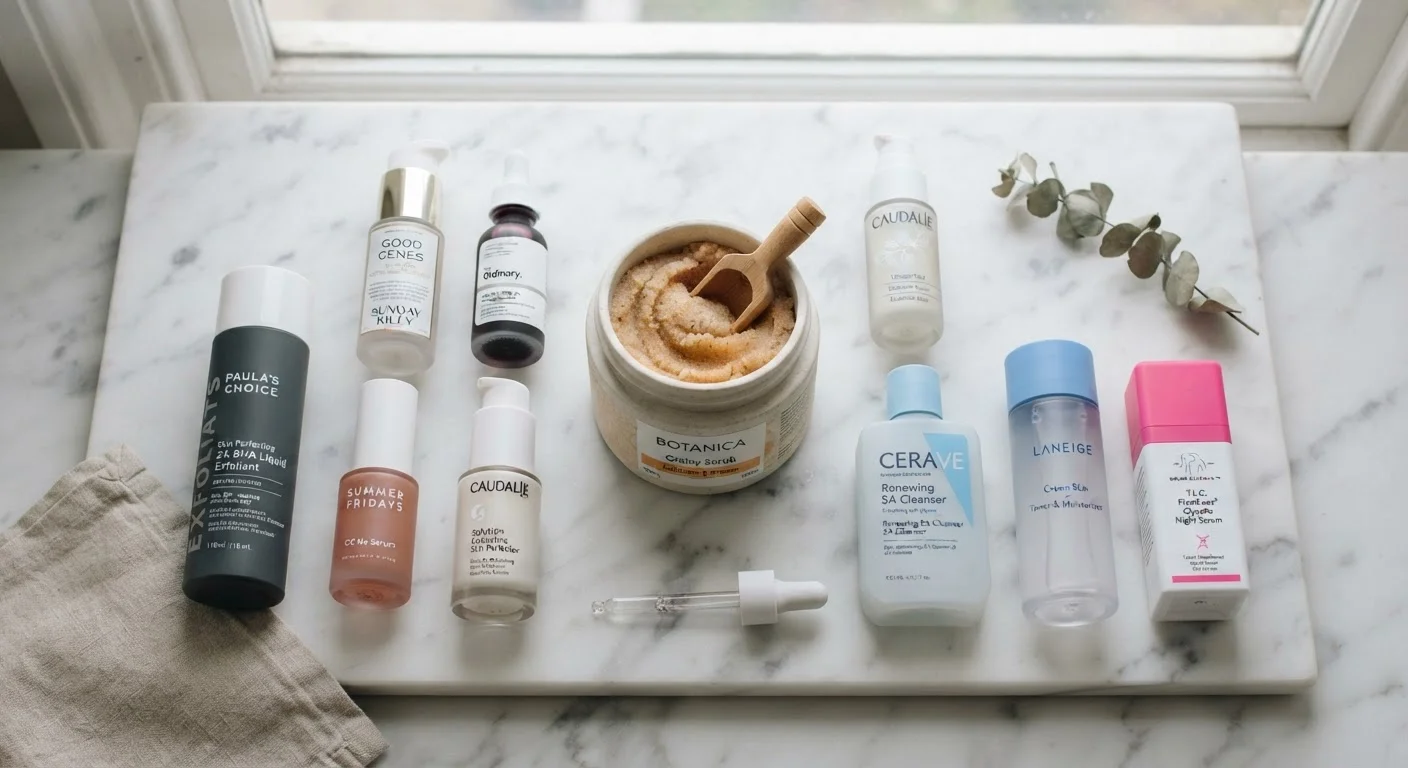
Key Takeaways
- Chemical exfoliants (AHAs and BHAs) dissolve dead skin cells using acids, requiring no scrubbing motion.
- Physical scrubs use manual friction — grains, beads, or textured cloths — to slough off dead cells.
- Chemical exfoliants tend to deliver more consistent results for acne-prone or sensitive skin types.
- Over-scrubbing with physical exfoliants can cause micro-tears and irritation, especially on delicate skin.
- Both methods work — the right choice depends on your skin type, concerns, and tolerance for actives.
Option A
Chemical Exfoliants
The science-backed, deeper-working option.
Best for: Those dealing with uneven tone, clogged pores, or sensitivity who want targeted, consistent results without friction.
Option B
Physical Scrubs
The tactile, immediate-gratification classic.
Best for: Those who prefer a familiar, hands-on routine with instant smooth-skin feedback and no waiting for actives to work.
If you have oily or acne-prone skin
Chemical Exfoliants
BHAs like salicylic acid are oil-soluble, meaning they can penetrate into pores to clear congestion more effectively than surface-level scrubbing.
If you have sensitive or rosacea-prone skin
Chemical Exfoliants
Low-concentration AHAs such as lactic acid exfoliate without physical friction, reducing the risk of redness or irritation triggered by scrubbing.
If you want instant texture improvement before an event
Physical Scrubs
A gentle physical scrub delivers immediate smoothness you can feel right away — no waiting for acids to work overnight.
If you're targeting hyperpigmentation or dull tone
Chemical Exfoliants
AHAs like glycolic acid work at the skin-cell level to accelerate turnover and fade discoloration more reliably over time.
If you prefer a simple, familiar routine with no actives
Physical Scrubs
Physical scrubs require no acid tolerance build-up, no sun-sensitivity adjustments, and fit easily into an everyday wash routine.
How Each Method Actually Works
The core difference is mechanical versus chemical. Physical scrubs rely on friction — tiny particles (sugar, salt, ground walnut shell, or synthetic beads) rub against the skin's surface to dislodge dead cells manually. You feel it working immediately, which is part of their enduring appeal.
Chemical exfoliants take a different route entirely. Alpha hydroxy acids (AHAs) like glycolic and lactic acid loosen the bonds between dead skin cells, allowing them to shed naturally. Beta hydroxy acids (BHAs) like salicylic acid do the same but go further — they're oil-soluble, so they can travel into the pore lining to clear congestion from the inside. For a broader look at where enzymatic exfoliants fit alongside these two, see this side-by-side breakdown.
| Criterion | Chemical Exfoliants | Physical Scrubs |
|---|---|---|
| How they work | Dissolve cell bonds with acids | Physically buff cells with friction |
| Key ingredients | AHAs (glycolic, lactic), BHAs (salicylic) | Sugar, salt, ground grains, cloths |
| Pore penetration | BHAs penetrate into pore lining | Surface-level only |
| Sun sensitivity | AHAs increase photosensitivity | No added photosensitivity |
| Best skin type | Oily, acne-prone, sensitive, uneven tone | Normal, dry, those new to exfoliation |
| Results timing | Builds over days to weeks | Immediate tactile smoothness |
| Irritation risk | Low if introduced gradually | Higher if pressure or particles are harsh |
Skin Type Matchmaking
Skin type is the single biggest factor in deciding which approach serves you well. Oily and acne-prone skin generally responds strongly to BHA-based chemical exfoliants because salicylic acid can decongest pores that a scrub simply can't reach. Sensitive skin types often find that the friction of physical scrubs triggers redness or broken capillaries — low-concentration AHAs (around 5–8%) tend to be gentler when introduced slowly.
Dry skin can benefit from both: AHAs speed up the shedding of flaky cells, while a light physical scrub prepped skin before moisturiser. Combination skin may find chemical exfoliants easier to apply evenly without over-treating one zone. For a fuller picture of how skin type shapes your entire grooming approach, grooming routines by skin type is worth reading alongside this guide.
~5–8%
AHA concentration for beginners
Dermatologists generally suggest starting with lower concentrations of AHAs to build tolerance before moving to stronger formulas.
2–3x/week
Typical safe exfoliation frequency
Most skin-care guidance recommends exfoliating no more than two to three times per week to avoid compromising the skin barrier.
Where People Go Wrong — and How to Avoid It
Over-exfoliation is the most common pitfall with both methods — and it shows up as tightness, stinging, or a sudden surge in sensitivity. With physical scrubs, pressing too hard or using abrasive particles on thin facial skin can create micro-tears that compromise the skin barrier. Stick to gentle, rounded particles and a light hand — no vigorous scrubbing circles needed.
With chemical exfoliants, the main risks are layering too many actives at once and skipping sunscreen. AHAs in particular increase photosensitivity, so daily SPF becomes non-negotiable. If you're already navigating the chemical-vs-mineral sunscreen question, understanding those differences is a helpful next step. Start any new exfoliant once a week and build up gradually based on how your skin responds.
A Note on Skin Barrier Health
The skin barrier — the outermost protective layer — is easily disrupted by both over-exfoliation and harsh ingredients. Signs of a compromised barrier include redness, tightness, flaking, or a sudden increase in sensitivity. If you notice these signs, scale back exfoliation frequency and focus on gentle, hydrating products while your skin recovers. When in doubt, a dermatologist can assess your barrier health and recommend an appropriate routine.
Building It Into Your Routine
Neither method needs to be used daily. Two to three times per week is a reasonable starting point for most people — and less frequent if your skin is reactive. Chemical exfoliants typically work best applied after cleansing on dry skin, left to absorb before moisturising. Physical scrubs slot naturally into the cleansing step itself, rinsed away before toning or treating.
The two approaches aren't mutually exclusive, but combining them on the same day is usually unnecessary and can tip easily into irritation. A simple rhythm might be: chemical exfoliant on weekday evenings, a gentle physical scrub on weekend mornings. If your routine also involves shaving — where exfoliation and blade work interact closely — electric vs. manual razor considerations may affect which exfoliant timing works best for you.
This article is for general informational purposes only and does not constitute medical or dermatological advice. If you have a skin condition or persistent irritation, consult a qualified dermatologist before changing your exfoliation routine.