

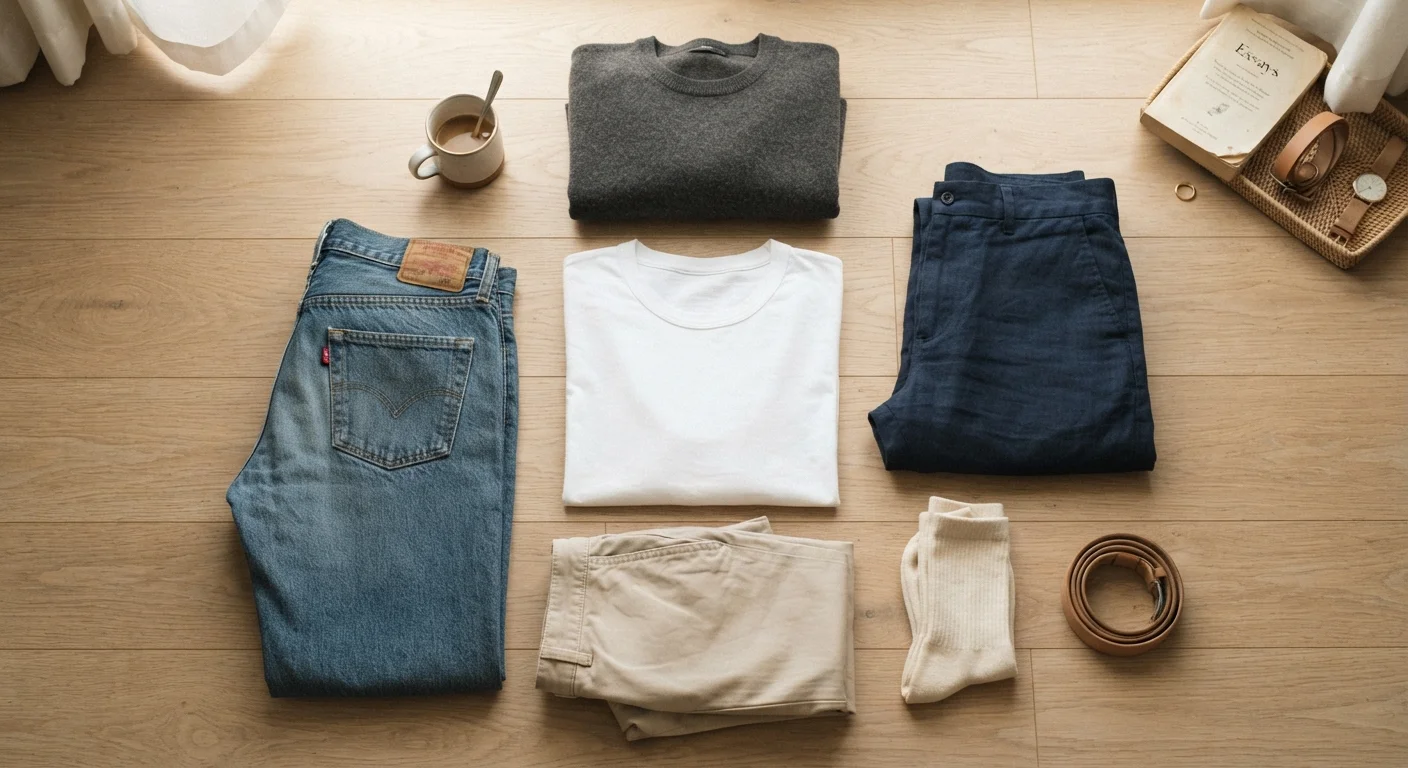
Key Takeaways
- A small, well-chosen wardrobe outperforms a packed, chaotic closet every time.
- Fit is the single most impactful element of how clothing looks on your body.
- Fabric choice affects comfort, longevity, and how polished a garment reads.
- Most occasions can be navigated with just a handful of versatile outfit formulas.
- Grooming and clothing work together — both shape your overall presentation.
Why Everyday Style Matters More Than Trends
Everyday style isn't about chasing runways or refreshing your entire closet each season. It's about building a reliable visual language that reflects who you are, works for your actual life, and makes getting dressed feel easy rather than stressful. Research in consumer behavior consistently shows that what we wear influences how we feel — and how others initially perceive us — long before we say a word.
The good news: you don't need a large budget or a fashion background to get this right. What you need is a clear framework. This guide gives you exactly that — from closet architecture to fit, fabric, occasion dressing, and the grooming habits that tie a look together.
59%
Americans who say clothing affects their confidence
According to a survey conducted by OnePoll on behalf of a clothing retailer, a majority of American adults reported that what they wear directly influences how confident they feel.
3–5
Core outfit formulas most people actually need
Style experts and wardrobe consultants broadly agree that most everyday social and professional contexts can be navigated with fewer than five reliable outfit combinations.
Building a Functional Wardrobe Foundation
Think of your wardrobe as a toolkit. Every item should earn its place by being versatile, wearable across multiple contexts, and something you genuinely like putting on. A tight, intentional closet beats a stuffed one — studies on decision fatigue suggest that more choices don't always lead to better outcomes; they can actually increase stress.
The Core Categories to Cover
- Tops: A mix of plain crew-neck tees, one or two button-up shirts, and a lightweight layer (cardigan or zip hoodie) covers the vast majority of casual and smart-casual situations.
- Bottoms: Well-fitting jeans, chinos or trousers in a neutral color, and one pair of shorts (climate permitting) handle most days.
- Outerwear: One structured jacket or blazer and one weather-appropriate coat — prioritize versatility over novelty.
- Footwear: A clean sneaker, a casual leather or synthetic alternative, and one weather-resistant option covers almost every scenario.
Start With What You Actually Wear
Before buying anything new, spend two weeks tracking which items you actually reach for. Most people wear roughly 20% of their wardrobe 80% of the time. Understanding your real habits tells you exactly where to invest and what to let go of.
When considering budget allocation, it generally makes sense to spend more on items you wear daily and less on pieces worn rarely. General financial guidance on managing everyday spending can be helpful — see our resources at Saving & Debt for a broader framework.
Understanding Fit: The Single Biggest Factor
You can own the most expensive shirt in the world and look sloppy if it doesn't fit. Conversely, an inexpensive garment in the right fit can look sharp and intentional. Fit is the great equalizer in style — and it's entirely within your control.
Key fit signals to check: shoulders sit at the edge of your actual shoulder (not drooping down your arm), shirts aren't pulling across the chest or billowing in excess, trouser hems break just at the top of your shoe. These small details make an outsized difference. For a thorough, plain-language breakdown of fit terminology — tailored, relaxed, oversized, slim — see our guide to how clothing fit actually works.
Before buying anything new, try it on and sit down, reach up, and walk around the store — real fit reveals itself in movement, not just standing still.
Garments that fit beautifully on a hanger can pull, bunch, or gap badly once you're actually living in them. Motion-testing at the point of purchase prevents a lot of buyer's remorse.
If a garment fits everywhere except one dimension — like the waist on trousers or the length of a sleeve — a basic alteration often costs less than $20 and transforms the piece.
Minor tailoring is one of the most underused tools in everyday wardrobing. It's especially effective on structured items like trousers, blazers, and button-up shirts.
Fabric Basics Every Shopper Should Know
Fabric affects everything: how a garment drapes, how long it lasts, how comfortable it is in different weather, and how polished it reads. You don't need a textile degree — just a working knowledge of the most common options.
Care Labels Are Worth Reading
Fabric content and care instructions are printed on every garment label in the U.S. by federal requirement. Taking 10 seconds to check before washing can prevent shrinkage, color fading, and premature wear. Machine-washable cotton and polyester blends are generally the most low-maintenance options for busy routines.
At a Glance
- Cotton
- Breathable, soft, widely available, and easy to care for. A reliable default for everyday wear.
- Linen
- Exceptionally breathable in warm weather; wrinkles easily, which some consider part of its charm.
- Wool
- Excellent insulator that regulates temperature. Merino wool is softer and more wearable for casual use.
- Polyester blends
- Durable and wrinkle-resistant, but less breathable. Common in athletic and performance wear.
- Denim
- Sturdy cotton weave that softens and forms to the body over time. The most versatile fabric in most American closets.
Dressing for Occasion Without Overthinking It
Most everyday Americans navigate three or four recurring dress contexts: casual (weekends, errands), smart-casual (work, dinners, social events), business professional (formal workplaces, important meetings), and special occasions (weddings, ceremonies). Rather than building a separate wardrobe for each, the goal is to own pieces that can shift between contexts with minor adjustments.
Simple Outfit Formulas That Work
- Casual: Well-fitting jeans + clean tee + white sneakers. Effortless and universally appropriate.
- Smart-casual: Chinos + button-up shirt (tucked or half-tucked) + loafers or clean leather alternative.
- Business professional: Tailored trousers + blazer + dress shirt. Add or remove the tie based on the room.
- Elevated occasion: A single well-fitted dark suit or a midi dress in a solid color handles most formal needs without requiring a specialty purchase.
Dress Codes Are Often Ambiguous — Ask
When an invitation or workplace says 'business casual' or 'cocktail attire,' interpretations vary widely. If you're unsure, it's always appropriate to ask the host or HR contact directly. Overdressing slightly is generally less awkward than significantly underdressing for an important occasion.
Color is a powerful variable. Neutral palettes (navy, grey, white, tan, black) mix freely and reduce the mental overhead of getting dressed. Introduce color or pattern through one element — a scarf, a pair of socks, a printed shirt — rather than all at once.
Grooming as Part of Your Overall Look
Clothing doesn't work in isolation. Clean skin, well-maintained hair, and basic grooming habits complete a look in a way that no outfit alone can accomplish. Think of grooming as the finishing layer — it signals care and attentiveness, which reinforces the impression your clothing creates.
You don't need a 20-step routine. A consistent, simple approach to hair, skin, and nails does the job. For a comprehensive reference covering everything from haircare to hand care, our complete personal grooming guide is a useful companion to this article. And if you're building out a light makeup routine to complement your daily look, see everyday makeup for non-makeup people for a no-fuss starting point.
Avoid Letting Grooming Routines Become Overwhelming
The beauty and grooming industry is designed to sell complexity. A minimal, consistent routine almost always outperforms an elaborate one you won't stick with. Start with the basics — cleanser, moisturizer with SPF, a good haircut — and add only what genuinely improves your day-to-day experience.
Style, at its core, is about showing up as a well-considered version of yourself — not performing an image for someone else. When your wardrobe, fit, fabric choices, and grooming habits align with your actual life, getting dressed stops being a chore and starts being a quiet confidence boost every single day.