

Key Takeaways
- You only need a handful of products to build a polished, everyday look.
- Tinted moisturizer or a light-coverage foundation is the most forgiving starting point.
- Mascara alone can make a noticeable difference in how awake and put-together you look.
- Good skincare underneath makes makeup easier to apply and longer-lasting.
- There is no right or wrong — skipping steps you don't enjoy is completely fine.
Start here
Why Simple Makeup Is Still Real Makeup
Next
The Five Products Worth Starting With
Then try
How to Put It All Together
Watch out for
Common Beginner Stumbles (And How to Sidestep Them)
When you're ready
When You're Ready to Go a Little Further
Why Simple Makeup Is Still Real Makeup
There's a persistent idea that makeup is only worth wearing if you're doing it elaborately — full contour, cut crease, baked setting powder. For anyone who didn't grow up watching tutorials, that bar can feel impossible, and the logical response is to just skip it entirely.
Here's the reframe: a tinted moisturizer and a coat of mascara is makeup. A swipe of blush and some tinted lip balm is makeup. Simple isn't lesser — it's just efficient, and for most real-life mornings, it's exactly enough.
The goal of a light everyday look isn't transformation. It's just a small, deliberate step toward feeling polished and put-together on your own terms. If your skin feels like a good foundation (literally), makeup gets even easier — building a basic skincare routine first makes every product sit better and last longer.
Tinted moisturizer
A lightweight lotion that combines skin hydration with a small amount of color pigment, giving a sheer, natural-looking coverage.
BB cream
Short for 'beauty balm,' a multitasking product that typically combines moisturizer, light foundation coverage, and sometimes SPF in one formula.
Concealer
A concentrated pigment product used to cover specific areas — dark circles, redness, or blemishes — without covering the whole face.
Cream blush
A blush formula with a creamy, blendable texture that can be applied with fingers and tends to look more natural on skin than powder versions.
Undertone
The underlying hue beneath your skin's surface — generally warm (yellow/golden), cool (pink/blue), or neutral — which affects how makeup shades appear on you.
Micellar water
A gentle, water-based cleanser that uses tiny oil molecules to lift away makeup and impurities without requiring rinsing.
The Five Products Worth Starting With
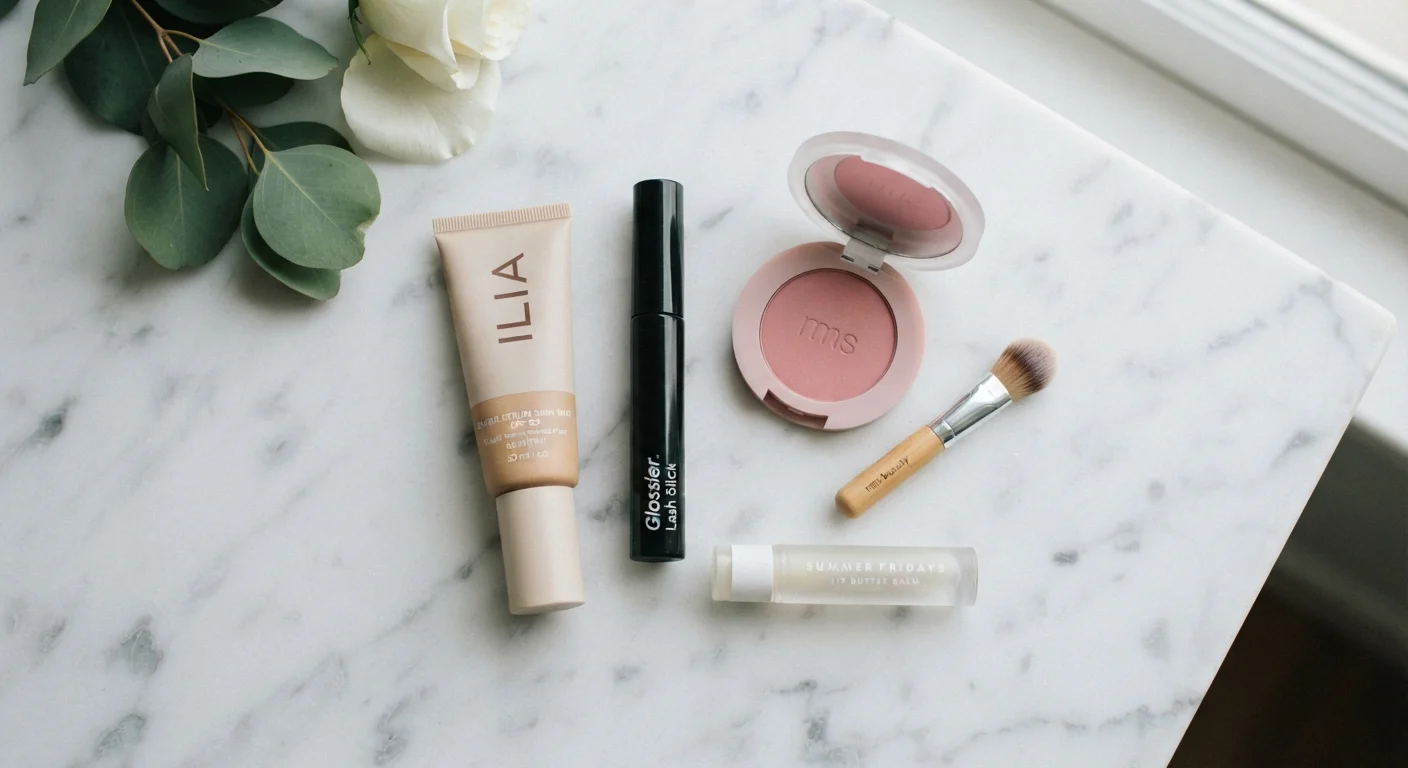
You don't need a full kit. These five cover almost everything a light everyday look requires:
- Tinted moisturizer or BB cream — Combines hydration and light coverage in one step. More forgiving on shade matching than traditional foundation, and easier to blend with just your fingers.
- Concealer — A small tube of creamy concealer handles under-eye circles, redness, or any spots you'd like to even out. Tap it gently with a fingertip rather than rubbing it in.
- Cream blush — Cream formulas blend naturally into skin and don't require brushes. A soft peach or rosy shade on the apples of your cheeks adds life and warmth almost instantly.
- Mascara — One coat on your upper lashes opens up your eyes more than almost any other single product. Start at the root and wiggle the wand upward.
- Tinted lip balm — Delivers a hint of color while keeping lips comfortable. Zero technique required.
Notice what's not on this list: foundation, setting powder, eyeshadow, eyeliner. All of those have their place, but none of them are required for an everyday look that still feels intentional.
Fingers Work Better Than You'd Think
For a beginner's kit, your fingers are genuinely useful tools. Body heat warms cream products and helps them melt seamlessly into skin. Tinted moisturizer, cream blush, and concealer all blend well with a light tapping or buffing motion from clean fingertips — no brushes required to start.
How to Put It All Together
Order matters a little, but not as much as tutorials suggest. A reliable sequence for beginners:
- Start with a clean, moisturized face. SPF in the morning is worth the habit — it sits underneath everything else without much fuss.
- Apply tinted moisturizer across your face with your fingers or a damp sponge, blending it out toward your hairline and jawline.
- Dab concealer only where you actually want it — under your eyes or over any spots — and blend the edges so there's no visible line.
- Smile gently and tap cream blush onto the rounded part of your cheeks, then blend upward toward your temples with your fingertips.
- Apply one coat of mascara. Let it dry for a few seconds before blinking hard.
- Swipe on tinted lip balm and you're done.
Total time: five to eight minutes once you've done it a few times. The whole look pairs naturally with everyday American style basics — both are built around the same idea of looking pulled-together without overthinking it.
Common Beginner Stumbles (And How to Sidestep Them)
A few things trip up nearly every first-timer:
- Too much product. With tinted moisturizer especially, less is always more. Start with a small amount, blend it in fully, then decide if you want more coverage before adding another layer.
- Blending stops too soon. Visible edges — around the jaw, hairline, or nose — are almost always a blending issue, not a product issue. Give it another ten seconds of work and they typically disappear.
- Wrong shade of concealer. A concealer slightly lighter than your skin tone works under the eyes. Matched exactly to your skin is better for covering spots.
- Mascara on the lower lashes. Skipping your lower lashes is a perfectly valid choice — it's a cleaner look for daytime and dramatically reduces the chance of smudging under your eyes.
If you're curious about how makeup and skin health interact, that's worth a read too — particularly if you have reactive or acne-prone skin.
Check Expiry Dates — Especially Mascara
Makeup products do expire, and using old formulas — particularly mascara — can irritate eyes or cause infections. Mascara is generally recommended to be replaced every three months after opening. If a product smells off, has changed texture, or has been open longer than the period-after-opening symbol (the small open-jar icon) indicates, it's time to let it go.
When You're Ready to Go a Little Further
Once a five-product routine feels comfortable and automatic, adding one more element at a time keeps things manageable. A brow gel is often the highest-impact next step — groomed brows frame your face without requiring artistic skill. After that, a neutral eyeshadow used as a wash across the lid (applied with a fingertip) adds definition without demanding precision.
Everything else — liner, setting spray, highlighter — is genuinely optional and can wait until you feel curious about it, not pressured. Makeup at this level is supposed to make mornings easier, not add a new source of stress.
And if you enjoy the low-fuss approach in your beauty routine, the same energy applies to other personal care areas — nail care for people who never think about nail care takes exactly the same simplified, practical approach.
This article is for general informational and educational purposes only. Product suitability varies by skin type and individual condition. If you have skin sensitivities or concerns, consult a dermatologist or licensed skincare professional before introducing new products.