

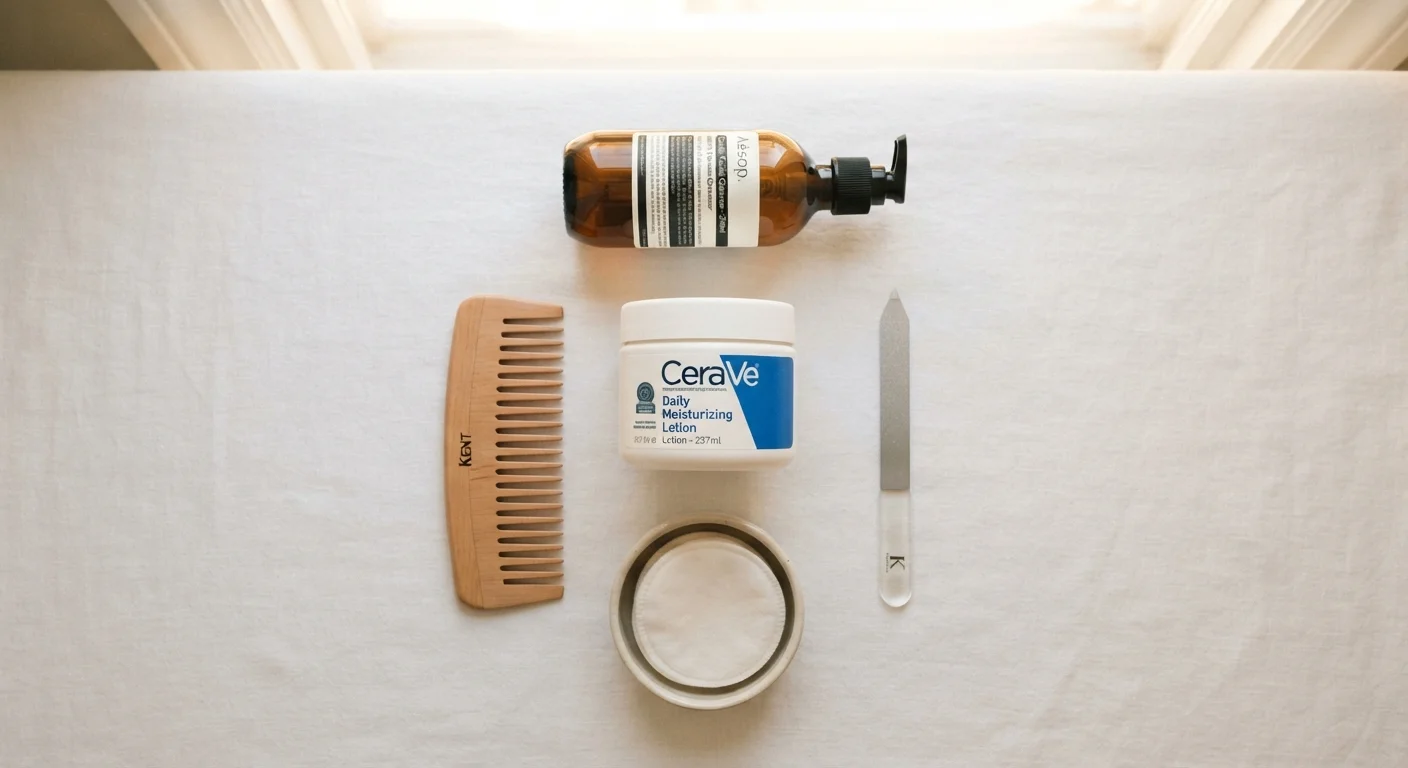
Key Takeaways
- Personal grooming is a broad category that spans skincare, hair care, oral hygiene, nail care, and body hygiene.
- Good grooming habits support both physical health and personal confidence.
- Your skin type and lifestyle should guide which grooming practices you prioritize.
- A sustainable grooming routine doesn't have to be complicated or expensive.
- Many grooming tasks can be handled at home; some benefit from professional attention.
Personal Grooming
Personal grooming refers to the full range of habits and practices people use to clean, maintain, and care for their bodies. It includes everything from washing your face and brushing your teeth to managing your hair, skin, and nails. Grooming is about both hygiene — keeping your body clean and healthy — and presentation, helping you feel put-together in daily life.
Dermatologists and public health professionals typically distinguish between hygiene (practices that prevent infection and illness) and cosmetic grooming (practices aimed at appearance), though the two categories overlap significantly in everyday routines.
The Full Scope of Personal Grooming
When most people hear "personal grooming," they picture a haircut or a quick face wash. In reality, the term covers a much wider range of daily and weekly practices that keep your body clean, comfortable, and cared for. Understanding all the categories helps you identify any gaps in your current routine — and make smarter choices about where to invest time and effort.
For a head-to-toe overview of grooming habits and terminology, the complete personal grooming reference is a useful starting point. Here, we'll break down each major category so you know exactly what falls under the grooming umbrella.
85%
Americans who say appearance affects self-confidence
Survey data from the American Academy of Dermatology suggests a strong link between skin health habits and self-reported confidence levels.
47%
Adults who skip daily flossing
According to the American Dental Association, nearly half of U.S. adults do not floss daily, despite it being a core oral hygiene recommendation.
3 steps
Core daily skincare routine for most adults
Dermatologists widely agree that cleansing, moisturizing, and sun protection form the minimum effective daily skincare routine for most skin types.
Skincare: More Than Moisturizer
Skincare is one of the most visible and talked-about grooming categories — and one of the most misunderstood. At its core, a basic skincare routine involves three steps: cleansing, moisturizing, and sun protection. These three habits address the majority of everyday skin health needs for most adults.
Beyond the basics, skincare can expand to include exfoliation (removing dead skin cells to support cell turnover), targeted treatments like serums for specific concerns, and eye care. The right approach varies considerably depending on your skin type — oily, dry, combination, or sensitive skin each respond differently to products and ingredients.
Start With Your Skin Type
Before adding any new skincare product to your routine, identify your skin type first. Using a moisturizer formulated for dry skin when you have oily skin — or vice versa — can make things worse, not better. When in doubt, a fragrance-free, non-comedogenic (non-pore-blocking) formula is a safe starting point for most skin types.
Skincare also connects to broader hygiene: keeping your pillowcases clean, not touching your face with unwashed hands, and staying hydrated all influence how your skin looks and behaves. These habits cost nothing and often make a noticeable difference.
Hair Care: Scalp Health First
Hair care goes beyond shampooing and styling. A well-rounded hair care routine addresses the scalp as well as the strands, since a healthy scalp is the foundation for healthy hair growth. Cleansing frequency, conditioning, and heat protection are the pillars most people focus on — but scalp care, detangling technique, and regular trims round out a complete approach.
Hair type — whether it's fine, coarse, curly, straight, color-treated, or chemically processed — heavily influences what your routine should look like. What works well for one person can cause buildup, dryness, or breakage for another. Keeping it simple and consistent tends to outperform constantly switching products.
Hair Washing Frequency Varies Widely
There's no universal rule for how often you should wash your hair. Fine, straight hair tends to show oil faster and may need more frequent washing. Coarser, curlier textures often do better with less frequent cleansing. Your activity level and scalp health also play a role — listen to your scalp rather than following a fixed schedule.
Hygiene: The Non-Negotiable Foundation
Body hygiene forms the backbone of all grooming. This category includes daily bathing or showering, oral hygiene (brushing, flossing, and tongue cleaning), deodorant use, handwashing, and managing body odor. These practices aren't optional — they directly affect both personal health and the comfort of those around you.
Oral hygiene in particular is one of the most health-critical grooming habits. Dental health is connected to cardiovascular health, immune function, and overall wellbeing, according to general guidance from health organizations. Brushing twice daily and flossing once daily remains the standard recommendation from dental professionals.
Body hygiene also includes ear cleaning (outer ear only — never insert objects into the ear canal), foot care, and intimate hygiene. Each of these has straightforward best practices that don't require elaborate products. For a reference covering terminology and tools across all of these areas, see the personal grooming quick-reference guide.
Nail Care, Fragrance, and Everything Else
Nail care — trimming, filing, and keeping nails clean — is a grooming category that's easy to overlook but genuinely matters for both hygiene and presentation. Overgrown or dirty nails can harbor bacteria and contribute to infections. A basic nail care routine requires just a few minutes every week or two.
Fragrance (cologne, perfume, or scented body products) is an optional but common part of personal grooming for many people. It's worth thinking of fragrance as a finishing element rather than a substitute for hygiene — scent layered over a clean, well-moisturized body performs very differently than scent used to mask odor.
Grooming also touches on eyebrow maintenance, facial hair care (for those who have it), and hand care — areas that sit at the intersection of hygiene and personal style. The beauty basics hub offers approachable guidance across these everyday categories. No single routine covers everyone, but knowing all the categories puts you in control of building one that actually works for your life.
This article is for general informational purposes only and does not constitute medical or professional skincare advice. Consult a qualified dermatologist or healthcare provider for concerns about your skin, scalp, or personal health.