

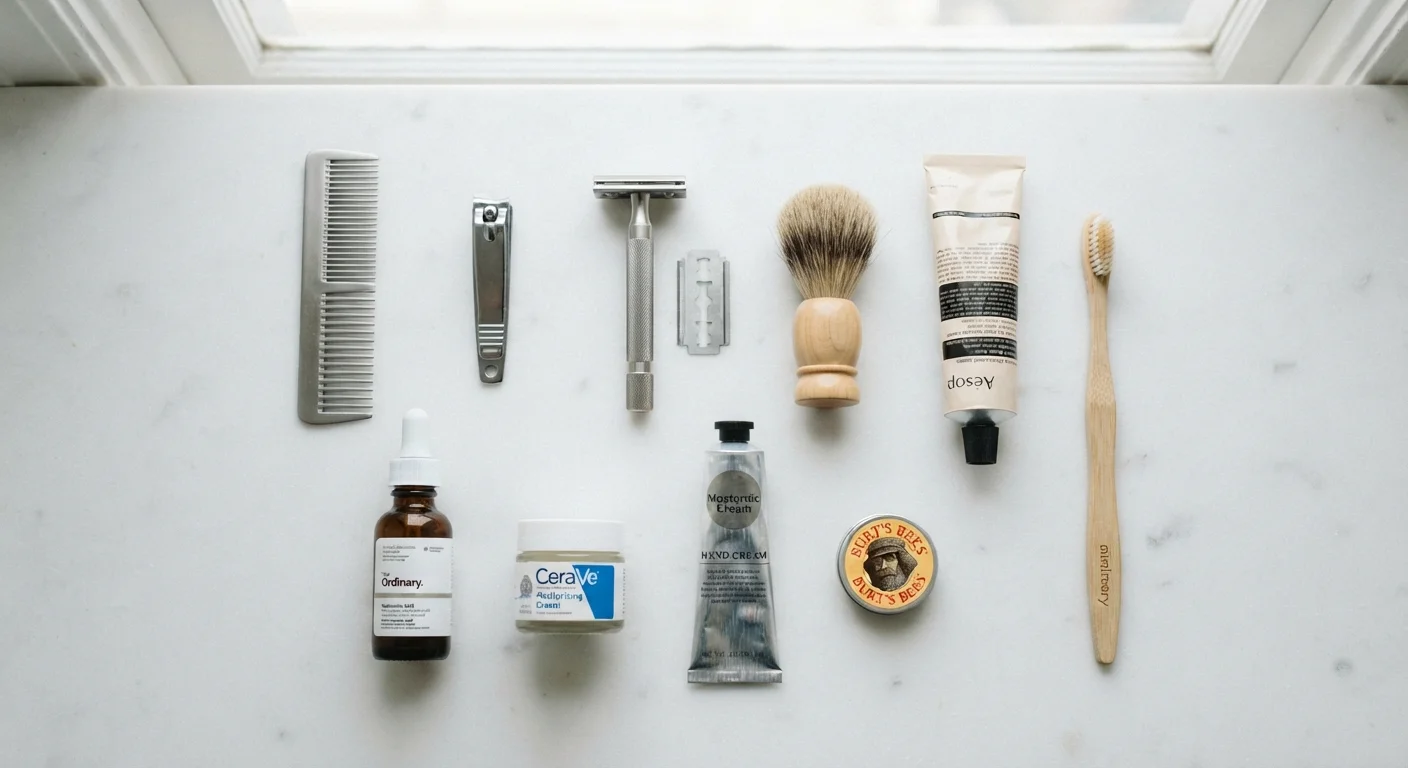
| Grooming categories covered | Hair, skin, nails, facial hair, body hair |
| Most versatile single tool | Fine-tooth comb (detangling, parting, styling) |
| Recommended nail-trimming frequency | Every 1–2 weeks for fingernails; every 4–6 weeks for toenails (General dermatology guidance) |
| Exfoliation frequency (face) | 1–3 times per week, depending on skin sensitivity (American Academy of Dermatology general guidance) |
| Razor blade replacement guideline | After 5–7 uses or when tugging is felt |
Why Grooming Terminology Matters
Whether you're scanning product labels, chatting with a stylist, or building a grooming kit from scratch, running into unfamiliar terms can slow you down. This quick-reference guide cuts through the jargon so you can shop smarter, communicate better, and keep your routine on track — no guesswork required.
Personal grooming spans far more ground than most people realize. As our companion piece on what personal grooming actually covers explains, it reaches from daily skincare to nail care to body hair management. The vocabulary that goes with each of those categories can trip up even seasoned routine-keepers.
| Grooming categories covered | Hair, skin, nails, facial hair, body hair |
| Most versatile single tool | Fine-tooth comb (detangling, parting, styling) |
| Recommended nail-trimming frequency | Every 1–2 weeks for fingernails; every 4–6 weeks for toenails (General dermatology guidance) |
| Exfoliation frequency (face) | 1–3 times per week, depending on skin sensitivity (American Academy of Dermatology general guidance) |
| Razor blade replacement guideline | After 5–7 uses or when tugging is felt |
Core Grooming Terms Defined
The glossary below covers the terms you're most likely to encounter across hair, skin, and nail care contexts. Bookmark it as your go-to lookup resource.
Cuticle
The thin strip of skin at the base of each fingernail or toenail that seals the nail matrix from bacteria. It should be softened and pushed back gently — not cut aggressively — to avoid infection.
Emollient
An ingredient (such as shea butter or mineral oil) that softens and smooths skin by filling gaps between cells. Found in moisturizers, lip balms, and hair conditioners.
Humectant
A substance that draws water from the air or deeper skin layers to the surface, helping skin retain moisture. Common examples include glycerin and hyaluronic acid.
pH Balance
A measure of how acidic or alkaline a product or the skin's surface is, rated on a scale of 0–14. Healthy skin sits around pH 4.5–5.5; products that disrupt this can cause dryness or irritation.
Sebum
The natural oil produced by sebaceous glands in the skin. It lubricates and protects skin and hair, but excess sebum can contribute to clogged pores.
Trichology
The scientific study of the hair and scalp, including disorders and their treatment. A trichologist is a specialist in this field, though they are not licensed medical doctors in most U.S. states.
Astringent
A liquid that tightens pores and removes excess oil from the skin surface. Often used after cleansing; stronger than a standard toner and not suitable for dry or sensitive skin types.
Detangling
The process of removing knots or tangles from hair using a wide-tooth comb or detangling brush, typically on damp hair and from the ends upward to prevent breakage.
For a deeper dive into how these categories connect day to day, see our head-to-toe personal grooming reference.
Common Tools and What They're Actually For
Grooming aisles are packed with tools that look similar but serve distinct purposes. Here's a plain-language breakdown of the ones you'll encounter most often:
- Paddle brush: A wide, flat brush ideal for detangling and smoothing medium-to-long straight or wavy hair.
- Boar-bristle brush: Uses natural bristles to distribute scalp oils along the hair shaft, adding shine. Best for finer hair textures.
- Round brush: Used during blow-drying to create volume and curl. The barrel diameter determines the size of the wave or curl.
- Safety razor: A single-blade razor with a protective guard between the blade and skin, designed to reduce nicks during shaving.
- Cartridge razor: A replaceable multi-blade head that pivots to follow facial contours.
- Nail nipper: A small, spring-loaded tool for trimming ingrown edges or thick nails — different from standard nail clippers, which use a lever-press mechanism.
- Cuticle pusher: A metal or wooden stick used to gently push back the cuticle (the thin skin at the base of the nail) before trimming or polishing.
- Tweezers: Available in slanted, pointed, or flat-tip styles; each is suited to different hair-removal precision tasks.
- Facial steamer: Directs warm water vapor toward the face to soften pores before cleansing or exfoliating.
Not sure whether to handle a task at home or call a professional? Our guide on at-home vs. professional grooming services can help you decide.
Techniques at a Glance
Many grooming instructions assume you already know basic technique names. Here's what the most common ones mean in practice:
- Exfoliation: Removing dead skin cells from the surface of the skin, either mechanically (scrubs, brushes) or chemically (acids like lactic or glycolic). Keeps skin texture smooth and allows moisturizers to absorb more effectively.
- Double cleansing: A two-step facial cleansing method — typically an oil-based cleanser first, followed by a water-based one — designed to remove makeup, sunscreen, and daily grime thoroughly.
- Toning: Applying a liquid toner after cleansing to restore the skin's pH balance and prep it for serums or moisturizers.
- Point cutting: A hair-trimming technique where scissors are held vertically and small cuts are made into the ends of hair to reduce bulk and add texture without blunt lines.
- Feathering (shaving): Light, short strokes used near sensitive areas or bone ridges to avoid razor burn or cuts.
- Buffing (nails): Using a multi-sided nail buffer to smooth ridges and create a natural shine on the nail surface without polish.
When In Doubt, Go Gentle
More aggressive is rarely better in grooming. Over-exfoliating, trimming cuticles too aggressively, or shaving against the grain too often can cause irritation, ingrown hairs, or infection. If you notice persistent skin reactions or nail changes, consult a licensed dermatologist — this guide is for general information only and is not a substitute for professional advice.
Grooming routines connect to broader daily health habits — consistency matters as much as technique when it comes to seeing results over time.