

Key Takeaways
- Optical heart rate sensors on wearables use light, not electrical signals, making them inherently less precise than medical-grade monitors.
- Accuracy drops significantly during high-intensity exercise, especially activities involving wrist movement.
- Skin tone, tattoos, device fit, and cold temperatures can all affect sensor readings.
- Wearable heart rate data is useful for trends and general wellness awareness, not clinical diagnosis.
- For medically meaningful readings, consult a healthcare professional and use certified medical-grade equipment.
How Optical Heart Rate Sensors Actually Work
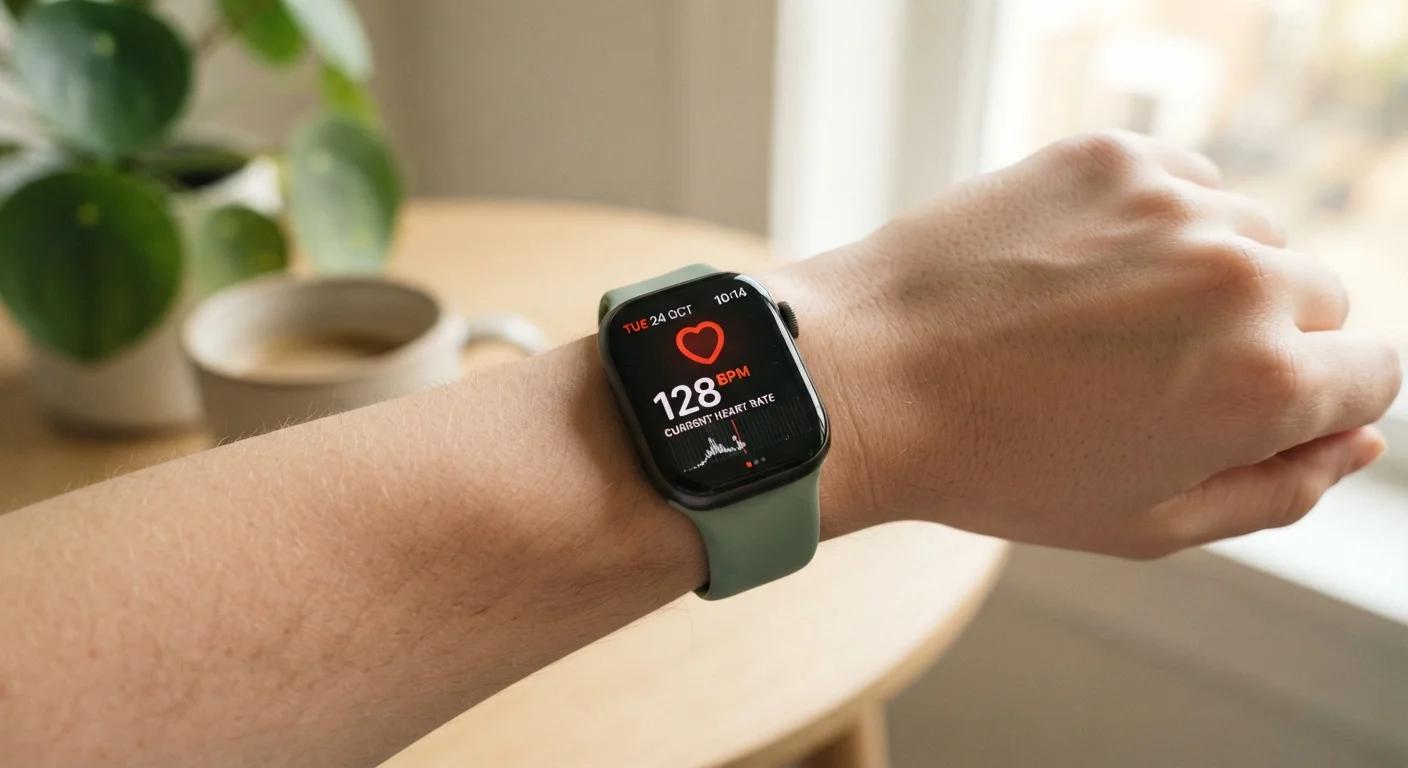
Most wrist wearables — smartwatches, fitness bands, and hybrid watches — measure heart rate using a technology called photoplethysmography, or PPG. The term sounds complex, but the concept is straightforward: LEDs (usually green, sometimes infrared or red) on the back of the device shine light into your skin. A photodetector measures how much light bounces back. Because blood absorbs light differently depending on how much of it is flowing through your vessels, the sensor can estimate how fast your heart is beating by reading those tiny fluctuations.
This approach is clever and genuinely useful — it's what allows a slim wristband to give you a continuous heart rate readout without chest straps or sticky electrodes. But PPG has real physical limitations baked into its design. It's measuring a reflection, not a direct electrical signal from your heart. That distinction matters whenever conditions at the wrist change — and they change constantly during daily life.
For a deeper look at how wearable sensors work more broadly, see our guide to ECG, SpO2, and skin temperature sensors.
Common Myths — and What the Evidence Actually Shows
Misunderstandings about wearable heart rate accuracy are widespread, partly because device marketing emphasizes convenience over caveats. Here's what the research and real-world use actually tell us.
Myth
My wearable's heart rate reading is accurate enough to replace a medical monitor.
Fact
Consumer wrist wearables are not certified medical devices and cannot replace clinical-grade heart rate monitors for diagnostic purposes.
Research published in peer-reviewed journals has found that optical wrist sensors can be reasonably accurate at rest, but error margins widen substantially during exercise — sometimes by 10 to 20 beats per minute or more. Medical-grade monitors measure electrical signals directly from the heart; optical wrist sensors estimate blood flow indirectly. The difference is significant when accuracy is clinically important.
Myth
Heart rate readings are equally accurate at rest and during exercise.
Fact
Accuracy degrades during physical activity, particularly exercises involving wrist motion like weightlifting or cycling on rough terrain.
Movement creates what engineers call motion artifact — noise in the sensor signal caused by the wrist moving, muscles contracting, and skin shifting over the device. At rest, the sensor's job is relatively easy. During vigorous activity, the device's algorithm has to work much harder to separate a true heartbeat signal from background noise, and it doesn't always succeed. High-cadence activities like running tend to produce better readings than motion-heavy activities like boxing or rowing.
Myth
Skin tone doesn't affect how well a wearable reads my heart rate.
Fact
Studies suggest that darker skin tones can reduce the accuracy of green-LED optical sensors, though manufacturers are actively working to address this.
Green light is absorbed more readily by melanin (the pigment that gives skin its color), which can interfere with the sensor's ability to detect subtle blood-flow changes underneath. Some wearable makers have added red and infrared LEDs to their sensors partly to mitigate this issue. This is an area of active research and development in the industry, and the gap has narrowed — but consumers with darker skin tones should be aware that readings may be slightly less reliable.
Myth
A looser fit is more comfortable and doesn't affect accuracy.
Fact
Fit directly impacts sensor performance — a loose band allows ambient light to leak in and the sensor to shift, both of which introduce error.
The sensor needs consistent, snug contact with your skin to work properly. A band worn too loosely lets outside light contaminate the reading (called optical interference) and allows the device to shift with each movement. Most manufacturers recommend wearing the device one finger-width above the wrist bone, snug but not tight enough to restrict circulation. During intense workouts, a slightly tighter fit tends to improve accuracy.
Myth
Cold weather only affects comfort, not sensor performance.
Fact
Cold temperatures cause blood vessels near the skin to constrict, reducing blood flow at the wrist and making it harder for the sensor to detect a clear signal.
This is called peripheral vasoconstriction — your body's natural response to cold is to redirect blood flow toward your core organs. With less blood moving through the capillaries near the wrist, the optical sensor has a weaker signal to read. Users exercising outdoors in winter often notice less reliable readings. Wearing the device slightly higher on the forearm, where the skin is warmer, can sometimes help marginally.
±10–20 BPM
Typical error range during vigorous exercise
Multiple independent studies have found optical wrist sensors can deviate by 10–20 beats per minute during high-intensity activity, compared to chest strap or ECG reference measurements.
~1–2 BPM
Typical error range at rest
At rest, consumer wrist wearables generally perform much better, with some devices achieving error margins close to those of medical monitors under controlled conditions.
When Accuracy Gaps Start to Matter
For casual wellness tracking — checking whether your resting heart rate is trending up or down week over week — minor inaccuracies rarely cause harm. Wearables genuinely shine in this use case. The problem arises when people rely on wrist-based readings for decisions that warrant medical-grade precision.
Do Not Use Wearables for Medical Diagnosis
Consumer wrist wearables are wellness and fitness tools, not medical devices. If you are experiencing symptoms such as chest pain, palpitations, or shortness of breath, do not rely on your wearable's heart rate reading to assess your condition. Seek evaluation from a licensed healthcare professional and use clinically validated equipment. No wrist-worn consumer device should be used as a substitute for proper medical assessment.
If you're using heart rate data to guide workout intensity zones, a few beats per minute of drift is mostly harmless. But if you're monitoring for atrial fibrillation (an irregular heartbeat), or tracking recovery from a cardiac event, consumer-grade optical sensors are not the right tool on their own. An electrocardiogram (ECG), performed by a clinician or using a medically certified wearable ECG feature, captures the electrical activity of the heart directly and offers far greater diagnostic reliability.
Learn more about what fitness trackers can and cannot reliably measure before making health decisions based on their data.
This article is for general informational purposes only and does not constitute medical advice. Always consult a qualified healthcare professional for questions about your heart health or any medical condition.