

Key Takeaways
- Fitness trackers estimate most metrics using indirect sensor readings, not direct measurement.
- Step counting is generally the most reliable feature; calorie and sleep data carry more uncertainty.
- Heart rate readings from wrist-based optical sensors can be less accurate during intense exercise.
- No consumer fitness tracker is a medical device — readings should not guide clinical decisions.
- Trends over time are more meaningful than any single data point from a wearable.
Fitness Tracker
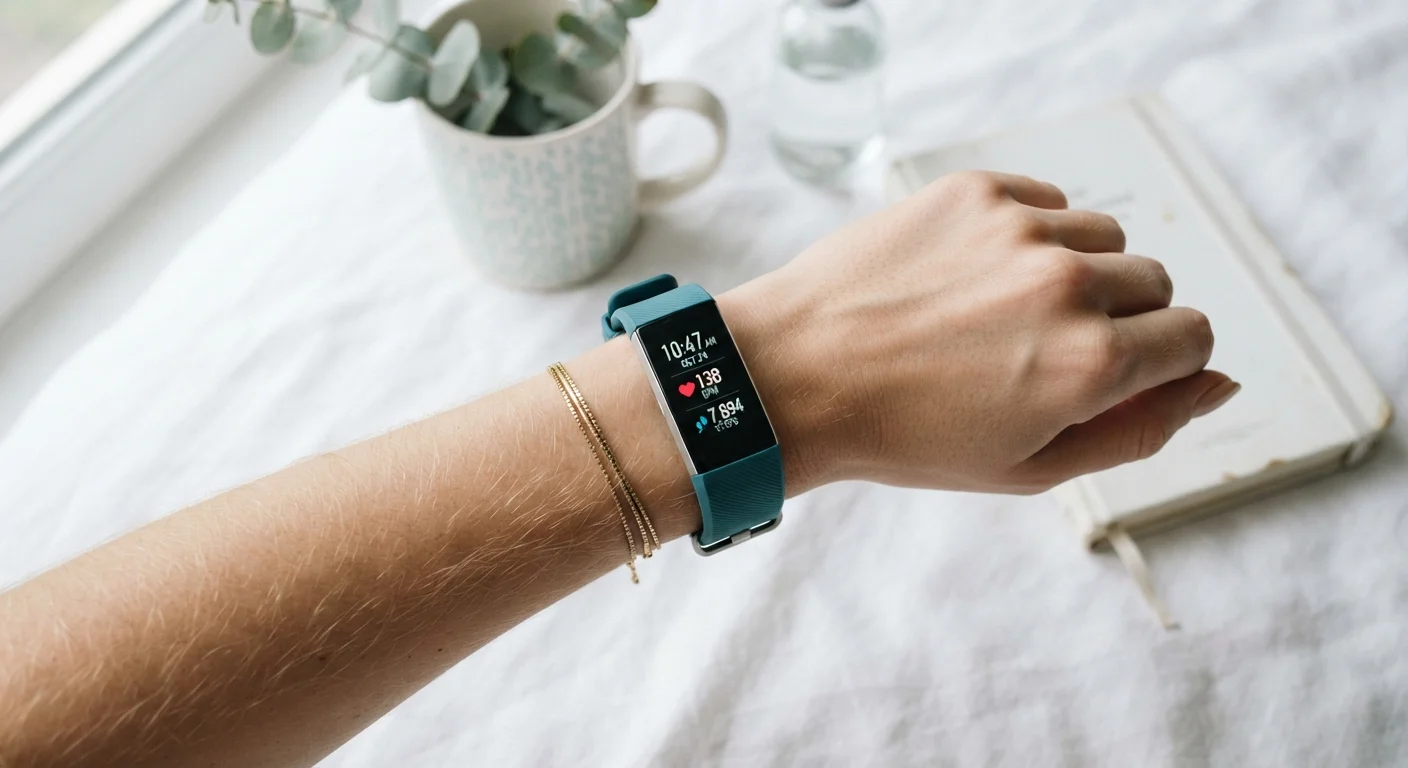
A fitness tracker is a wearable device — usually worn on the wrist — that uses built-in sensors to collect data about your body and movement throughout the day. It estimates metrics like steps taken, heart rate, calories burned, and sleep duration. The data is processed by algorithms and displayed in an app on your phone or on the device itself.
Most consumer fitness trackers use photoplethysmography (PPG) — a light-based sensor — to detect blood flow, plus a three-axis accelerometer to track motion. These are estimation tools, not medical instruments.
The Sensors Inside Your Tracker
Every fitness tracker is essentially a small bundle of sensors paired with software that interprets their output. Understanding what those sensors actually detect makes it much easier to judge what the numbers in your app mean — and how much weight to give them.
The two most universal sensors are:
- Accelerometer: Detects changes in motion and orientation across three axes. This is what counts your steps, detects whether you're running or resting, and identifies sleep restlessness.
- Optical heart rate sensor (PPG): Shines green (and sometimes red/infrared) light into your skin and measures how much light bounces back. Blood absorbs more light when the heart pumps, so the sensor reads fluctuations in light reflection as a heartbeat.
More advanced devices add sensors for GPS (actual location tracking rather than step estimates), skin temperature, electrodermal activity (a measure of skin conductance sometimes linked to stress), and SpO2 (blood oxygen estimation). Each sensor has its own accuracy profile and its own set of conditions that throw it off.
Sensor Quality Varies Across Devices
Not all fitness trackers use identical hardware or algorithms, which means accuracy can differ between models even when measuring the same metric. The principles described in this article apply broadly to consumer wrist-worn devices, but specific performance will vary. Manufacturers sometimes publish validation studies for their sensors — these are worth reviewing if precise data matters to you.
What Trackers Measure Reasonably Well
Step counting is the most dependable metric most trackers produce. Because walking has a consistent, rhythmic motion signature, the accelerometer can identify it with reasonable reliability during normal daily activity. That said, it's still an estimate — arm gestures can mimic steps, and steps taken while pushing a stroller or shopping cart (minimal arm swing) may go uncounted.
Resting heart rate trends are another relatively reliable output. When measured during stillness — ideally during sleep or quiet sitting — optical sensors tend to be accurate enough to show meaningful patterns over days and weeks. A rising resting heart rate over several days can be a legitimate signal worth noting, even if any single reading is imperfect.
For a deeper look at how these sensors apply specifically to overnight tracking, see how wearable sleep tracking works.
~3%
Typical resting heart rate error margin
Research published in peer-reviewed journals has found consumer optical heart rate sensors can come within roughly 3% of reference measurements during rest, though accuracy declines significantly during vigorous activity.
Up to 27%
Calorie burn estimation error reported in studies
Academic reviews of consumer fitness tracker accuracy have documented calorie expenditure errors ranging from under 10% to over 25%, depending on device and activity type.
78%
U.S. adults who find step tracking motivating
Survey data from health research organizations consistently shows step counting is among the most motivating features of wearables, even when users understand it's an estimate.
Where the Numbers Get Fuzzy
Calorie burn is one of the least reliable figures a tracker produces. The device combines heart rate, movement intensity, and the personal data you entered at setup (age, weight, height, biological sex) into an algorithm. Each input carries its own estimation error, and those errors compound. Published research has found consumer devices can miss actual calorie expenditure by a meaningful margin in either direction — so treat those numbers as a rough guide, not a precise accounting.
Sleep staging — the breakdown into light, deep, and REM sleep — is another area to treat with caution. Trackers infer sleep stages from movement and heart rate, not from brain activity. The technology can reasonably identify when you're asleep versus awake, but the stage breakdowns are estimates. For more context on interpreting those numbers responsibly, see what sleep tracking data can and cannot tell you.
Stress scores are perhaps the most abstract metric. They're typically derived from heart rate variability (HRV) — the beat-to-beat variation in your heart rhythm — which correlates loosely with autonomic nervous system load. But a low HRV reading can stem from a hard workout, a cold, poor sleep, or emotional stress. The tracker cannot distinguish between these causes.
Focus on Trends, Not Individual Readings
A single step count, calorie figure, or sleep score carries inherent estimation error. The real value of a fitness tracker emerges over weeks, when patterns become visible — a gradually improving resting heart rate after starting a new exercise routine, or consistent sleep disruption that warrants a conversation with a doctor. Train yourself to look at weekly or monthly averages rather than reacting to any single day's numbers.
What No Consumer Tracker Can Do
It's worth being direct about hard limits. No consumer fitness tracker — regardless of price — can:
- Diagnose a health condition, including arrhythmias, sleep apnea, or diabetes.
- Replace a clinical electrocardiogram (ECG). Some trackers include single-lead ECG electrodes that can flag certain rhythm irregularities, but these are screening signals, not diagnostic tools.
- Measure blood glucose, hydration levels, or blood pressure accurately from the wrist (as of current mainstream consumer technology).
- Guarantee any reading is clinically accurate.
If a reading from your device concerns you — an unusual heart rate, a flagged rhythm, or persistent low SpO2 values — treat it as a reason to consult a healthcare professional, not as a diagnosis in itself. For context on how wearable heart rate sensors compare to medical-grade equipment, common myths about wearable heart rate monitors is a useful read.
Trackers are also distinct from full smartwatches in meaningful ways. If you're weighing which device suits your needs, understanding the real difference between fitness trackers and smartwatches can help clarify the choice.
This article is for general informational purposes only and is not medical advice. If you have concerns about your health based on any device reading, consult a qualified healthcare professional.