

Key Takeaways
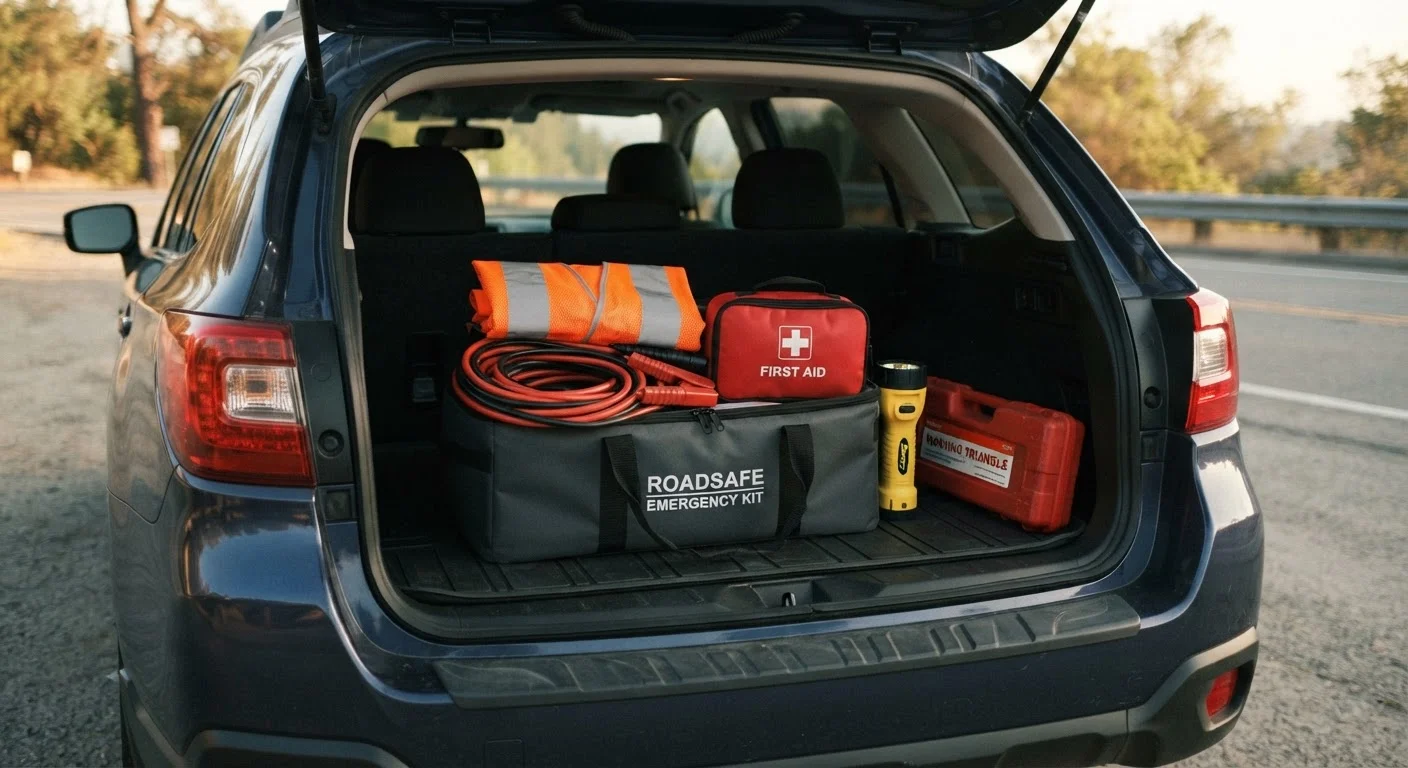
- Most roadside emergencies involve flat tires, dead batteries, or overheating - your kit should address all three.
- Visibility gear like reflective triangles and a safety vest can protect you while you wait for help.
- A basic first aid kit and phone charger are considered essential by most roadside safety organizations.
- Seasonal conditions - extreme heat or winter cold - call for a few additional supplies.
- Reviewing and refreshing your kit once a year helps ensure items are still functional and unexpired.
Summary
22 items · 20-40 minutes to assemble or audit
Why Your Car Needs an Emergency Kit
Most drivers go years without a serious roadside incident - and then it happens at the worst possible moment: late at night, in poor weather, far from home. A flat tire, dead battery, or overheated engine isn't just stressful; without the right supplies on hand, it can also become a safety hazard.
Building a roadside emergency kit doesn't require specialized skills or a large investment. It's mostly about being deliberate. The items listed in this checklist are broadly recommended by roadside safety organizations and reflect what's most useful in the most common breakdown scenarios. Your needs may vary depending on climate, how far you typically drive, and whether you travel with children or pets.
If you're also preparing for longer trips, our pre-trip vehicle safety checklist walks through the mechanical checks worth doing before you hit the highway.
Waterproof Storage Bin or Duffel Bag
Keeps all emergency items organized and protected from moisture in the trunk.
Jumper Cables or Portable Jump Starter
Provides the ability to restart a dead battery without waiting for another vehicle.
Reflective Warning Triangles
Alerts other drivers to your stopped vehicle, reducing the risk of secondary accidents.
Portable Power Bank
Keeps your smartphone charged so you can call for help or navigate even with a dead car battery.
Basic First Aid Kit
Handles minor injuries at the scene until professional help arrives.
High-Visibility Safety Vest
Makes you visible to passing traffic if you need to stand outside your vehicle.
Your Roadside Emergency Checklist
Use this checklist to build a new kit from scratch or audit what's already in your trunk. Items are organized by category. Pay attention to priority levels - must items address the most common, potentially dangerous situations first.
Tire & Traction
Battery & Electrical
Visibility & Safety
First Aid & Personal Safety
Under the Hood Basics
Documents & Admin
Your Safety Comes Before Your Vehicle
If you experience a breakdown on a high-speed road or highway, move as far off the travel lanes as possible before exiting the vehicle. Turn on your hazard lights immediately. If it's not safe to exit - for example, on a narrow shoulder with fast-moving traffic - stay in your vehicle with your seatbelt fastened and call for help. No car repair is worth the risk of being struck by passing traffic.
Seasonal and Situational Add-Ons
The core checklist above covers year-round basics. But where you live and drive should influence what else you carry.
Cold-weather additions: An ice scraper and snow brush are non-negotiable in northern climates. A small folding shovel can help if you're stuck in a drift. A mylar emergency blanket weighs almost nothing but provides meaningful warmth if you're stranded in freezing temperatures while waiting for roadside assistance.
Hot-weather additions: Extra drinking water is critical in summer, especially in desert regions. Overheating is more likely in high heat, so a gallon of coolant (also called antifreeze) is worth keeping on hand - though you should only add coolant to a completely cool engine, and if you're unsure about the procedure, wait for a qualified mechanic.
If you're weighing a move to an electric vehicle, note that EV emergency kits differ slightly - jumper cables are less relevant, but a portable charging cable and awareness of your vehicle's specific towing requirements become more important. See our practical guide to gas vs. electric vehicles for more context.
Never Add Coolant to a Hot Engine
If your car has overheated, wait at least 30 minutes before opening the radiator cap or adding coolant. Opening the cap on a hot engine can cause pressurized steam or fluid to spray, causing serious burns. When in doubt, stay clear of the hood and wait for a qualified mechanic or roadside assistance.
Keeping Your Kit Ready
Assembling a kit is step one - keeping it functional is an ongoing task. Check your kit once a year (tying it to a car registration renewal or seasonal tire change works well as a reminder). Replace any batteries, expired first aid supplies, or worn-out flares. Make sure the spare tire is properly inflated; a flat spare is useless when you need it most.
Store your kit in a dedicated bag or bin in the trunk, not loose in the backseat where items scatter. A minor fender bender can be chaotic enough - our guide on what to do after a fender bender covers how to stay organized in those first critical minutes.
Finally, if roadside emergencies prompt you to think about your broader auto insurance coverage - what's included, what towing or rental benefits you have - that's a conversation worth having with a licensed insurance agent. Coverage details vary significantly between policies and providers.