

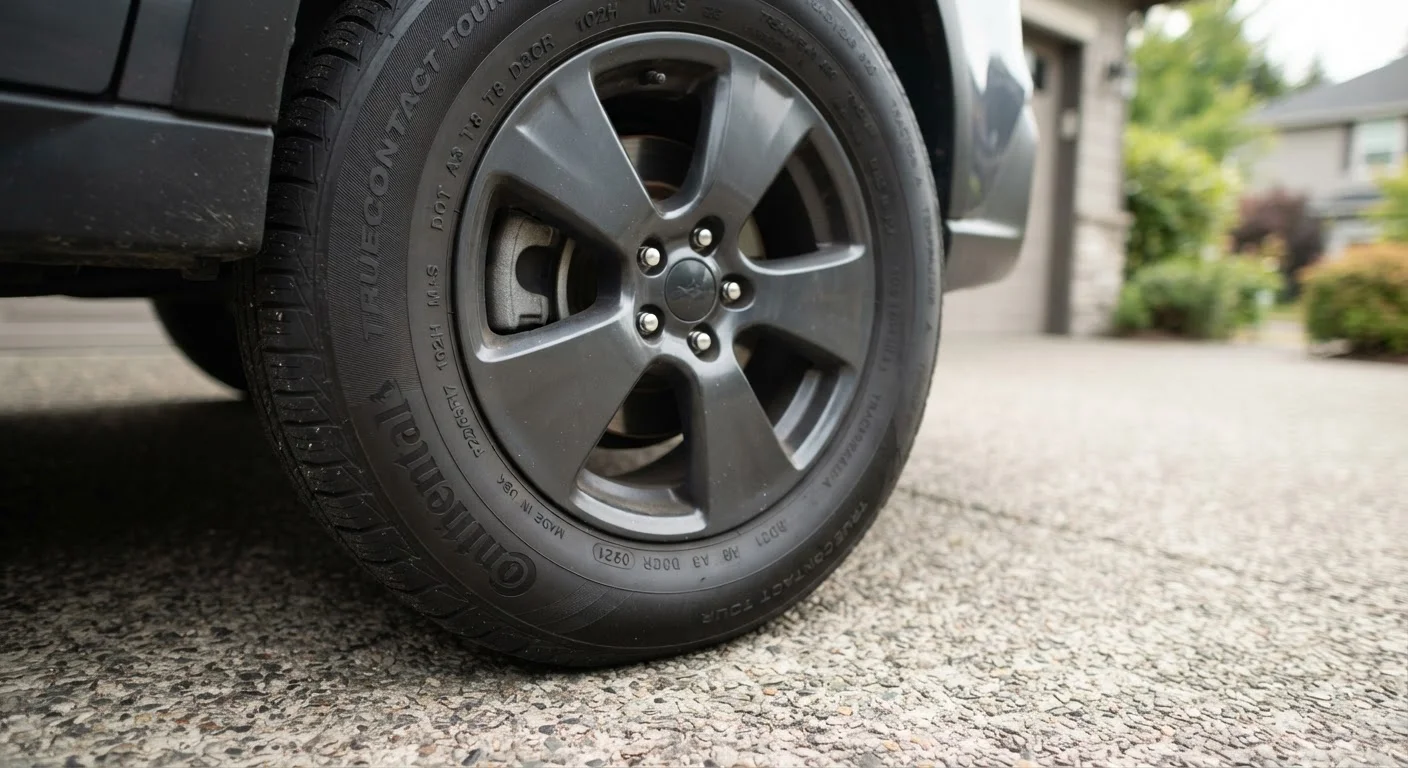
Decoding the Sidewall: What Those Numbers Actually Mean
That string of letters and numbers stamped into your tire sidewall - something like P215/65R16 98H - isn't random. Every segment tells you something specific about the tire's design and limits.
- P - Passenger vehicle. Some tires start with LT (Light Truck) instead.
- 215 - Section width in millimeters. This is the tire's width from sidewall to sidewall.
- 65 - Aspect ratio. The sidewall height is 65% of the section width. Lower numbers mean a shorter, sportier sidewall.
- R - Radial construction, the standard for most modern passenger tires.
- 16 - Wheel diameter in inches. This must match your rim size exactly.
- 98 - Load index. A numeric code corresponding to the maximum weight each tire can safely carry. The 98 rating, for example, supports up to 1,653 lbs per tire.
- H - Speed rating. H-rated tires are tested up to 130 mph. This is a maximum under controlled conditions, not a recommended driving speed.
Your vehicle's correct tire size is listed on a sticker inside the driver's door jamb - not just in the owner's manual. That sticker is your authoritative source. The sidewall of a tire already mounted on your car reflects a previous owner's choice, which may or may not match the factory spec.
Tire Pressure: The Number That Changes With the Weather
Tire pressure is measured in PSI. The correct PSI for your vehicle is printed on the door jamb sticker - not on the tire sidewall. The sidewall number is the tire's maximum allowable pressure, not the target inflation level. Inflating to the sidewall max is a common and potentially dangerous mistake.
Most passenger vehicles run between 32 and 35 PSI, though trucks, SUVs, and performance vehicles may differ. Check your specific vehicle's recommendation before adding air.
PSI (pounds per square inch)
The unit used to measure tire inflation pressure. Your vehicle's recommended PSI is found on the door jamb sticker, not the tire sidewall.
Aspect ratio
The ratio of a tire's sidewall height to its section width, expressed as a percentage. A lower aspect ratio means a shorter sidewall and typically a firmer, sportier ride.
Load index
A numeric code indicating the maximum weight a tire can carry when properly inflated. Higher numbers correspond to higher weight capacities.
Tread depth
The measurement from the top of the tread rubber to the bottom of the deepest groove, expressed in 32nds of an inch. It indicates how much usable rubber remains.
DOT code
A code stamped on the tire sidewall by the U.S. Department of Transportation. The final four digits indicate the week and year the tire was manufactured.
TPMS
Tire Pressure Monitoring System - a sensor-based system required on U.S. passenger vehicles since 2008 that alerts the driver when one or more tires drops significantly below the recommended pressure.
Temperature matters more than most drivers realize. Tire pressure drops roughly 1 PSI for every 10°F drop in ambient temperature. A tire that reads fine in October may trigger your TPMS warning in January. For more on what that dashboard light means, see what your TPMS and other warning lights are telling you.
Check pressure when tires are cold - before driving more than a mile or after the car has sat for at least three hours. Driving heats the air inside the tire and raises the reading artificially, which can cause you to underinflate.
Under-inflated tires wear faster on the outer edges, reduce fuel efficiency, and can overheat at highway speeds. Over-inflated tires wear faster in the center and reduce contact with the road, affecting braking and cornering. Neither condition is safe.
Tread Depth: How to Check It at Home
Tread depth is measured in 32nds of an inch. New tires typically start at 10/32" to 11/32" of tread. The legal minimum in most U.S. states is 2/32", but many safety organizations suggest replacing tires at 4/32" - especially if you drive in rain.
~1 PSI
Pressure lost per 10°F temperature drop
According to the Tire Industry Association, seasonal temperature swings are one of the most common causes of underinflation warnings.
2/32"
Minimum legal tread depth in most U.S. states
The National Highway Traffic Safety Administration notes that wet-weather stopping distances increase significantly as tread depth approaches this threshold.
4/32"
Recommended replacement threshold for wet roads
Safety researchers generally recommend tire replacement at 4/32" rather than waiting for the 2/32" legal minimum, particularly for drivers in rainy climates.
The simplest home check is the penny test: insert a penny into the tread groove with Lincoln's head pointing down and facing you. If you can see the top of Lincoln's head, the tread is at or below 2/32" - replacement is overdue. For a more conservative check, use a quarter: if the top of Washington's head is visible, you're at roughly 4/32" and it may be time to start shopping.
Wear patterns reveal additional problems. Wear concentrated in the center suggests chronic over-inflation. Wear on both outer edges points to chronic under-inflation. Uneven or cupped wear across the tread often indicates a suspension, alignment, or balancing issue worth having a mechanic examine.
Tires age even without heavy use. Rubber compounds degrade over time, and most manufacturers recommend replacing tires after six to ten years regardless of tread depth - check the DOT code on the sidewall. The last four digits indicate the week and year of manufacture: 2319 means the 23rd week of 2019.
Before any long drive, tires deserve the same attention as fluids and lights. Our pre-road-trip safety checklist walks through a full vehicle inspection routine worth building into your habit. And if you're weighing tire types, see how all-season and winter tires actually compare before your next set goes on.