

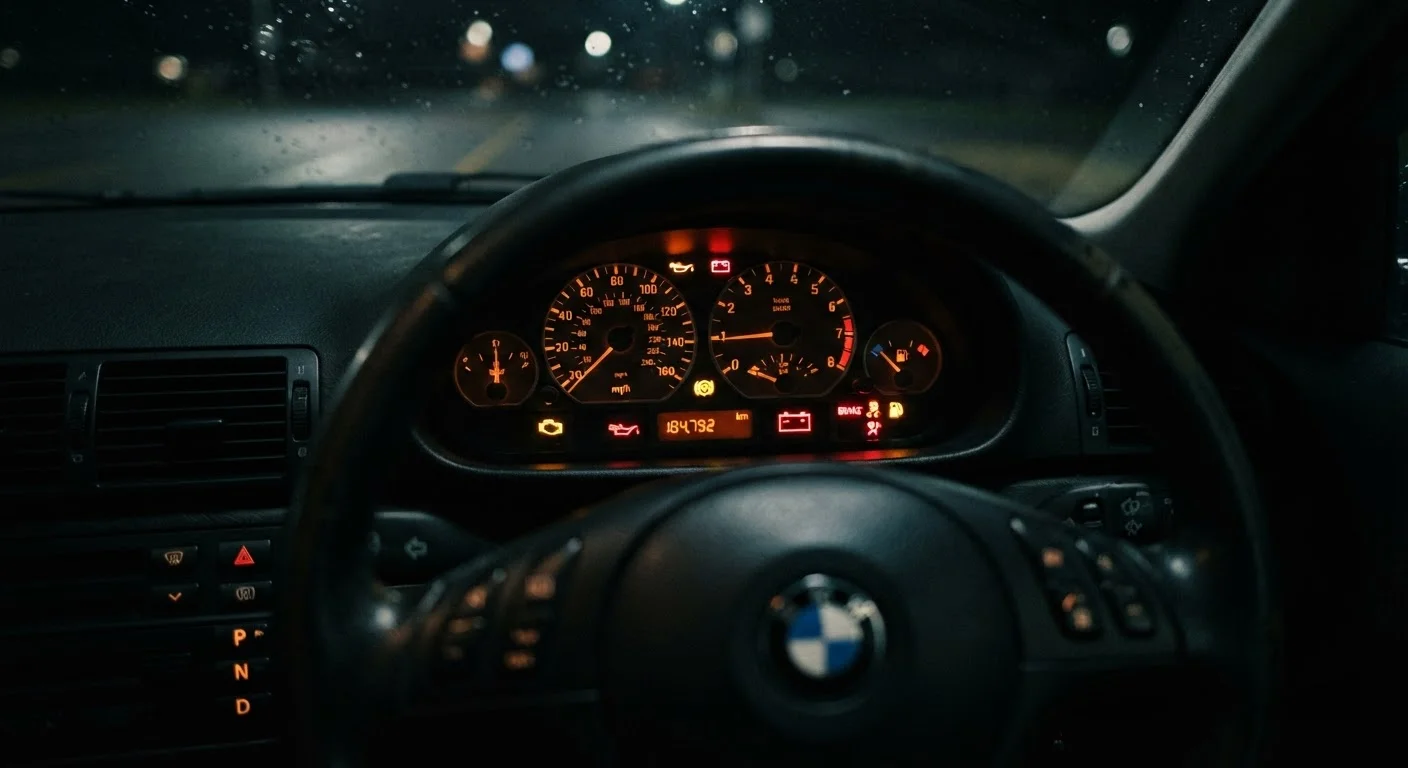
How Warning Lights Are Classified
Your dashboard uses a color-coded system that mirrors traffic signals. Red lights signal stop-now urgency - continuing to drive could cause serious damage or a safety hazard. Amber or yellow lights mean monitor and address soon, but most won't strand you immediately. Green and blue lights are informational, confirming that a system is active (think high beams or cruise control).
Understanding this hierarchy is the first step to responding appropriately rather than panicking over every lit symbol. When in doubt, your owner's manual remains the definitive reference for your specific vehicle.
Red Lights: Act Immediately
These warnings should prompt you to pull over safely and stop driving as soon as possible.
- Oil Pressure (oil can icon): Low or lost oil pressure can destroy an engine within minutes. Don't drive - check oil level only after the engine cools.
- Engine Temperature (thermometer in liquid): The engine is overheating. Turn off the AC, pull over, shut down, and let it cool before checking coolant. Never open a hot radiator cap.
- Battery (battery outline): The charging system has failed. You may have limited driving time before the car shuts off entirely. Head straight to a shop.
- Brake System (exclamation in circle or BRAKE): Could indicate low brake fluid, a hydraulic failure, or - if the parking brake is off - something more serious. Test brake feel carefully; if pedal is soft or spongy, stop driving immediately.
Before any long drive, it pays to run through a quick safety check. See our pre-trip vehicle checklist for a structured walkthrough.
Amber Lights: Schedule Service Soon
These lights indicate issues that need attention but generally don't require an immediate roadside stop.
- Check Engine (engine outline): One of the most misunderstood lights. It can mean anything from a loose gas cap to a misfiring cylinder. A solid light means get it diagnosed soon; a flashing check engine light is more urgent and indicates an active misfire - reduce speed and load, and avoid hard acceleration until it's checked.
- TPMS (tire with exclamation point): One or more tires are significantly underinflated. Check pressure at your next stop. For a deeper look at tire safety numbers, see our guide on tire pressure and tread depth.
- Traction Control / Stability Control: A steadily lit icon means the system has been disabled or has a fault - worth investigating.
- Transmission Temperature: The transmission is running hot. Reduce load (towing, hauling) and have the fluid and cooling system checked.
- Service Required / Wrench: A scheduled maintenance interval has been reached. Check your maintenance schedule guide for what's due.
OBD-II
On-Board Diagnostics II - a standardized system in vehicles made after 1996 that stores fault codes. A handheld scanner can read these codes to identify why a warning light is on.
TPMS
Tire Pressure Monitoring System. A sensor-based system that alerts the driver when one or more tires drops significantly below the recommended inflation pressure.
ABS
Anti-lock Braking System. Prevents wheels from locking up during hard braking, helping drivers maintain steering control. An ABS warning light means this assist feature may be inactive.
Fault Code
An alphanumeric code stored by a vehicle's onboard computer when a sensor detects an out-of-range condition. Mechanics use these codes as a starting point for diagnosis.
Charging System
The combination of the alternator, battery, and related wiring that keeps a vehicle powered while running. A battery warning light often indicates a failure somewhere in this system.
A Few Lights That Often Get Confused
Several symbols look similar or carry multiple meanings depending on the vehicle.
Same Light, Different Meanings by Model
Warning light icons are largely standardized under ISO guidelines, but their exact triggers and severity can vary by manufacturer and model year. A wrench icon means scheduled maintenance on one brand but a powertrain fault on another. Always cross-reference with your owner's manual or ask a qualified technician when a symbol's meaning is unclear.
The TPMS light can also illuminate when temperatures drop sharply overnight - cold air contracts and lowers tire pressure. If the light disappears after driving a few miles on a cold morning, check pressures anyway to confirm they're within the correct range.
An ABS (Anti-lock Braking System) light does not mean your regular brakes have failed - it means the anti-lock assist feature may be offline. Your standard braking still works, but you lose the system that prevents wheel lockup during hard stops. Drive carefully and get it diagnosed.
If multiple lights illuminate simultaneously right after startup and then go off, that's a normal self-test cycle. If they stay on together, it may indicate an electrical or sensor issue worth a professional scan.
Being stranded is far less stressful when you're prepared. Our roadside emergency guide covers what to keep in your vehicle for exactly these situations.
This article is for general informational purposes only. Always consult a qualified mechanic for diagnosis and repair decisions specific to your vehicle.