

Key Takeaways
- A flexible pantry of versatile staples creates variety without inflating your grocery bill.
- Planning meals around sales and seasonal produce stretches dollars while keeping menus fresh.
- Batch cooking components—not full meals—gives you mix-and-match options all week long.
- Small flavor shifts like different spice blends can make the same protein feel entirely different.
- Reducing food waste is one of the fastest ways to get more value from what you already buy.
What you will need
Why Budget Eating Gets Boring—and How to Break the Cycle
Budget eating tends to collapse into repetition for a predictable reason: people find a handful of cheap meals that work and then default to those indefinitely. The short-term logic is sound—if pasta with jarred sauce is affordable and easy, why change? But over time, the monotony erodes motivation to cook at home at all, which is where budgets really fall apart.
The fix isn't spending more. It's building a system that creates variety as a natural output of budget-conscious shopping, rather than treating variety as a luxury you trade away when money is tight. For additional context on shopping intentionally, see our guide to intentional budget shopping.
What you will need
The steps below are practical, not theoretical. They don't require a culinary background or a lot of extra time—just a willingness to shift the sequence in which you make decisions.
What You'll Need Before You Start
Weekly meal planning worksheet or notes app
Helps you map out meals before shopping so you buy only what you'll actually use.
Store weekly ad or app
Identifies which proteins and produce are on sale so you can plan around discounts rather than despite them.
Airtight storage containers
Extends the life of batch-cooked grains, beans, and prepped vegetables throughout the week.
Freezer bags or containers
Allows you to freeze portions of bulk-cooked proteins or bread before they go stale.
If you want to make sure your budget-conscious choices also support good nutrition, our nutrition-focused grocery guide walks through how to make sound choices at the store without following a strict diet plan.
Step-by-Step: Making It Work Every Week
Build a flexible pantry foundation
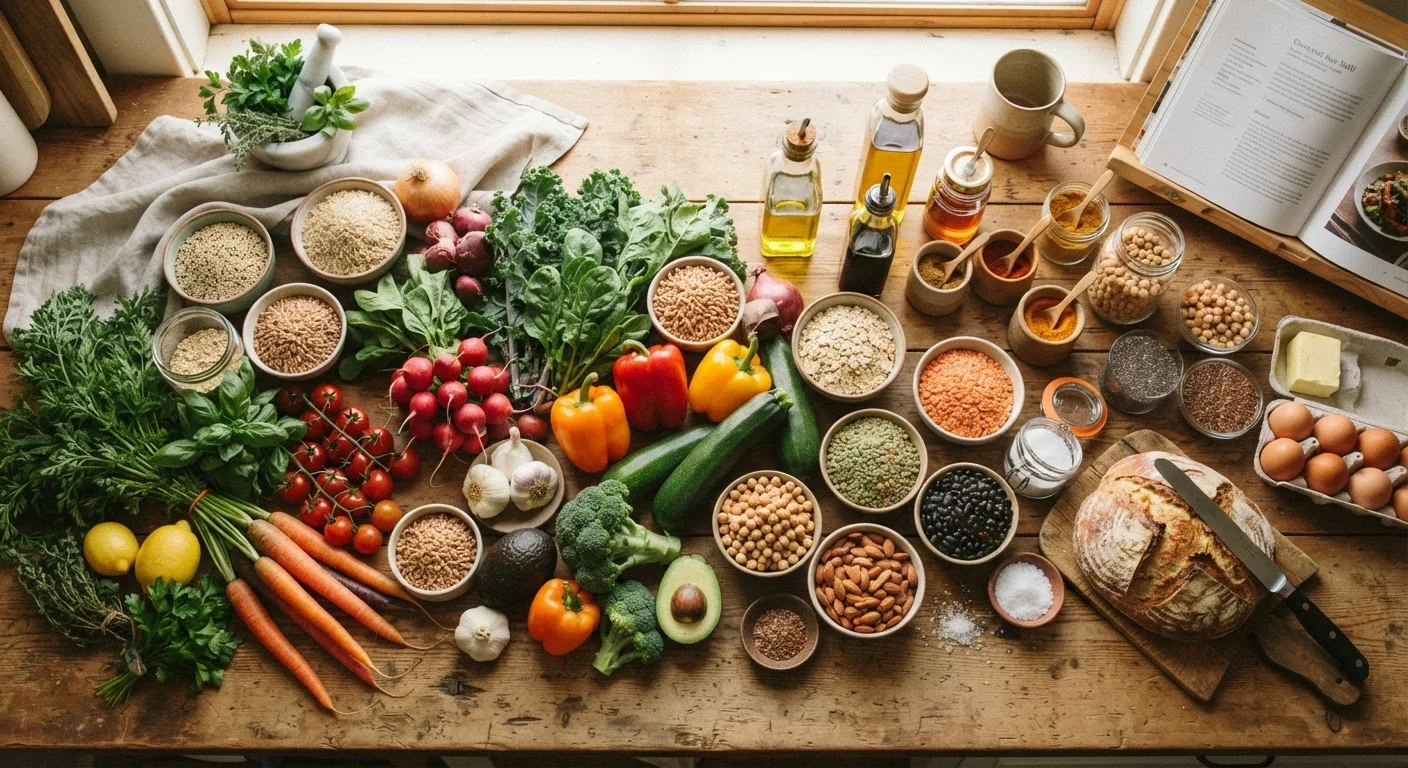
The single biggest driver of meal monotony on a budget is a pantry stocked with single-purpose items. Instead, prioritize ingredients that can move across multiple cuisines and meal types: dried lentils, canned beans, rice, oats, canned tomatoes, eggs, frozen vegetables, and a rotating protein you buy when it's marked down.
These aren't exciting on their own—but they're the raw material for dozens of combinations. A can of white beans becomes pasta e fagioli, a grain bowl topping, or a smashed side dish depending on what's around it. Stock the pantry once thoughtfully and your week-to-week shopping becomes smaller and more targeted.
Plan meals around what's on sale, not the other way around
Most shoppers pick their meals first and then buy the ingredients regardless of price. Flipping that process—checking the store's weekly circular before you plan—can significantly lower your bill without making meals feel repetitive.
If chicken thighs are marked down this week, build two or three different preparations around them. If zucchini is at peak-season pricing, find three ways to use it across different dishes. This forces variety by design, since what's cheapest rotates week to week. Check the store app or physical ad before you sit down to plan—it takes five minutes and reorients your whole list.
Cook components, not just complete meals
Batch cooking full meals leads to the repetition people dread—eating the same soup five days in a row. A more flexible approach is to cook components in bulk: a big pot of grains, a sheet pan of roasted vegetables, a batch of cooked beans or protein.
From those components, you can assemble different combinations each day. Monday's grain bowl becomes Tuesday's stuffed pepper filling and Wednesday's side dish alongside a fried egg. The ingredients are the same; the meals feel different. This method also reduces mid-week cooking time substantially.
Use flavor variables to multiply your options
A small investment in aromatics, spices, and acids pays enormous variety dividends. The same chicken breast prepared with garlic and lemon feels entirely different from one made with smoked paprika and cumin—or soy sauce and ginger. The protein cost is identical; the meal experience is not.
Build a basic spice shelf over time: a few blends (Italian seasoning, chili powder, curry powder), whole spices if you use them, vinegars, hot sauce, and soy or fish sauce. You don't need all of these at once—add one or two per shopping trip and rotate what you reach for.
[tip_callout]Track and use what you already have before it's gone
Food that gets thrown away is money that was already spent. Before shopping, do a quick audit of your refrigerator and pantry—anything close to expiring should drive at least one meal this week. Wilting vegetables become soup, stir-fry, or frittata. Stale bread becomes croutons or breadcrumbs. Half-used cans become the base of tomorrow's lunch.
This habit also prevents the creep of over-buying. When you regularly use what you have, you stop purchasing duplicates and start shopping with a clearer picture of actual need.
[important_callout]Lean on protein alternatives strategically
Meat is typically the most expensive line item in a grocery budget. Replacing one or two meals per week with protein alternatives—eggs, canned fish, legumes, tofu—can reduce your weekly spend noticeably without eliminating meat entirely.
The key is treating these as full meals, not compromises. A lentil soup with good aromatics, a chickpea curry, or a tuna pasta are genuinely satisfying meals that cost a fraction of a comparable meat-based dish. Rotating these in alongside meat-based meals also adds natural variety to your week.
For more ideas on trimming your grocery bill without overhauling what you eat, these underused grocery savings strategies are worth a look. And if you're building broader spending habits, these durable shopping habits apply well beyond the grocery aisle.
Keeping It Sustainable Over Time
The strategies above work best when they become low-effort habits rather than active decisions. Planning around the sale circular becomes second nature after a few weeks. Batch cooking components stops feeling like extra work once you see how much it simplifies the rest of the week. The flavor variable approach becomes automatic once your spice shelf has a few key players on it.
If time is a recurring constraint, these principles for eating well on a busy schedule offer practical ways to maintain variety without spending hours in the kitchen. Budget and schedule constraints often compound each other—addressing both at once makes your system more durable.
None of this requires perfection. A week where you use three of these strategies is better than a week where you use none. Start with whichever step fits most naturally into how you already shop, and add from there.