

Key Takeaways
- Carbohydrates are your body's preferred and most efficient source of energy.
- Protein builds and repairs tissues, and supports immune and hormonal function.
- Dietary fat is essential for brain health, hormone production, and absorbing key vitamins.
- No macronutrient is inherently bad - balance and food quality matter more than elimination.
- Reading a food label is easier once you understand what each macronutrient does.
Macronutrients
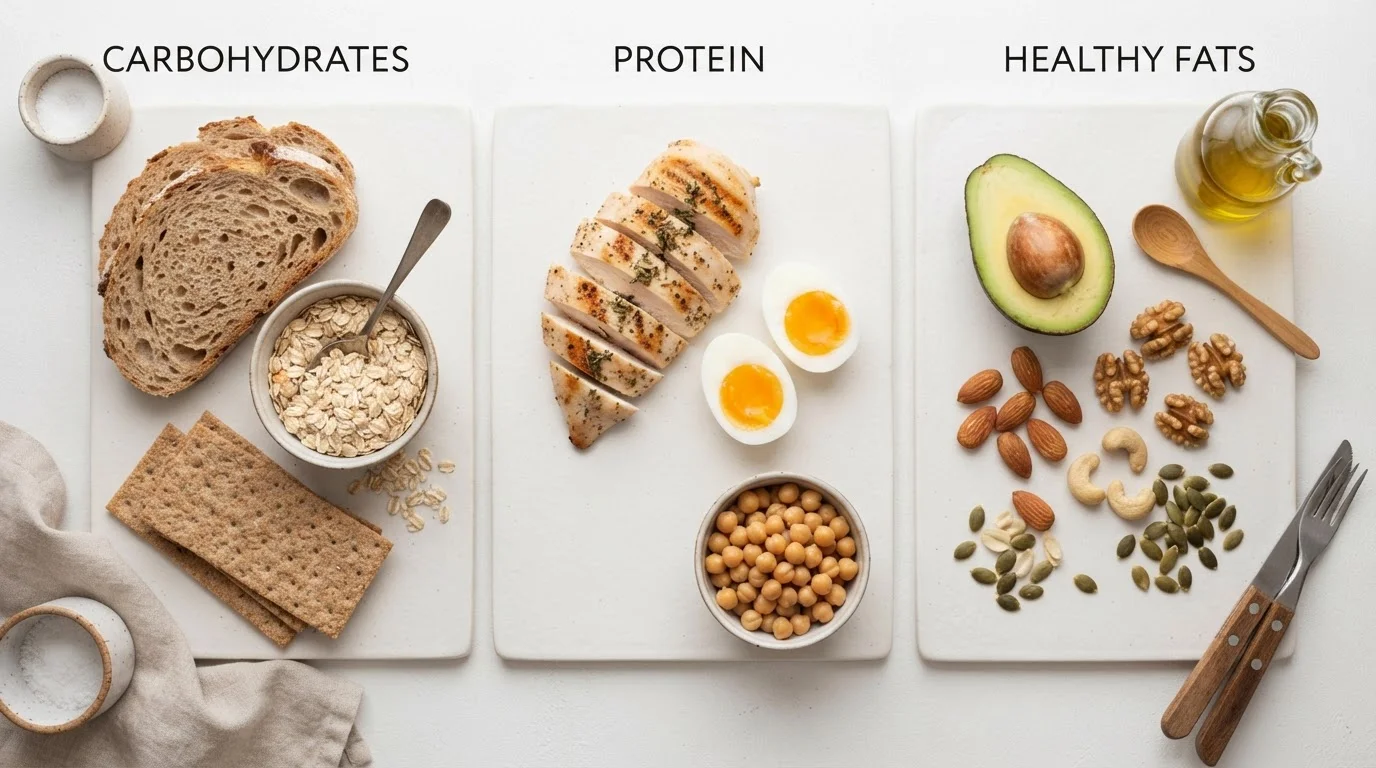
Macronutrients are the three main categories of nutrients your body uses in large amounts for energy and basic functions: carbohydrates, protein, and fat. Unlike vitamins and minerals, which are needed in tiny quantities, macronutrients form the bulk of what you eat every day. Each one serves a different purpose, and your body cannot function well without all three.
Macronutrients provide calories - carbohydrates and protein at roughly 4 calories per gram, fat at approximately 9 calories per gram. These figures are why fat is calorie-dense, not calorie-bad.
Why Macronutrients Matter
Walk down any grocery aisle or scroll through a nutrition website and you'll encounter contradictory advice: cut carbs, eat more fat, load up on protein, avoid all three. It's exhausting. But before deciding what to do with any macronutrient, it helps to understand what each one actually does in your body.
Macronutrients are the foundation of every meal. They provide energy, support cellular repair, regulate hormones, and keep your brain and organs running. For a broader look at how macronutrients fit into the larger picture of eating well, see our foundational nutrition guide. The short version: all three macronutrients play distinct, non-negotiable roles - and cutting one out entirely usually means trading one problem for another.
45-65%
Recommended daily calories from carbohydrates
According to the U.S. Dietary Guidelines for Americans, carbohydrates should make up nearly half or more of total daily calories for most adults.
20-35%
Recommended daily calories from fat
The U.S. Dietary Guidelines suggest fat should account for roughly one-fifth to one-third of total daily caloric intake for healthy adults.
10-35%
Recommended daily calories from protein
The Acceptable Macronutrient Distribution Range (AMDR) for protein, as set by the National Academies of Medicine, spans a wide band to accommodate varying lifestyles and needs.
Carbohydrates: Your Body's Preferred Fuel
Carbohydrates are broken down into glucose, the sugar your cells use for immediate energy. Your brain, in particular, runs almost exclusively on glucose - which is why very low-carb diets can cause mental fog, especially early on.
Not all carbs behave the same way. Complex carbohydrates - found in whole grains, legumes, vegetables, and fruits - digest slowly, providing a steadier energy supply and delivering fiber that supports gut health. Simple carbohydrates, like those in sugary drinks and highly processed snacks, digest quickly and can cause rapid swings in blood sugar.
The key distinction isn't carbs versus no carbs - it's fiber-rich, minimally processed sources versus stripped-down, heavily refined ones. When you look at a nutrition label, the fiber and total sugar numbers alongside total carbohydrates tell you more than carb grams alone. Our guide on reading a food label breaks down exactly what to look for.
Protein: Builder, Repairer, Regulator
Protein is made up of amino acids - the building blocks your body uses to construct and maintain virtually everything: muscle tissue, skin, enzymes, hormones, and immune cells. When you eat protein, digestion breaks it into individual amino acids, which your body then reassembles for whatever it needs most.
Some amino acids are called essential because your body can't make them - they must come from food. Animal proteins (meat, fish, eggs, dairy) provide all essential amino acids in one package. Plant proteins (beans, lentils, tofu, nuts) are excellent sources too, though combining a variety of plant foods across the day generally covers all essential amino acids.
Mix Your Protein Sources
Varying your protein between animal and plant sources across the week helps ensure a broader range of amino acids, fiber, and micronutrients. Try incorporating beans, lentils, or tofu alongside eggs or lean meats rather than relying on a single go-to protein every day.
Protein also plays a role in satiety - it tends to keep you feeling fuller for longer compared to the same number of calories from other macronutrients. This is one reason higher-protein meals are often recommended for people managing appetite.
Fat: The Misunderstood Macronutrient
Dietary fat spent decades being demonized, and the fallout - an explosion of low-fat processed foods - didn't serve public health well. Fat is essential. It insulates organs, forms every cell membrane in your body, enables your nervous system to function, and allows you to absorb fat-soluble vitamins A, D, E, and K.
Fat also supports hormone production, including hormones that regulate mood, metabolism, and reproduction. Without adequate dietary fat, these systems falter.
The type of fat matters. Unsaturated fats - from sources like olive oil, avocados, nuts, and fatty fish - are generally associated with cardiovascular health. Saturated fats, found in red meat and full-fat dairy, are better consumed in moderation according to most dietary guidelines. Trans fats, which were widely used in processed foods, are associated with increased health risk and have been largely phased out of the food supply. For a deeper look at fat types, see our plain-language breakdown of dietary fats.
Fat and Calorie Density
Because fat provides about 9 calories per gram - more than double that of carbohydrates or protein - portion awareness matters more with high-fat foods. This doesn't mean limiting healthy fats, but it's worth understanding why a small handful of nuts is quite satisfying: a little goes a long way calorically.
Putting It All Together
Macronutrients don't work in isolation - they interact constantly. Fat slows digestion, which affects how quickly carbohydrates raise blood sugar. Protein supports muscle recovery after exercise, which is fueled largely by carbohydrates. A meal with all three macronutrients present tends to be more satisfying and nutritionally complete than one built around just one.
Rather than eliminating a macronutrient based on a trending diet, consider the quality of each source. Whole, minimally processed foods across all three categories - complex carbs, lean and plant-based proteins, unsaturated fats - form the core of most evidence-based dietary patterns. To understand how macronutrients relate to the vitamins and minerals your body also needs, the macronutrients and micronutrients overview is a useful next step. And for specifics on vitamins and minerals, see Micronutrients at a Glance.
This article provides general nutrition information for educational purposes only and is not a substitute for personalized advice from a qualified healthcare provider or registered dietitian.