

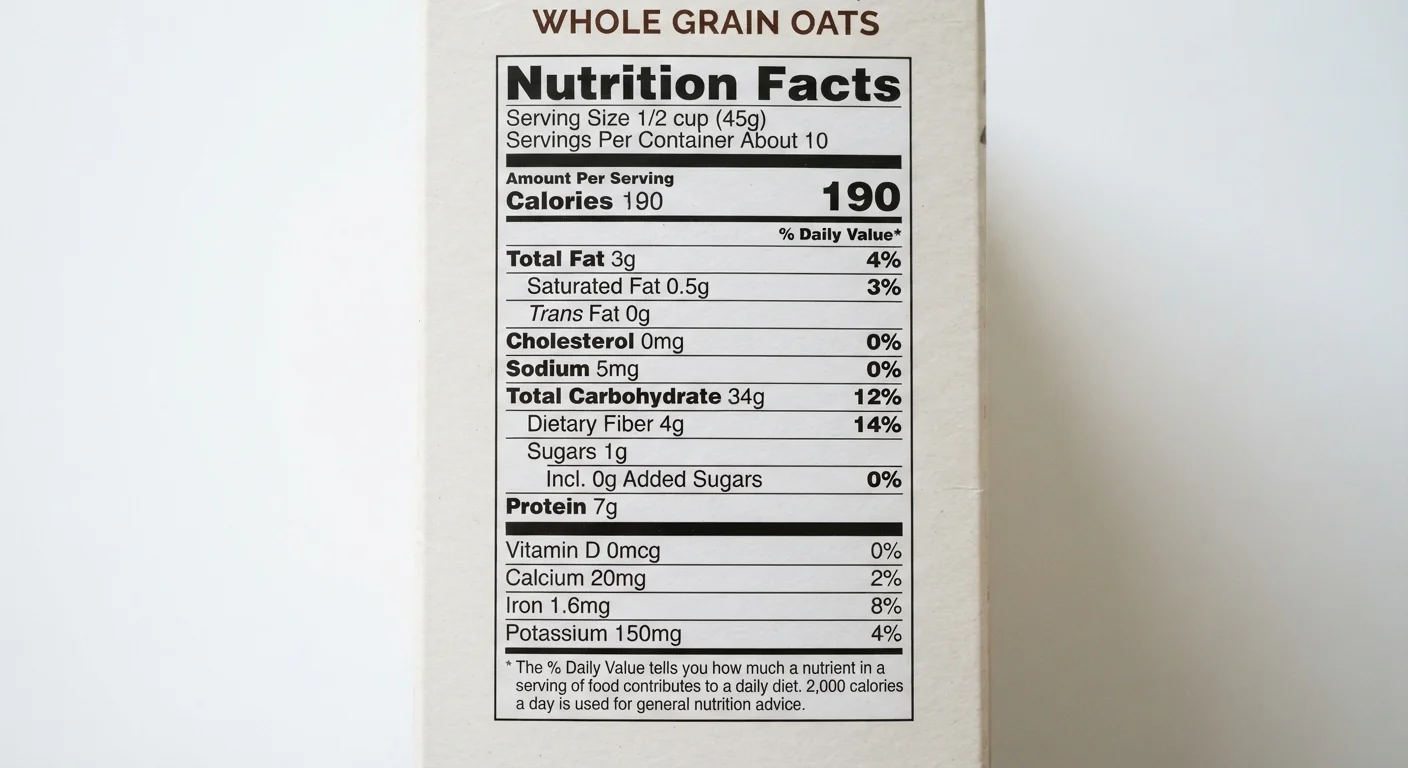
Key Takeaways
- Serving size is the foundation of every number on the label - always check it first.
- % Daily Value tells you how much a nutrient contributes to a 2,000-calorie reference diet.
- Added sugars and sodium are worth watching; many Americans consume more than recommended.
- The ingredient list is ordered by weight - the first few ingredients make up most of the product.
- Front-of-package claims are marketing; the Nutrition Facts panel is where regulated information lives.
Nutrition Facts Panel
A Nutrition Facts panel is the standardized information box required by the FDA on most packaged foods sold in the United States. It tells you how much of key nutrients - calories, fats, sodium, carbohydrates, protein, and more - are contained in a specific serving of that food. The format is regulated so that every label follows the same structure, making it easier to compare products.
The current Nutrition Facts label format was updated by the FDA in 2016 and required on most packaged foods by 2020. Key changes included a larger calorie display, updated Daily Values, and a new line for added sugars.
Start Here: Serving Size Changes Everything
The single most important line on any Nutrition Facts panel is the serving size. Every calorie count, every gram of fat, every milligram of sodium listed below it refers to that specific amount - not the whole package.
Serving sizes are standardized by the FDA to reflect typical consumption amounts, not ideal portions. A bag of chips might list a serving as 1 ounce (about 12 chips), but if you eat 2 ounces, every number on the label doubles. A bottle of juice labeled "2.5 servings" has 2.5 times the listed calories if you drink it all.
Getting the serving size right before reading anything else is the single habit that makes food labels actually useful. For a more detailed walkthrough of each label section, see our guide to reading a nutrition label without getting lost.
Check the Serving Size Before Anything Else
Before reading calories, fat, or sodium, confirm the listed serving size and compare it to how much you'd actually eat. If the package contains two servings and you eat the whole thing, every number on the label needs to be doubled. This one habit prevents the most common misreading of food labels.
Calories, Macronutrients, and What the Numbers Mean
After serving size, the label moves into calories and the three macronutrients: fat, carbohydrates, and protein. Each plays a distinct role in your body - understanding what they do helps put the numbers in context. Our article on what carbs, protein, and fat actually do covers this in plain language.
- Total Fat is broken down into saturated fat, trans fat, and sometimes monounsaturated and polyunsaturated fats. Saturated fat and trans fat are the types most associated with cardiovascular health concerns at high intake levels. For more on how different fats behave in the body, see our breakdown of dietary fat types.
- Total Carbohydrates include dietary fiber, total sugars, and - importantly - added sugars. Fiber is a nutrient many Americans under-consume; added sugars are one many over-consume.
- Protein does not carry a % Daily Value on the label for most foods, but the gram amount is still useful for tracking intake across meals.
77%
Americans who check nutrition labels
According to FDA consumer research, roughly 77% of adults report using the Nutrition Facts label when buying food for the first time.
3,400 mg
Average daily sodium intake for U.S. adults
The CDC estimates that American adults consume an average of about 3,400 mg of sodium daily - well above the 2,300 mg limit generally recommended in dietary guidelines.
17 tsp
Average added sugar consumed daily
USDA data suggests Americans consume roughly 17 teaspoons of added sugar per day on average, compared to the American Heart Association's guidance of no more than 6-9 teaspoons.
% Daily Value: A Quick Reference Tool
The right-hand column of the Nutrition Facts panel shows % Daily Value (% DV) for most nutrients. This figure is based on a 2,000-calorie daily diet - a reference point, not a prescription. Your actual needs may be higher or lower depending on your age, size, activity level, and health status.
A rough but practical rule: 5% DV or less is considered low for a nutrient; 20% DV or more is considered high. This scale works in both directions. A food high in fiber (20%+ DV) is contributing meaningfully to your intake. A food high in sodium (20%+ DV per serving) deserves attention if you're eating multiple servings or already consuming sodium elsewhere in your diet.
The 2,000-Calorie Reference Is a Starting Point
The % Daily Values on nutrition labels are based on a 2,000-calorie daily diet, which is a general population reference - not a target for every individual. Calorie needs vary significantly by age, sex, body size, and physical activity level. Use % DV as a comparative tool rather than a personal prescription, and speak with a healthcare professional or registered dietitian about what daily targets make sense for you.
Vitamins and minerals also appear in this section. Vitamin D, calcium, iron, and potassium are required on the label because Americans have historically under-consumed them. Looking for foods with higher % DVs for these nutrients is a practical way to support a more balanced diet.
The Ingredient List: Where to Find What's Really Inside
The ingredient list appears below the Nutrition Facts panel and is governed by a simple rule: ingredients are listed in descending order by weight. Whatever appears first is present in the largest amount.
This matters because a product marketed as "made with whole grains" might list enriched white flour first and whole wheat flour fourth - meaning the whole grain is a minor ingredient by weight. Similarly, if multiple forms of sugar (cane sugar, high-fructose corn syrup, honey, dextrose) each appear separately in the list, their combined contribution could be much larger than any single entry suggests.
The ingredient list is also where allergen declarations live. Major allergens - including milk, eggs, peanuts, tree nuts, wheat, soy, fish, and shellfish - are required to be identified clearly, either within the list or in a separate "Contains" statement. Front-of-package health claims are marketing language; for what's actually regulated versus what isn't, see our guide to nutrition claims on packaging.
This article provides general nutrition information for educational purposes only and is not a substitute for personalized dietary advice. Consult a registered dietitian or qualified healthcare professional for guidance tailored to your individual health needs.